Wednesday, 23 June 2010

Photos from Pour un Sourire d'Enfants

The following pictures are posted to supplement my previous commentary on the Phnom Penh-based NGO, Pour un Sourire d’Enfants (PSE).


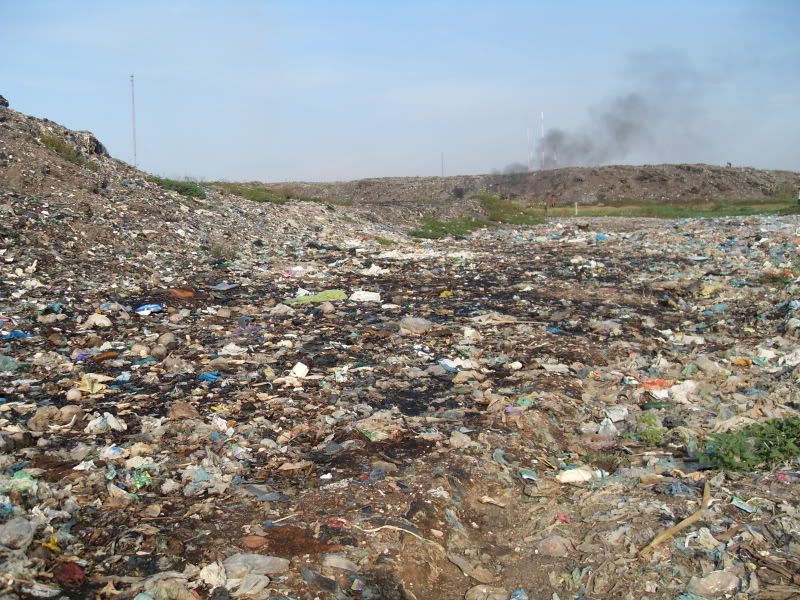
There are no longer any waste-scavenging activities in this old garbage dump in Stung Meanchey. However, the scotching sun can still make rubbish burn; perhaps, these fumes are toxic. Also, while the trash piles up as mountains, soil texture differs vastly. You can step on solid for one minute and find your foot immersed in soft stinky soil in another…
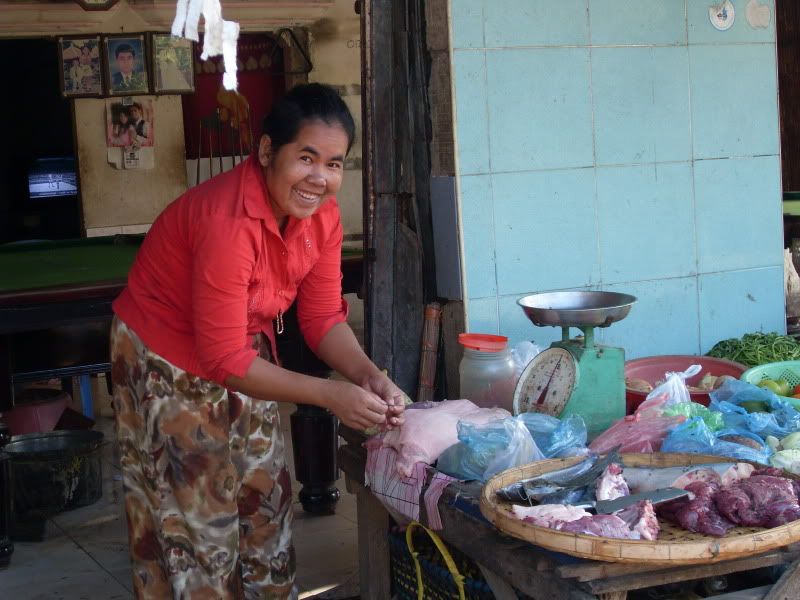
It surprised me that there are no mosquitoes inside the old dump. But they are everywhere in the villages surrounding the dump. The villagers appear to have become accustomed to the mosquitoes. Their house, their food and their skin are all strewn with mosquitoes but they still smile with joy as visitors arrive.
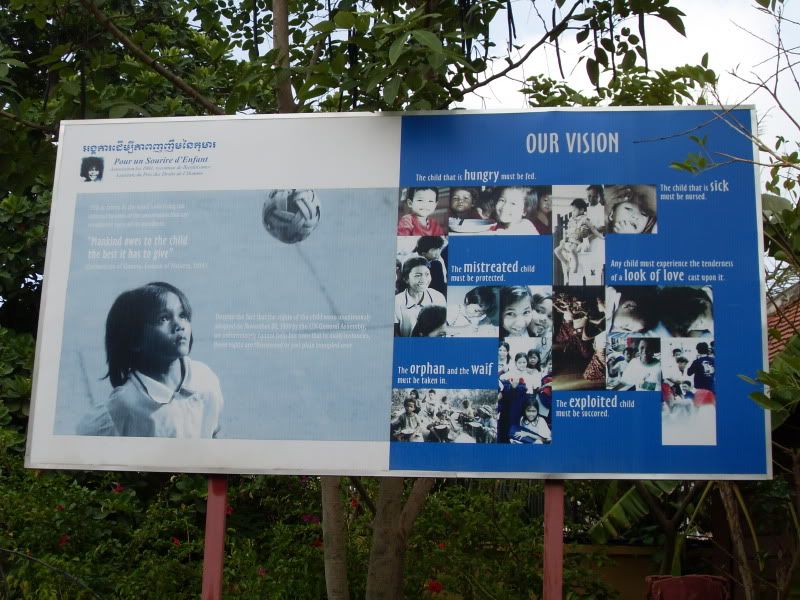

The mission of Pour un Sourire d’Enfants: The child that is hungry must be fed; the child that is sick must be nursed; the mistreated child must be protected; any child must experience the tenderness of a look of love cast upon it; the orphan and the waif must be taken in; the exploited child must be succoured. It is with this vision that the NGO has expanded to serve 6,000+ children and their family members (parents and siblings) near the garbage dump.
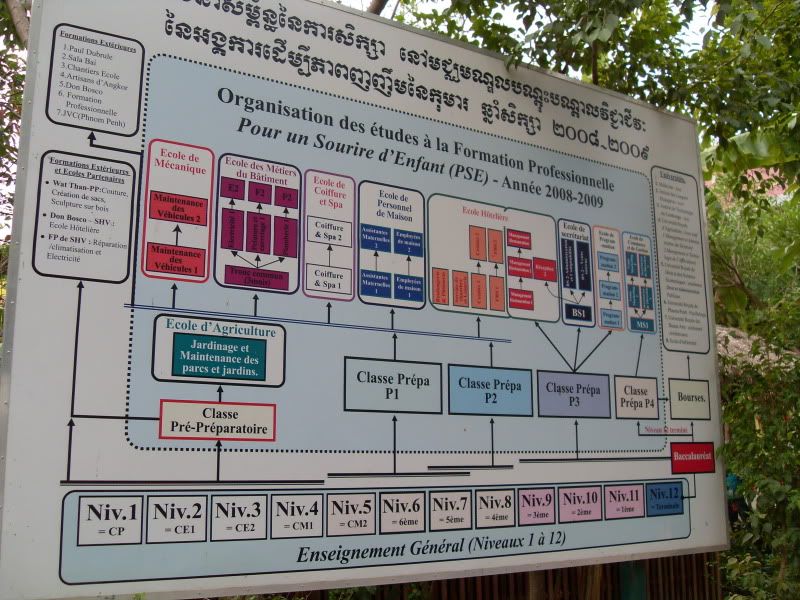

PSE has developed a sophisticated and systematic vocational training centre with eight schools. These schools are closely linked with non-formal education offered at the NGO’s campus and formal education received by some beneficiaries in public schools. In turn, there are suitable and marketable skills to be earned by all the beneficiary children, so that they can remunerative jobs.
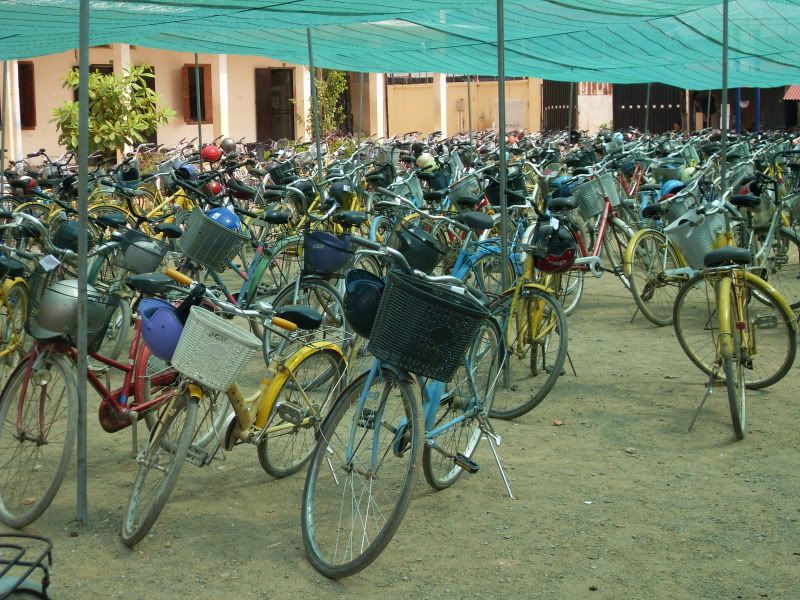
Children are given bicycles to travel to and from home, school and the PSE centre. The blue ones are donated by ANZ Royal Bank.
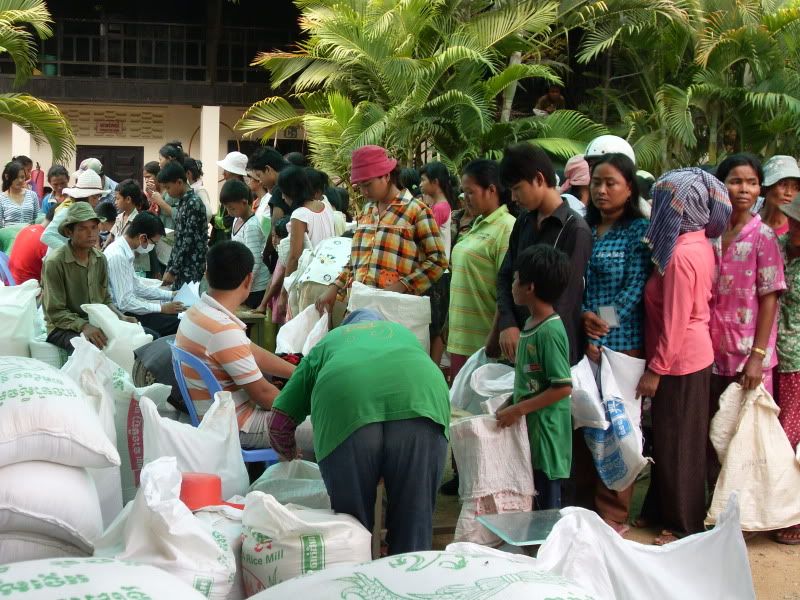
PSE distributes 3.5 kg rice to each family families of beneficiary children each week. For the poorest of the poor families, the rice may substitute the income and food lost when their children are withdrawn from work. For other less poor families, the ration serves as an incentive for retaining children in school. In social protection terms, this programme is called conditional in-kind transfer.
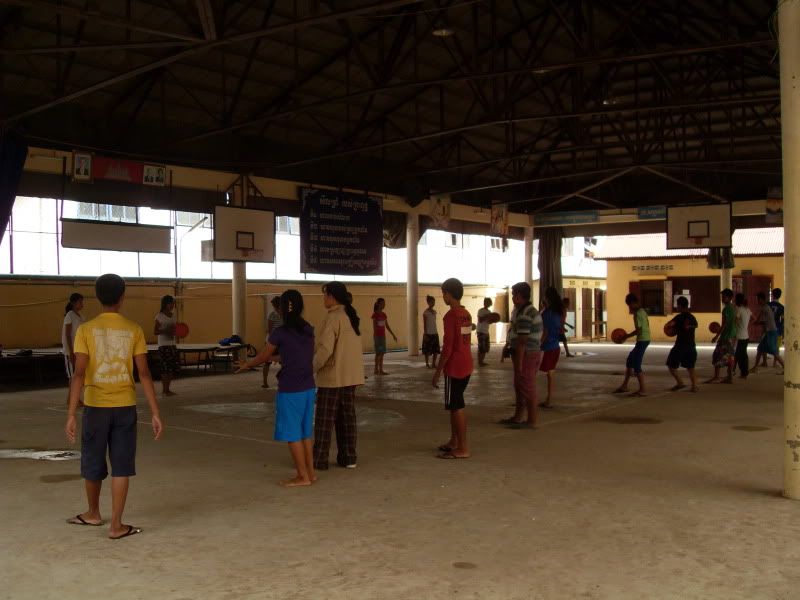


Physical education and recreational activities are part of the non-formal education programme.
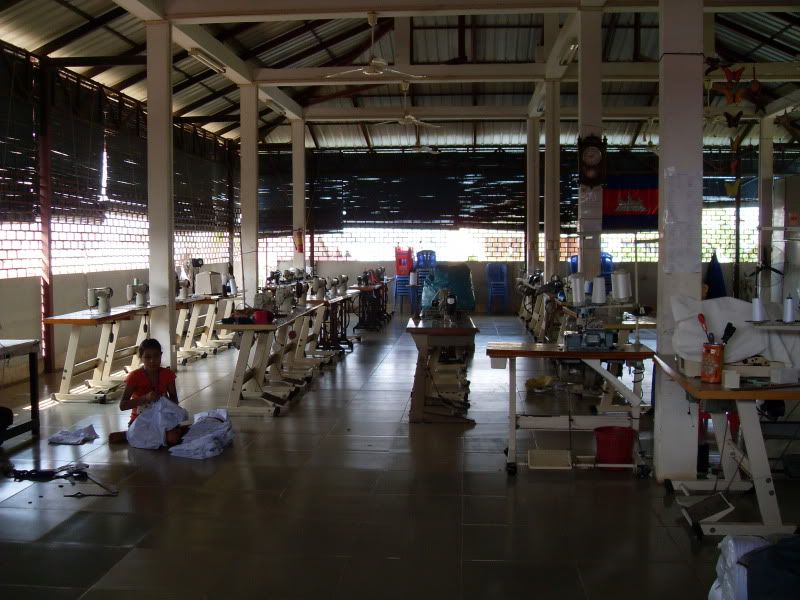


In addition to providing non-formal education and vocational training for children and assisting children to access formal education, PSE also offers training for parents. By the end of a six-month training course, the parent would receive a small sum to start his/her own business. On the other hand, older children from poor families are allowed to work in the weekend to earn some extra-income for their family.


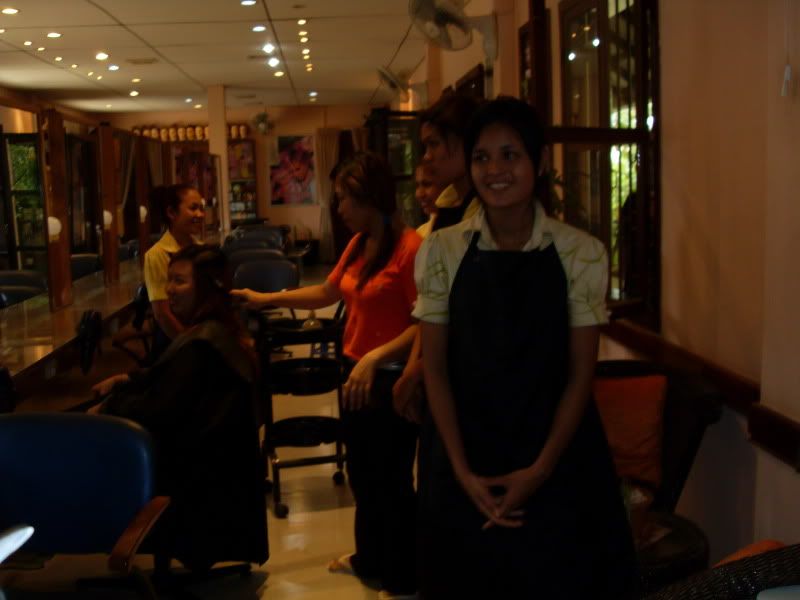
A snapshot of the hairdressing school; the quality of equipment and instruction at PSE’s hairdressing & spa school is of much higher calibre than the ones offered by government-run schools.

Monday, 14 June 2010

The Cambodian Town Called “Pour un Sourire d’Enfants”

I found an earthly paradise next to Phnom Penh’s notorious Stung Meanchey Garbage Dump.

I recall that before coming to Cambodia, the Garbage Dump is an icon of the country’s poverty. TV programmes and articles often depict scavengers, both adults and children, who support their livelihoods by rummaging through mountains of trash, earning less a dollar each day. Sometimes, accidently stung by unclean needles, the scavengers may contract HIV/AIDS; others may get cuts from broken bottles and suffer from open, infected wounds. All of them toil amidst intolerable, rotten smell and also risk being run over by tractors ploughing through the dumpsite. More sadly, many children cannot go to school because there are no schools around the site (since many actually live on the site despite extremely poor conditions) or are too poor even to attend public schools.

What I did not know, however, were the changes that have been taking place in these impoverished areas while grim messages spread.

THE “OLD” GARBAGE DUMP

In the past weekend, I paid my first visit to the Garbage Dump with a Hong Kong-based NGO, Humanity in Focus. The NGO was founded in 2006 by a group of students from the University of Hong Kong. Since then, every summer, the organization would bring a group of students to participate in community service projects in the rural areas of Cambodia.

We were met with smiling faces of villagers living adjacent to the dump, who have probably seen many foreign, curious faces throughout the years. We were also greeted by flocks of flies and dirt roads strewn with old plastic bags and rotten substances. As we walked closer towards the dump, I began to run through worst case scenarios about the dump. I imagined the pungent smell, fuming rubbish, makeshift tents and poor children swarming towards us for money. One of the more experienced students remarked on her trip in the previous year. She recalled that the smell was so strong that she could not breathe properly for 15 minutes. In fact, she also could not breathe through her mouth for fear that flies would enter. It was a disgusting experience.

But now, one year later, something has apparently changed. It was surprisingly quiet at the site. We later found out that another garbage dump has been created near the Cheoung Ek Killing Fields and the “new site” is no longer open to the public. There has been no scavenging activity in this “old site” since last fall.

Though a disappointment for us, I secretly feel that this arrangement is better for the adults and children working on the dump. In the past, the “old site” was open to the public; in fact, I found out that Wikipedia listed the Stung Meanchey Garbage Dump as a tourist attraction. There are ethnical issues involved, however, when watching children running up and down mountains of trash become a tourist must-see and when donors repeatedly use the faces of these poor children to provoke pity and donations. Perhaps, the “new site,” a restricted area, can allow the communities there to live with more dignity.

THE TOWN OF CHILDREN’S SMILES

Following our “garbage run,” the group visited a French NGO, Pour un Sourire d’Enfants (PSE; in English means For the Children’s Smile), to learn about how they have assisted children scavengers and their families out of poverty. Founded by a French couple in 1996, the NGO had a modest beginning, providing food and shelter for 50 children. Now, their five-acre campus reaches out to 6,000 children, plus their families, and hires 580 workers and staff. The comprehensive package of services offered at PSE has contributed to uplifting families dwelling in the garbage dumps from poverty.

The NGO takes in children living on the dumpsite, children from extremely poor families in the Meanchey District, under-privileged children in danger of other forms of hazardous work, abused children and illiterate youth. Each beneficiary child taken into the PSE campus (called remedial centre) would be supported through a range of education, health, counselling and other social services. Specifically, more than 1,100 children now attend non-formal education (NFE) classes in the remedial centre. These classes differ from those at formal schools because they are tailored for overage children who lost their chance to enter school at the appropriate age. For instance, a 16-year-old who dropped out from school at 8 years old may choose to enter an NFE class for Grade 1, instead of studying alongside much younger students in a formal school. These classes are also special because students can complete two grades in one year, so that eventually, they can be re-integrated into formal public schools.

To allow nearby public schools to absorb all the children rehabilitated from the garbage dump, the NGO also provides material and financial support for building new classroom buildings, renovating dilapidated classrooms and setting up health care centres. In turn, all beneficiary children, whether in formal or non-formal education, would immerse in a conducive learning environment.

PSE also offer top-notch technical and vocational education for older children who wish to get into particular technical vocations. The PSE campus includes eight schools: hairdressing & spa; gardening & landscaping; mechanics; child care and home economics; construction; hospitality and hotel management; secretarial skill; and, business administration. The curriculum in each school is designed based on consultations with professionals. For instance, the two-year hairdressing course was developed with inputs from a renowned French hair stylist who owns around 50 salons. The hotel school includes courses on food and beverage production, services and management and takes advice from a hotel association in Switzerland. The mechanics school was established with technical and financial support from Airbus, a leading European aircraft manufacturer.

Furthermore, all eight vocational schools have niche responses to market skills demand in Cambodia. Each school has a market committee consisting of international businesses with a footing in Cambodia as well as an academic committee which determines the technical standards to be achieved by each graduate. Based upon meticulous market research, the construction school then decides that plumbing, painting, tiling and electrician skills as the most remunerative in the field. Training at the home economics and child care school also targets the expats who can offer higher salaries. Their business administration course competes favourably with similar bachelor programmes in the country. Because of close linkages with market demands and employers, as well as high quality of teaching, 100 percent of its graduates can find satisfactory employment. In fact, it is not surprising that employers make specific requests to hire students from PSE.

In addition, to make education more palatable for families, PSE believed that it is necessary to “compensate” families with their loss in children’s income. This compensation comes in the form of food: two meals and two snacks each day for the beneficiary children and 3.5kg of rice per each week for each beneficiary family. In effect, more than 12,000 meals are delivered at the PSE campus each day and more than 13 tonnes of rice are distributed to families each week. (In social protection terms, this practice is called conditional in-kind transfers and provide incentives for parents to keep their children in school.)

Health centres, child nutrition centres, mobile clinics and services for special needs children (such as those with disabilities) have also been set up inside or outside the PSE campus. Consultations are free of charge for children and families (including siblings).

What’s more, community development projects have been implemented through PSE to empower families to make a better living. For instance, select families of beneficiary children could participate in six-month technical training and thereafter given micro-loans to start their own businesses. The campus also offers 150 jobs for parents.

As my group learned about the list of support services offered by PSE, everyone gasped at the scope and scale of the NGO’s work. In fact, it is not entirely incorrect to say that Pour un Sourire d’Enfants is running a mini-government of its own!

Such a delightful package of services surely comes with a hefty price tag. PSE’s annual operation costs amount to $5 million per year, i.e. approximately $800 per child. The technical and vocational education unit took up above $1 million (or one-fifth) of these costs, which ironically is about the same as the budget allocated to all vocational training centres operated by the Royal Government of Cambodia.

PROVOCATIVE THOUGHTS

The success of PSE straddles the hottest debates between two development schools: whether development aid is “good” for development or not. Proponents of development aid argue that piecemeal trickles of aid money and unfulfilled aid pledges perpetuate the “poverty trap.” In effect, countries lag behind because they lack substantial resources to invest in sustainable infrastructure and services. As an example, small intermittent funds may help to obtain agricultural technologies. But there may be no training for villagers to use or maintain them. In other circumstances, there may be funds to build capacity, but resources are not available to put in place systems and facilities for practicing new skills and knowledge. These cases suggest that targeted funds that are sustained over several years on some of the most effective aid efforts, such as vaccination, school-feeding, electricity supplies, etc. can more effectively move countries towards the trajectory of self-sustaining economic development.

Success stories at PSE seem to back up the arguments of aid proponents. Injecting aid at the magnitude of US$800 for each beneficiary child annually, a practice that has sustained for 10-plus years later, have transformed the lives of many. Children who received literary, numeracy and technical training at the PSE campus may be better equipped for stable, formal and dignified jobs and no longer want to return to the garbage dump. Building up the competencies and competitiveness of one child can set off a virtuous cycle, where siblings less likely become scavengers, parents less willing to see their children become scavengers and communities become mobilized to retain children in schools.

The opposing development school, the aid sceptics, nonetheless argues that aid is the very reason that countries remain weak and poor. They observe that neither China nor India, the fastest growing countries in the world, owed their progress to aid inflows. Although both countries received some external aid at some point, it was only when aid had become negligible that economic policies improved. Therefore, liberal policy reforms are more appropriate policy instruments than aid commitments for achieving development goals.

In addition, aid sceptics criticize that development aid generates dependency; very often, aid commitments are open-ended and few thoughts are devoted to designing exit strategies. A more sustainable solution may be job creation through building trade capacity and encouraging foreign and domestic investment.

The arguments of aid sceptics came to my mind as I ponder upon the sustainability of PSE’s work. Surely, PSE has set up top-notch technical and vocational training courses and standards, developed non-formal education modules and pioneered child nutrition centres. However, I worry that these structures would all fall apart when the funds leave. In my opinion, the NGO must engage its students in income generation, perhaps through setting up a small restaurant catering inside and outside the PSE campus or running a small construction business that hires students as part-time staff. In the long run, investigations into cost-effective (maybe less capital-intensive) strategies and projects that are replicable countrywide may be necessary. Most importantly, measures to transfer knowledge to the public realm, i.e. to state-run non-formal education facilities, technical training institutes and health centres, etc. should be formulated as part of the NGO’s sustainability strategy. In turn, the government would be capacitated and motivated to create technical standards and improve its social sector services. It may be slow to train government officials and even costly to circumvent political and cultural barriers (such as corruption), but building up sustainable public systems appears to be the necessary evil and an important component of any exit strategy.

While the two development schools debate intensely in the academia, there seems to be no black-and-white answer in the field. Our PSE tour guide, a 24-year-old young man, was illiterate until 14 years old. Upon enrolling in PSE’s non-formal education courses, he now studies psychology at the university and speaks four languages. The huge sums spent by donors have changed his life and he speaks with joy about his new opportunities. In the field, when the beneficiaries are so up-close and personal, academic theories and quantitative analysis appear to be less relevant. The stories of each child and their smiling faces become the motivator for NGOs like PSE and many others to “do something” while policy debates take place elsewhere.

Further reading:

Common Wealth, Jeffrey Sachs, 2008

Aid Ironies,” Jeffrey Sachs, Huffington Post, 24 May 2009


Aid Ironies: A Response to Sachs,” Dambisa Moyo, 26 May 2009

Banned Aid: Why International Assistance Does Not Alleviate Poverty,” Jagdish Bhagwati, Foreign Affairs, January/February 2010