

Tuesday, 29 September 2009
P'Chum Ben -- Pagodas, Food, Monks, Money, Prayers...
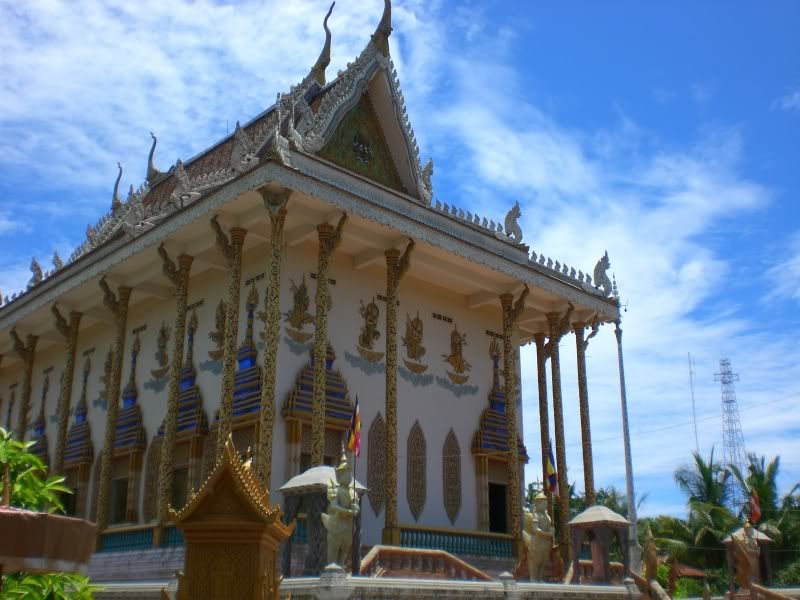
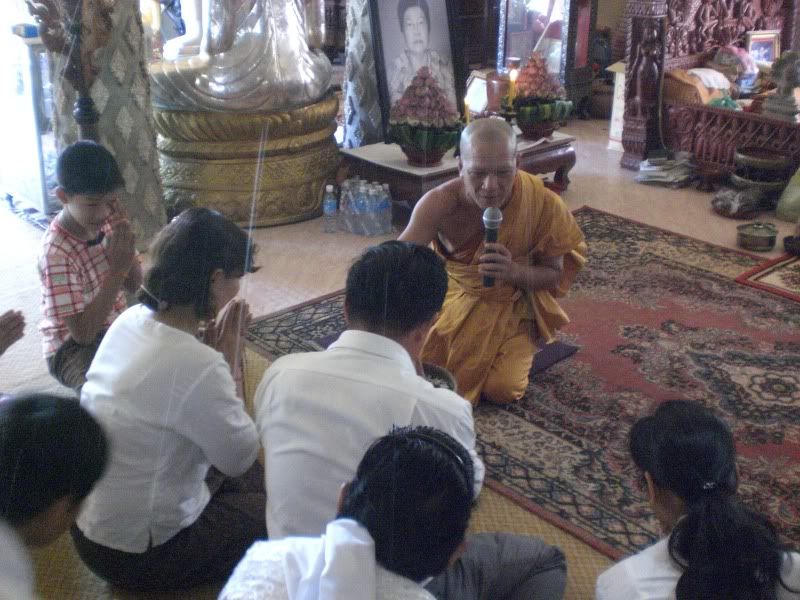
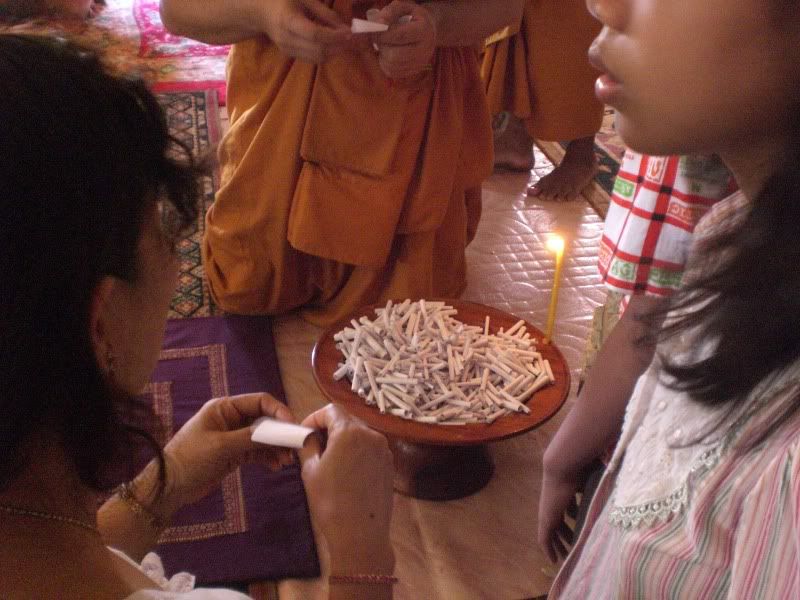
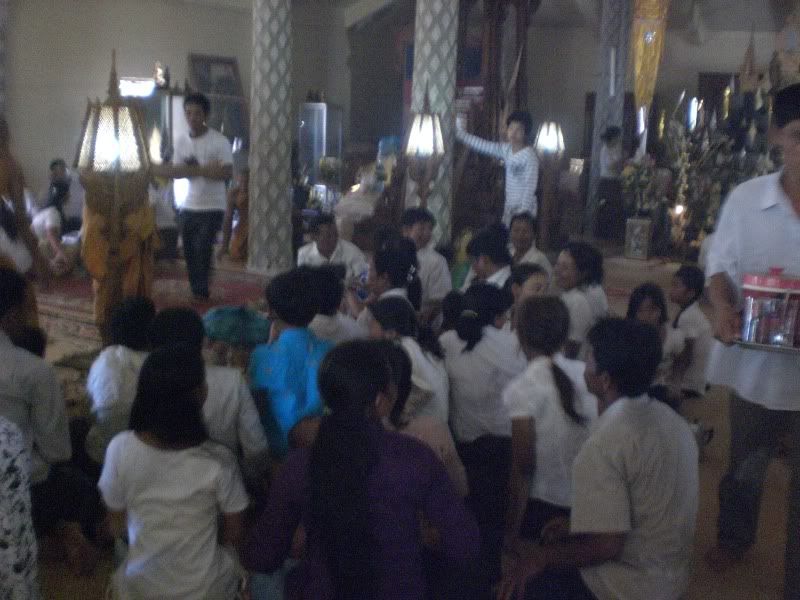
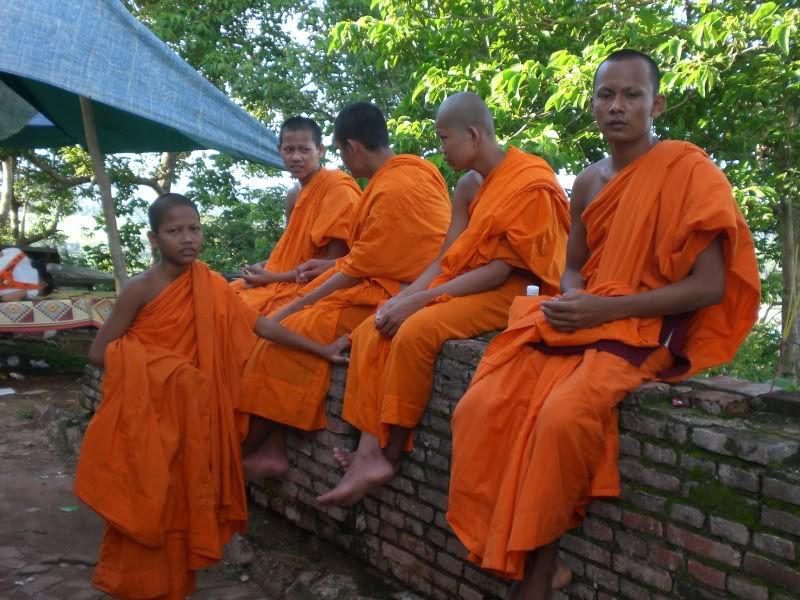
At the doorsteps of the pagoda, the noise of traditional Cambodian music and the smell of incense instantly overwhelmed me. I took off my shoes and hastily left them next in a pile of at least a hundred others. Once inside, my landlord, his wife and his two young children, age fourteen and twelve, dropped to their feet. Bowing repeatedly, they murmured some Khmer words, possibly a prayer for safety and wealth. Upon paying brief respects, the family “diversified” their responsibilities. The kids, as if pre-programmed to do so, swiftly took jasmine flowers to the front alter, bowed again and laid them down respectfully. My landlord prepared a handful of incense while his wife prepared food and drinks as offering. The family then gathered at the feet of a monk, pushed the food towards him and asked for blessings. Holding a microphone, the monk began his prayer in monotone. He put his hand into a bowl of “holy water” and sprayed them onto the family as he chanted. It was only afterwards which the family showed some sign of relief – at least the first parts of the necessary rituals had been completed.
The family continued their busy errands around the temple. There were numerous statutes of Buddhist gods, all in different emotions. The family rushed around the temple to make sure that they did not neglect to put down money, food and incense for any one of them. As I watched them and others in silent amazement, my landlord quietly came over.
“This is a national-level temple,” he said proudly. He pointed to the picture of Hun Sen, the Prime Minister, and the King’s family on the left. “They worship their ancestors here too,” he added and hurried off again.
These scenes reminded me of the Chinese tradition in which two calendar days are allocated each year for visiting the graves of ancestors. The anxious crowd inside pagodas also reminded me of the people elbowing each other every Lunar New Year to get the first blessings and pay the first respects at the temples.
Except these Chinese festivities do not quite match the frenzy of Cambodia’s P’Chum Ben.
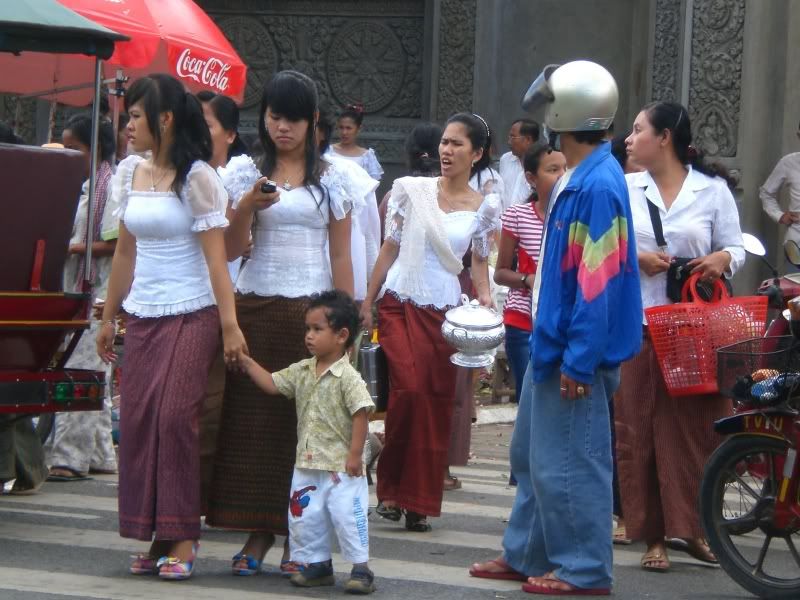
According to my local colleague, P’Chum Ben is all about going to the right pagoda, praying at the right time, using the right monk, bringing the right food, paying the right amount of money (and to the right person)… In short, it involves meticulous actions. And the scale of the activities during the P’Chum Ben period is certainly unmatched. Tuktuk drivers, instead of screaming for tourists, wait patiently outside pagodas for business. My landlord’s car ran on snail’s pace for two hours before reaching the pagoda. Everybody seems to be heading somewhere, to all different directions. Some travel as a big family, others travel with just a few relatives. In any case, congestion and frenzy may be the two best words to describe the activities at this time.
P’Chum Ben appears to be an expensive but necessary part of Cambodian life. The period lasts for 15 days and almost every family, from poor to rich, would visit pagodas in their ancestral homes. Visiting one pagoda, however, is not enough. Cambodians believe that their ancestors’ spirits fly to different pagodas in search of their living relatives but they cannot eat the food offered by other families. The locals would not stand a chance of “starving” their ancestors by visiting just one. Seven. Seven is the perfect number.
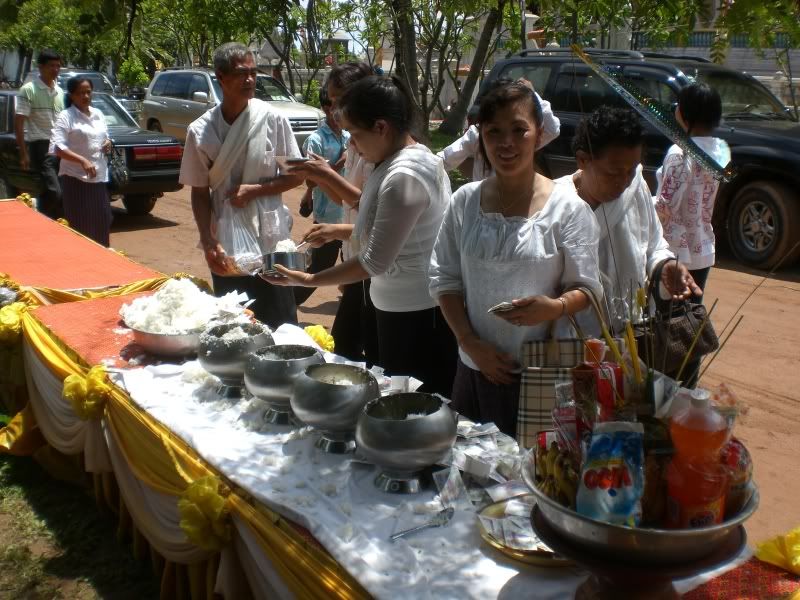
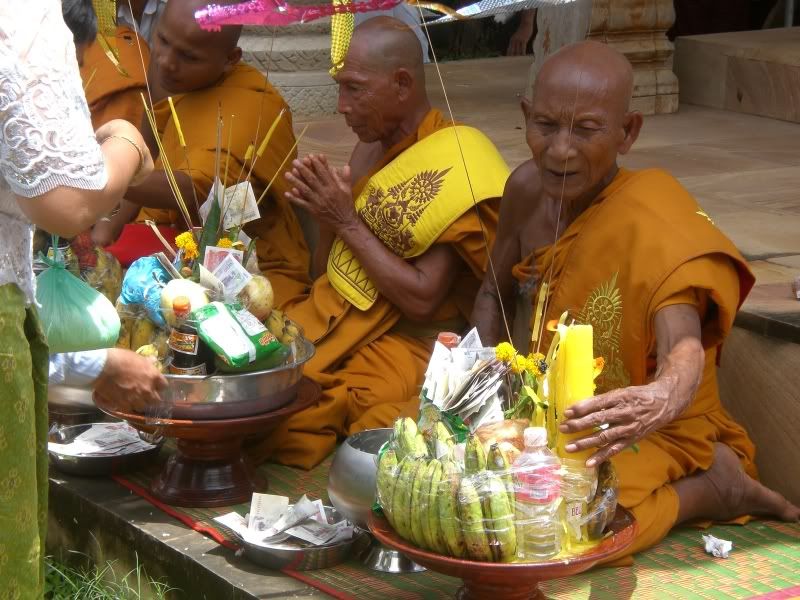
What’s also important is the food and money offered. Around the pagodas are lines of silver-plated containers where visitors lined up to dump in rice. Small alters decorated with bananas, apples, oranges, bamboo-leaf-wrapped sticky rice, etc. have little basins on the front to collect money. Money is attached to the baskets of food which women carried in for the monks. I saw an extended family coming in with two bags of 50kg rice, several boxes of water and soft drinks, fruits and rice. Food and money is surely a big deal. You cannot offer enough.
Finally, by noon, the crowds began to dissipate. According to my landlord, you can only pay respects in the morning. Some old people would come once in early morning, say, at 4am, and return again at 10am or 11am.
I left the pagoda with many questions which I do not dare to ask. For instance, what may happen when you visit seven pagodas and still fail to “meet” your ancestors? How can you be sure not to miss your ancestors? Where would poor people get the money to prepare all these food and travel to seven pagodas in the provinces? And what happens to the mountains of food given to the monks? I wonder if all these rituals are out of respect or out of fear, whether people are asking for forgiveness, protection or wealth. Do people know what they are praying for? Do they know what the monks are praying?
Returning to the office on the following week, I saw several colleagues who, in subtle ways, gave different answers to these questions. When asked about his four-day P’Chum Ben holiday, one joked that his wife and mother did all the work. He just waited outside because, according to him, “how can one pray when the pagoda is so noisy and crowded?” Another also smiled when talking about P’Chum Ben, but for a different reason. He was sincerely praying for his ancestors, especially relatives who died in the wars. He also enjoyed his time with the extended family. “We went to Kampong Som (or Sihanoukville) together. We only meet like this once each year.” Surely, P’Chum Ben appears to have multiple layers of meaning – what you make of it, I guess, matters more than what others feel as well as what the original Buddhist, religious or spiritual meaning was.
Thursday, 24 September 2009
T'wer Dam K'nia -- Do as Your Neighbours Do
A few weekends ago, I went on two trips to Takeo and Kandal, both provinces south of Phnom Penh. The Takeo trip was with Savon, my co-worker at the ILO, and with the purpose of visiting her rural home and her parents. The Kandal trip, with two Hong Kong missionaries Miu-Ling and Piano, was to visit a children sponsorship centre and a village church set up by the Asia Pacific Free Methodist Association (APFMMA).
It was especially interesting to count the number of road-side food stalls along the way. For example, while on the back of Savon’s motorbike for the three-hour trip, I counted 35 stalls selling grilled beef on one five-minute stretch. About half an hour later, we saw a line of 19 stalls selling melons right next to each other. After a while, yet another 10 stalls sold grapefruits next to each other. There were similar scenes on my trip to Kandal. There was a line of stalls selling lemons and ten-plus stalls selling preserved vegetables. But… how can these stalls make money when they all sell the SAME THING? I became very puzzled by this foolish business strategy (which seems to be quite prevalent).
When I posed this question to Miu-Ling, a missionary here for six years already, she noted that the locals have a “t’wer dam k’nia” attitude. The phrase literally means “to do and follow together.” In other words, when some business seems to work, then all neighbours would imitate. Imitation is not only acceptable but encouraged; in fact, in extreme cases, people doing something different (such as selling fresh vegetables when everybody else sells preserved ones) would be despised upon. In my opinion, the resilience of this deep-seated attitude is indicative of the lack of entrepreneurship development, i.e. the lack of training and economic opportunities.
Let’s go back to the 35 grilled beef stalls and the 19 melons stalls. Why would a seller decide to sell identical products as their neighbours? One reason is poor sourcing. Located in remote area and often operating in small-scale, it is difficult to source products from big wholesalers or at cheap prices. In effect, all neighbours may source from the same middlemen and end up getting products of the same type and quality. Another reason would be poor market information. Since the provincial government, communes and local communities lack resources to access information about market supply and demand, sellers have no idea what products they should sell and at what prices, as well as where they can best source their products. Thirdly, there is poor access to markets. On the one hand, rural producers do not know where they can sell at good prices; on the other hand, they have no money and facility to help store their products or transport them to larger cities, such as Phnom Penh. In the end, they begin to sell on the side of national roads with minimal, if any, profits.
Nonetheless, more fundamental problems leading to poor entrepreneurship skills include poor capital base, which in turn relates to the lack of income generation opportunities, productivity-enhancing skills, vocational training and adequate infrastructure. A recent report released by the International Finance Corporation (IFC), the private sector arm of the World Bank, and the Asia Foundation highlighted limited job creation despite overall economic growth in Cambodia. Surveying 65,507 businesses operating within three kilometres from all 24 provincial capitals, researchers found that 97% of businesses fall under the category of “micro-enterprises,” hiring less than 10 workers. More specifically, 68.8% of businesses responded that they are sole proprietors (hiring no workers). Many of these surveyed businesses are also “young” – 41.5% have been in operation for two years or less. An additional 21.8% have been open for three to five years. This trend could be indicative of the growth of entrepreneurship, but may also imply an unstable business environment. This detailed study also shed light on the types of businesses most operators engage in. In Phnom Penh, for example, 12.3% businesses are small “neighbourhood stores” and 14.5% are “street stalls” (different from “restaurants”), while most types of professional services each occupy just between one and three percent of all businesses. The overall picture generated by these statistics suggests that there are limited opportunities for productive wage employment in urban areas, let alone rural areas. In effect, most rural families and even urban workers earn low wages as low-skilled workers and in the informal economy. They would not have the savings for setting up profitable businesses or have access to credit lines necessary to finance business operations.
This lack of productive employment complements other problems of income generation. Travelling to rural areas of Takeo and Kandal, I was struck by the fact that ALL (not an exaggeration) households grow rice. Most families might grow other subsistence crops, such as green onions, for their own consumption. Since paddy-growing requires much irrigation, fields near the river may get two crops each year; but those located further away may only harvest one crop. This stubborn specialization in rice-growing can be partly attributed to cultural perceptions. Farmers fear criticisms from neighbours for doing something different (again, “t’wer dam k’nia”). Therefore, even though growing cash crops, such as vegetables, fruits and mushrooms, require less water and can yield more crops each year, farmers appear reluctant to change on their own. In effect, the whole rural community must be educated in order for change to occur.
Bigger obstacles for diversification, though, probably include the lack of skills and infrastructure. For instance, fish can usually sell for good prices in the market. However, fish-farming is more than just digging a pond. Farmers must know how to feed the fish, how to pump oxygen into the ponds and when to harvest the fish for sale. Other soft-skills, such as basic numeracy and book-keeping skills, are also necessary to account for profits and expenditures. In other words, training in basic and technical skills is necessary for income generation. To add to improved knowledge among rural households, external infrastructure constructed by provincial or communal authorities is necessary to expedite income growth. The construction of water pumps and roads are examples of basic infrastructures to facilitate growth.
To end my long arguments about entrepreneurship development in Cambodia, I feel that the “t’wer dam knia” attitude must be casted off through community-based training, peer-learning and collective brainstorming for new income-generation ideas. As I relax amidst the endless paddy fields, an idea came to mind. Is ecotourism a feasible for the economic development of these rural areas? With some hospitality training and accommodation facility, the community can set up some home-stay programmes for those travellers interested in experiencing the rural lifestyle – local food, local work, local hospitability. Or, there can be photography trips to the rural areas and workshops to teach tourists how to capture vivid pictures of the seemingly trivial but deeply cultural aspects of Cambodian life. Indeed, the poor people in rural Cambodia need to imagine and they also need the means to put to action their imagination.
References
“The Provincial Business Environment Scorecard in Cambodia: A Measure of Economic Governance and Regulatory Policy,” April 2009
“Listing of Business Establishments in Cambodia’s Provincial Towns and Selected Urban Areas,” March 2009
Tuesday, 22 September 2009
Photos from Kandal Province
 This statute is a landmark for "Tda K'mau" -- the Black Old Man -- a legendary wise man.
 We took a tuk-tuk from Phnom Penh to the southern part of Kandal province. After about one hour on the dusty road, we arrived at a pier. From there, we left the tuk-tuk driver and hoped on a flimsy boat to cross to the island.
 I admire the local wisdom in house-building. Their houses are often two-storey building: the ground level has the kitchen and open space. Under the midday heat, the shady portions can actually be cool with light breezes! The sleeping area is located on the second floor. It is elevated to avoid flooding. Tropical rains, indeed, can be quite brutal!
  The women on this island make a living by weaving these bamboo mats. They come in different colours. As we walked deeper into the village, we saw many households with women diligently weaving despite on a Sunday morning.
 This is a scene of the worship. Since most participants are sponsored children and their friends, the congregation is very young. They all love loud music... Although the microphones, the keyboard and the drums were way too loud, people were having fun.
 Some village children gathered to meet strangers =)
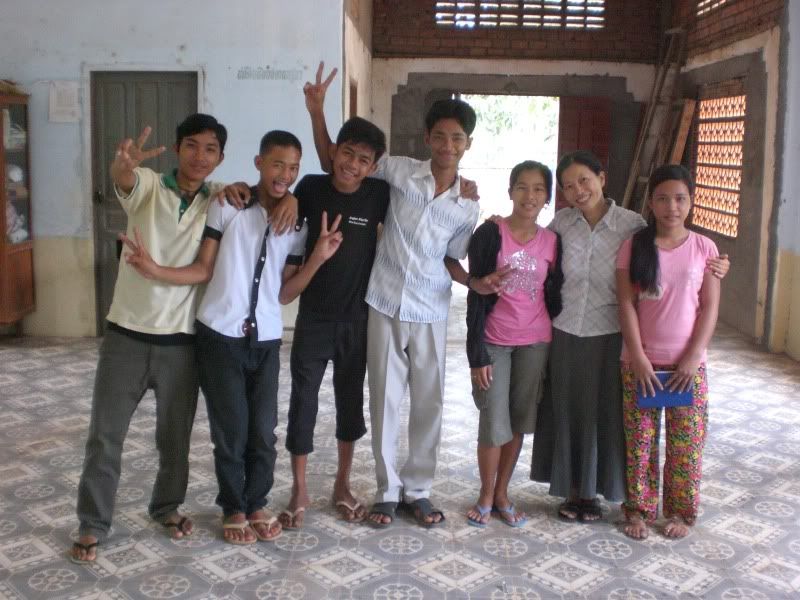 Miu-Ling (second from right) with the children who take English tutor lessons at the children centre.
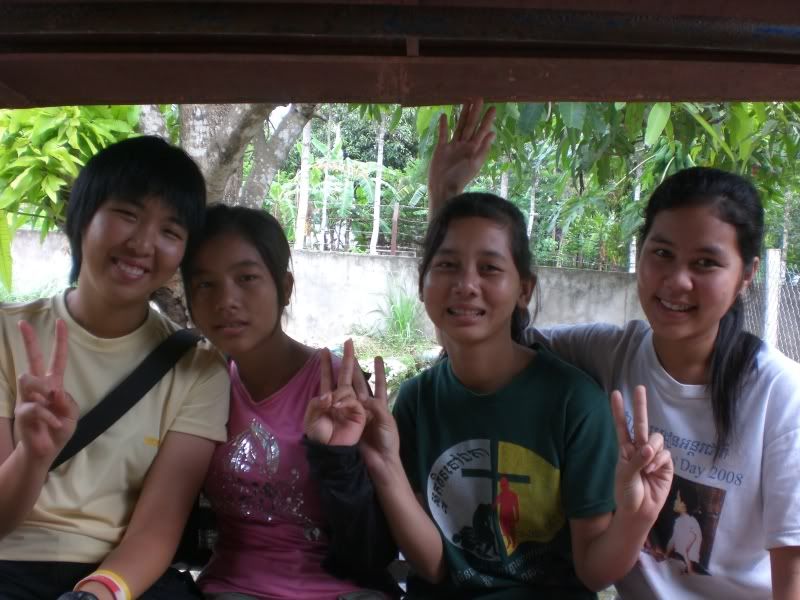 A few children and me chilling on the swing as we waited for Miu-Ling to finish off her day of work at the church.
 Thursday, 17 September 2009
Identifying Barriers to Education -- Reflection from Takeo Trip
When Savon was ten years old, she remembered that her second sister, then just graduated from Grade Nine, was a dedicated student and especially enjoyed practicing French at home. But then, the rainy season came. The family, with three younger school-age daughters and one infant son, did not have enough manpower to prepare the fields for the new crop.
The sister understood the family’s difficult situation. For days, she observed her oldest sister (already out of school) working in the field. One time, she saw her big sister dragging some heavy equipment and all of a sudden, she lost balance and fell hard on the ground. She cried, cried and cried. That very next day, the second sister decided that she should help in the field. She told her parents that she wanted to leave school.
Multiple Barriers to Education
While this story took place in a small farming village in Cambodia’s Takeo province, the plot is not new at all to many agricultural communities in the country. In fact, every year, many young children drop out from school as a result of either urges from the family or personal decision. In the case of SAVON’s second sister, her joining of the workforce was influenced by a number of factors: poverty, peer pressure from neighbours, cultural bias against girls’ education and the lack of public awareness on the value of education.
Most families in rural Cambodia are subsistence farmers lacking in skills and capital to improve their lands. As a result, their small scattered plots often bring low yields. For Savon’s family of eight, in particular, rice from their own fields may not be enough to feed everyone. To squeeze money for food, many parents in similar situations have no choice but to eliminate non-essential spending on books, uniforms and transportation.
SAVON’s recalled vividly that the neighbours also pressured her parents to stop their daughter’s education. “They came and told us that their fields were already prepared… but that ours were not,” she said. Many of these neighbours have already pulled their daughters out of school. SAVON’s parents hence had long seen how dropped-out children contributed to farm work. In need of food and manpower, past experiences shared by their close friends and relatives certainly would influence the parents’ position.
Working against rural girls as well were traditional gender biases. In the past, only boys could go to school at the pagodas. Girls had to stay at home to do chores or take care of siblings. Although most schools now accept both boys and girls, deep-seated perceptions (especially in rural areas) often undermine girls’ education prospects. Very often, even the nine years of basic education would be considered too much.
Furthermore, daughters are seen as “less valuable” than sons. They have less strength to carry out farm work and often get married by 16 or 18 years old. In fact, when daughters marry in the rural areas, the bride’s family often pay more money and contribute more land than the bridegroom’s side. In sum, in the parents’ minds, investment in girls’ education is not commensurate to future gains (losses, to be more accurate).
As Savon delivered the story of her sisters, I can sense bitterness about the country’s poverty and frustration towards the barriers for accessing education. She is now a university student at the Royal University of Phnom Penh and her academic achievements are exceptional compared to many of her peers. When asked about how she reached tertiary education, peer pressure and cultural biases, she commented that her commitment to education and stronger public awareness have moved her parents.
In some parts of Cambodia, commitments from students and teachers have served to break the vicious cycle of low education and low productivity. As a high school student, Savon was consistently the top of her class. She also worked hard to obtain vocational training certificates (e.g. secretarial skills, agriculture, etc.). To showcase the students’ efforts and academic progress, teachers initiated award-giving or certificate-granting ceremonies where all parents and villagers would be invited. These awards often came with verbal compliments and certificates, and sometimes book, stationary and monetary gifts as well. Instantly, bright students became the “famous people” of the village. Parents, now feel proud of their children’s achievements, thus became more willing to finance education.
Is There a Straight-Forward Solution?
The experiences of Savon and many other young girls in Cambodia remind me that education is long-term investment and a luxury for poor people who struggle to fill their stomachs every day. In effect, the $20 to $30 a month which a young daughter can earn by working a field worker, domestic helper or souvenir-seller bring more tangible benefits and satisfy urgent needs. A poor household cannot afford to have no income from their children despite the fact that a daughter with a university degree can earn more than $200 a month in the future.
Since access to education is closely linked with a myriad of economic, cultural and social issues, many development agencies have adopted a multi-pronged approach to increase enrolment and attendance. On the one hand, some donors and NGOs have focused on the supply side of education, namely the quality of teachers. Curriculum development and the design of teaching materials are also key issues to attract children to school. Some active agencies in this area include USAID, the Japan International Cooperation Agency (JICA) and the Asian Development Bank (ADB).
On the other hand, others have focused on the demand side of education. To reduce the financial burden posed by sponsoring children’s education, some agencies have started to train families on income generation activities, such as more productive farming methodologies, or to engage adults and youth in labour-intensive infrastructural projects, such as improving roads and building bridges. The government, together with donor agencies, have started conditional cash transfer programmes (CCTs). Participating households can get monetary awards for making pre-specified investments in the education and health of their children. One such prominent example in Cambodia would be the World Bank’s Cambodia Education Sector Support Project (CESSP) Scholarship Programme where a number of $45 and $60 scholarships are given to lower secondary school students in participating schools.
A LAST TWIST – While most development specialists would agree that poverty is the single biggest obstacle to education, a World Bank study published July 2009 showed more scholarships would not necessarily translate into higher attendance and better test scores. Using the CESSP Scholarship Programme as an example, researchers found that the enrolment rates of recipients and non-recipients differed by 16.2 percentage points between February 2006 and June 2007. However, the first $45 is more “cost-effective” in boosting school attendance than the next $15. Researchers also designed a mathematical model to measure the relationship between the size of the scholarship and test scores. The results showed no significant differences (not better, not worse) between the test scores of scholarship recipients and non-recipients. These recent findings may suggest that accessing education is far more complex than giving scholarships and income generation activities. There may be underlying socioeconomic factors, such as the parents’ education background, the family’s means of livelihood and the living environment, etc., which hinder academic progress.
I wonder what has happened since that fateful day when Savon’s second sister decided to leave school. Without adequate schooling, there are few choices of occupation. With two children, her sister has to find more money for the family’s livelihood. Recently, she started selling vegetables in Phnom Penh. Revenues from her small business, net of fees and rental for her apartment and stall space in the city, leave just a small amount to be sent home. Making a living is still a problem, apparently.
As for Savon, a university degree does not guarantee success. Like many students, she now faces the gloomy labour market where youth are often left out from productive employment.
References
Deon Filmer, and Novert Schady, “Are There Diminishing Returns to Transfer Size in Conditional Cash Transfers?” World Bank Impact Evaluation Series, July 2009
Wednesday, 16 September 2009
Photos from Recent Takeo Trip
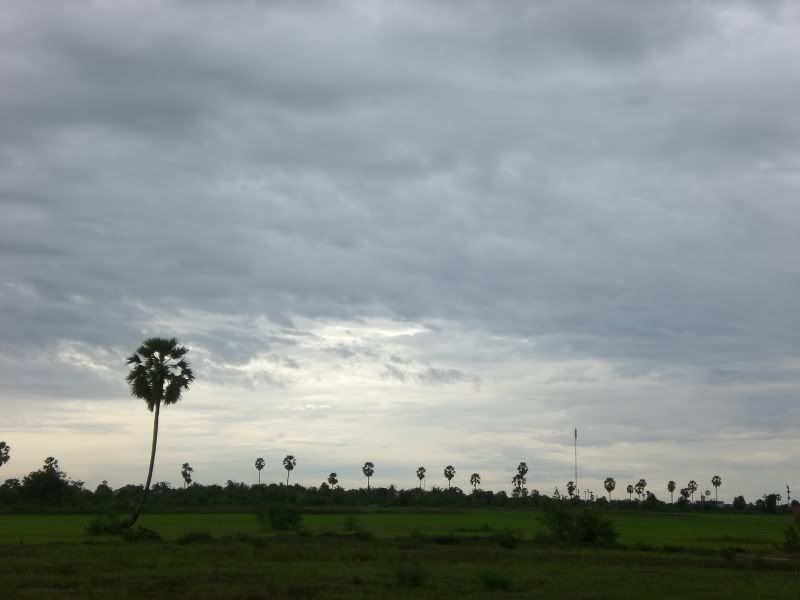
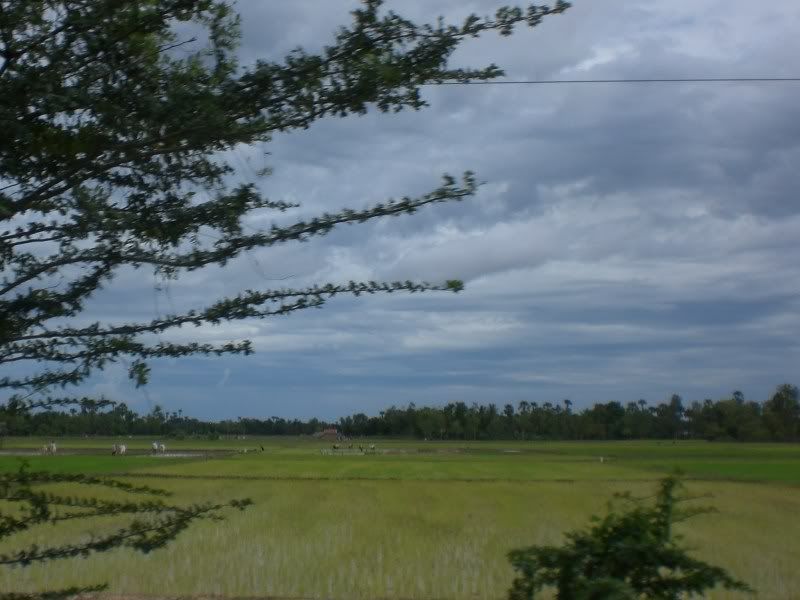 Paddy fields stretch mile after mile after we left Phnom Penh. We past through Kandal Province on the way.
 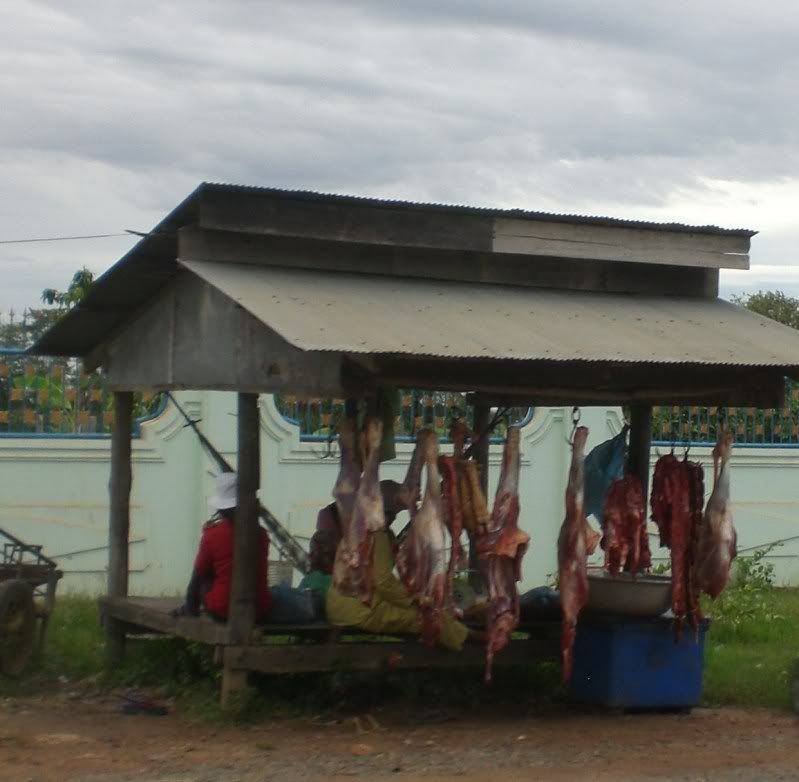 The Khmer festival of P'chum Ben has started. It is equivalent to the Chinese ghost festival. According to my friend, pork is the "meat of the festival." People would make rolls out of sticky rice during this 15-day period.
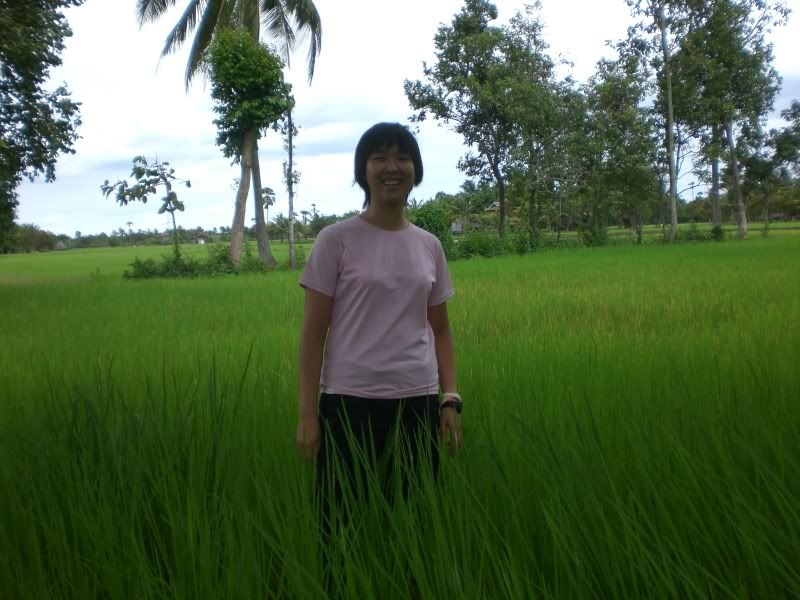 Me standing in the middle of rice fields. According to the locals, this is actually a bad sign -- because the fields are not soaked with water. Growing rice needs lots of irrigation. Therefore, growing is difficult when rain is scare or when the field are located far from the river.
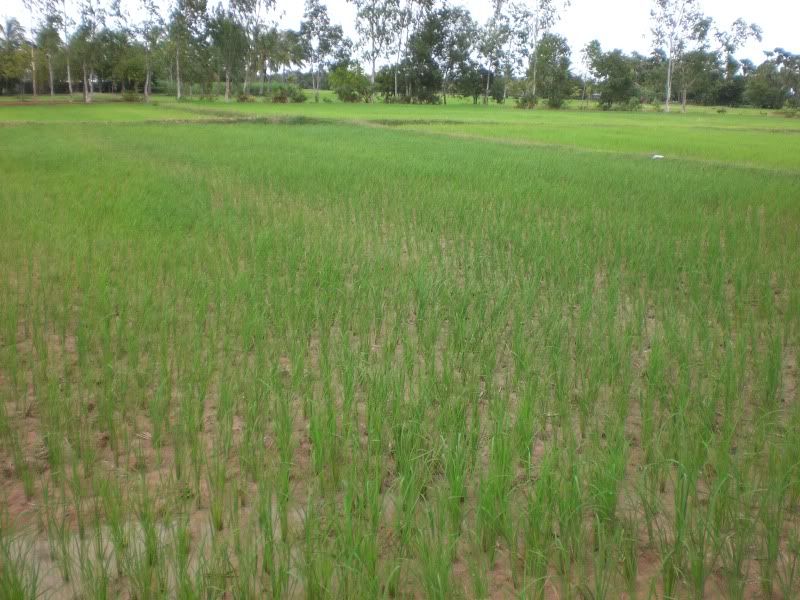 Rice fields surrounding Savon's house. The field has become smaller and smaller in size as her sisters (four in total) marry. According to rural tradition, the bride's side must contribute land.
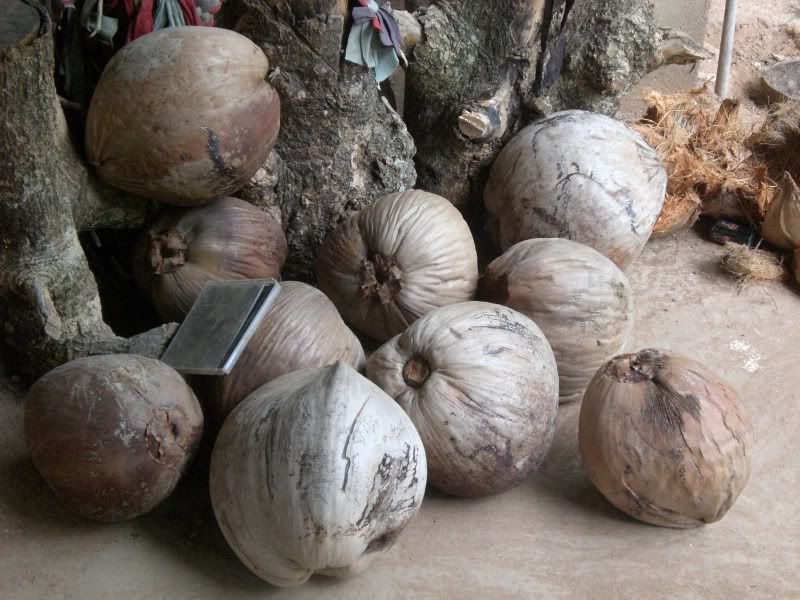 "The Oldest Coconuts" in Savon's house. When cut open, there would be enough meat to make a meal.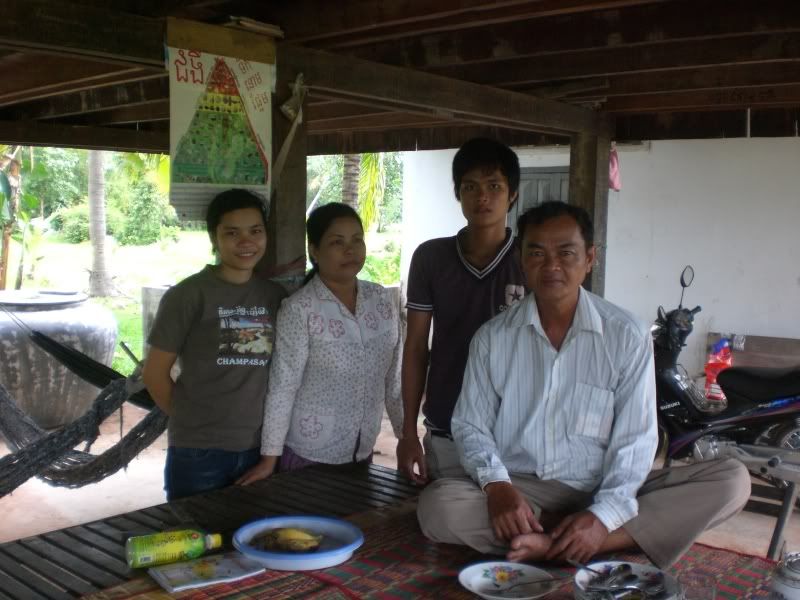
Monday, 14 September 2009
Brief Update and Message
Sometimes, these challenges may be small things in life – navigating the busy traffic with my bicycle, biking in the tropical rains (and becoming soaking wet), wading through knee-deep floods, combating floods in my apartment, killing the intruding army of ants, cleaning up a dead mouse on my doorsteps (!!) and enduring black-outs at night. But they all add flavour to my life. I find my body slowly adjusting to the heat (e.g. I do not sweat as much now in my home and can often sleep without the fan on.). I find it enjoyable to bike in busy traffic; sometimes, I even secretly rejoice when find a way past big trucks, cars and motorbikes stuck in traffic jams. I also wonder about getting motorbike if I return to Hong Kong or to the U.S.
The local markets, though smelly, surprises me every time. There are so many types of vegetables and fruits I have never seen before. And also the people, such as the random man on Mao Tse Tung Road who spoke to me in Mandarin, can turn out to somehow cross paths with my work or my life here. This man who I just mentioned, for example, turned out to have worked for the ILO as a Khmer-Chinese translator. The random encounters with co-workers (e.g. Bunleng and Sisovann) at the Toul Tum Poung Market are often pleasant surprises as well.
In addition to the happy and exciting bits, there are of course times when I must overcome the loneliness. I am especially scared to go out at night and even the landlord worries when I return home after 9pm. Very often, on Saturday afternoons when I read books and relax, I miss the vibrant city life of Hong Kong and Washington DC. I miss the movies, the easy transportation, my friends, etc.
Challenges and new ideas also come to me every day at work. I am starting to learn about the UN bureaucracy but also enjoying conversations with local colleagues and specialists from Bangkok. I am struggling to learn about how to do employment assessments, how to negotiate with employer organizations, how to develop proposals (inc. relevant development objectives, immediate outputs, activities, indicators, etc.) and how to reference other countries’ experiences in delivering employment services and developing national skills standards. Work also requires patience – patience with local colleagues, patience with editing poorly written English reports and patience with the UN – while reminding myself day-by-day of my internship (and career) goals and keeping the ball rolling for good project ideas.
All in all, despite loneliness, long work days and occasional “disasters” at home, I am grateful and content with what I have here. I am especially grateful for Miu-Ling, Hwee-Ping, Davis, Piano, Angie, Pastor Ng’s family and Pastor Lam’s family, etc. and our almost weekly gathering at Lao Di Fang. I am grateful for the home group – for Edith and Rick and the enthusiastic Filipino group-mates – and for the kind advice of my co-workers (Sophorn [x2], Joseph, Sisovann, Anne, Tuomo, Michiel, Manuela, Geoff, David, Amy, Sukti, etc.). I thank especially for spiritual support such as from my parents and Carina.
Friday, 4 September 2009
Children's Work and Their Right to Education
In the summer of 2006, I left the village of Bhoodanatham with tears in my eyes, waving goodbye to the children there. For a week, I lived among the villagers as part of a research trip for a local start-up NGO. I was responsible for collecting information on education and therefore got the rare opportunity to interact with many children in the pre-school and the primary school. My most memorable moment was when I asked the fifth-graders, with my broken Tamil, what they would like to be in the future. They answered: teacher, doctor, nurse, policemen, etc.
Because of poverty, many girls would have to leave school after 12 years old to help with family chores; boys may leave after 15 and become full-time workers in their primitive family fields. I was saddened by the difficulties to access education there – chronic poverty, lack of schools, poor road connectivity and low teaching quality were among the many reasons that have pushed young children out of school.
Now in Cambodia, the issues of education and child labour come back to mind. To provide additional income for their struggling families, many children leave school for work. Some of these children may only leave the school system for short stints (e.g. to assist with seasonal work); but many never return to formal education. These dropouts represent forgone productivity and increased risk of social unrest and undesirable social behaviours, such as violence and drug use. In the long run, the economic implications for Cambodia can be huge. With these concerns in mind, development agencies and NGOs have long tried to reduce child labour. But the complexity of the child labour issue and the nature of children’s work have made such efforts difficult.
The first difficulty relates to the very definition of child labour itself: Which types of productive work (i.e. economic/non-economic; family/non-family) should be counted towards child labour? Which hour thresholds (e.g. one hour each week, one hour each day, etc.) should be considered? On what basis should these decisions be made? Let us use an example. Using 2001 data on child labour, a joint ILO-World Bank-UNICEF study in 2007 found that 76.2% of children have participated in family work for at least one hour each week, while 25.4% worked more than 28 hours each week for their family. These figures indicate that when children work, they tend to participate in family business, such as sowing or harvesting family fields and helping with family-run businesses. Other observations show that more than 50% of children conduct at least seven hours of housework each week; a similar proportion of children engage in economic activities for seven hours each week. However, while almost all children would be exempted from doing housework intensively, 23.4% and 16.5% of children reported doing economic activities for 21 and 28 hours each week respectively. These figures indicate that many children may conduct both non-intensive economic and non-economic activities. But for some children, economic activity can take up 3 to 4 hours of their time each day, which may limit their time to study or to play.
The second difficulty relates to the setting of children’s work. Cambodia is a signatory of the core ILO conventions against the “worst forms” of child labour and has national laws prohibiting child labour below the age of 15. Although the country’s enforcement capacity is low, the non-government sector and the donor community have, to some extent, tried to reduce the incidence of child labour. It is much easier to track children’s work in the formal sector, such as garment factories, registered construction sites and large private businesses. In these sectors, child labour has become less prevalent with time. Unfortunately, most children work in the non-formal sector, which is subject to less direct monitoring and a “natural shelter” of hazardous work. Some such activities, such as scavenging, begging, child portering, souvenir-selling and newspaper-vending, favour child labour because young children tend to solicit more sympathy, request less pay and are more agile. However, without proper registration, it is almost impossible to map out where these children are.
Thirdly, children often fall out of the radar through working within and travelling with private homes/families. Many young girls, for instance, work as domestic workers, taking care of children, washing dishes, cleaning the house and cooking meals. For some girls, the family may provide food and accommodation for the girl. But other girls, the employer may force them to do hard labour too intense for their physical development and may also exploit them physically or sexually. Sometimes, the young domestic helper would travel with the employer away from their provincial homes. It hence becomes even harder for the sending families to monitor the working conditions of their children. In any case, the work activities and conditions of work are concealed by the employers. It is almost impossible to collect qualitative and quantitative information about who are currently in domestic work and the nature of their work unless either the child or the employer voice out.
Last but not least, children workers are more vulnerable to engaging in illegal activities, such as trafficking and prostitution. Poor parents with low education may be deceived by middlemen who claim that their children can engage in more productive activities in cities or abroad. In effect, instead of going through the right channels (there are legal protocols to follow for labour migration, including obtaining the official certification for recruiters), these children will be taken away illegally. Children are also susceptible to commercial sexual activities (CESC), especially in touristy cities like Siem Reap and Phnom Penh. Again, these clandestine activities are hard to trace but children are most likely to engage in work damaging to their physical and moral development.
Indeed, it is disheartening to see children drop out from school and enter the workforce at a young age. But how can we work to reduce child labour and even to eliminate the Worst Forms of Child Labour (defined by ILO Conventions)? I hope to learn more about ways to prevent child labour and to rehabilitate existing children workers as my internship continues.
Resources: Measuring Child Labour: Discussion Note on Country Consultation in Cambodia, Understanding Children’s Work (UCW – an Inter-Agency Research Cooperation Project on Child Labour), March 2007
Wednesday, 2 September 2009
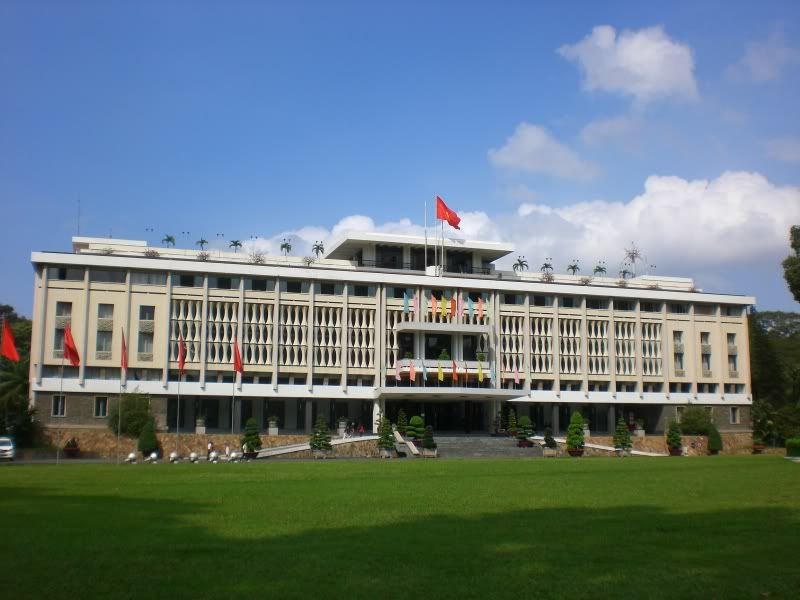
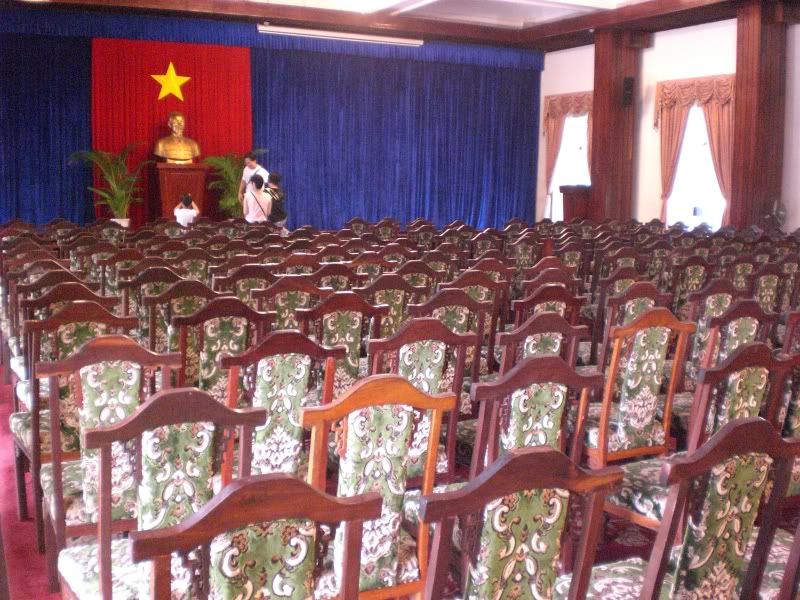
Palaces


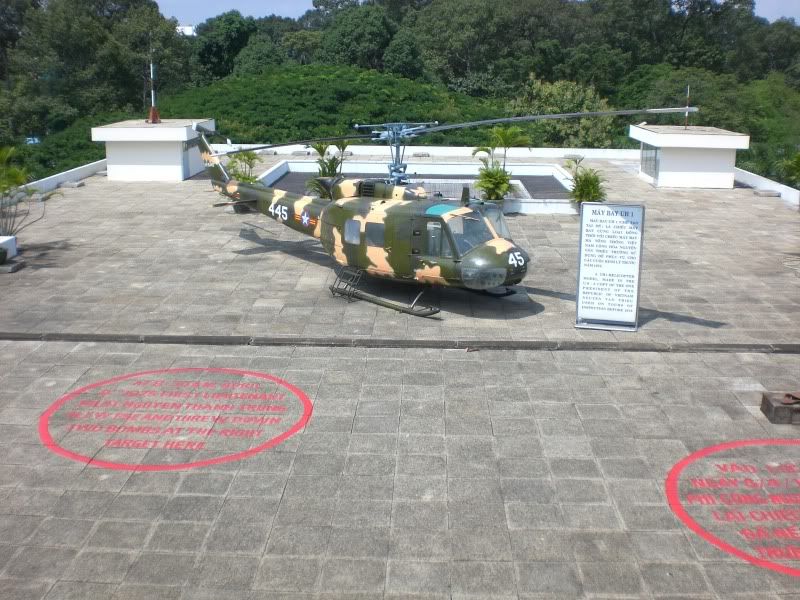
What they workship/respect:

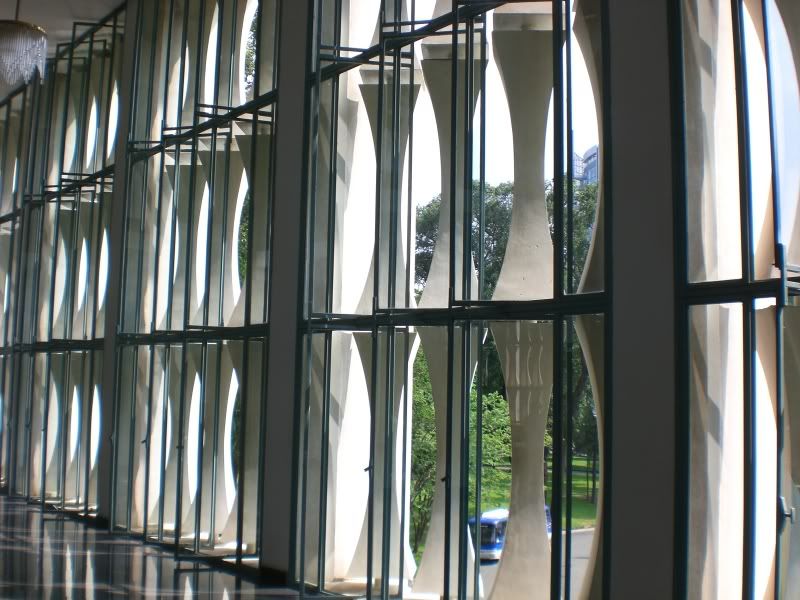
View from the windows:

Main Purpose Today: