I also recall the Phi Beta Kappa award ceremony last May at Grinnell College. The awardees, donned with their black graduation gowns, sat motionless on the stage overlooking the eager audience. The decades-old formalities of the ceremony matched the solemn atmosphere in the historical Herrick chapel. When the actual presentation of awards came about, one by one, awardees went cautiously to centre stage. Restrained applause would follow and sometimes, parents and friends would loosen up and cheer in exuberance.
These ceremonies are happy occasions, though I feel that they always fail to be inspiring. They miss the special something which provokes thoughts beyond those two hours of applause.
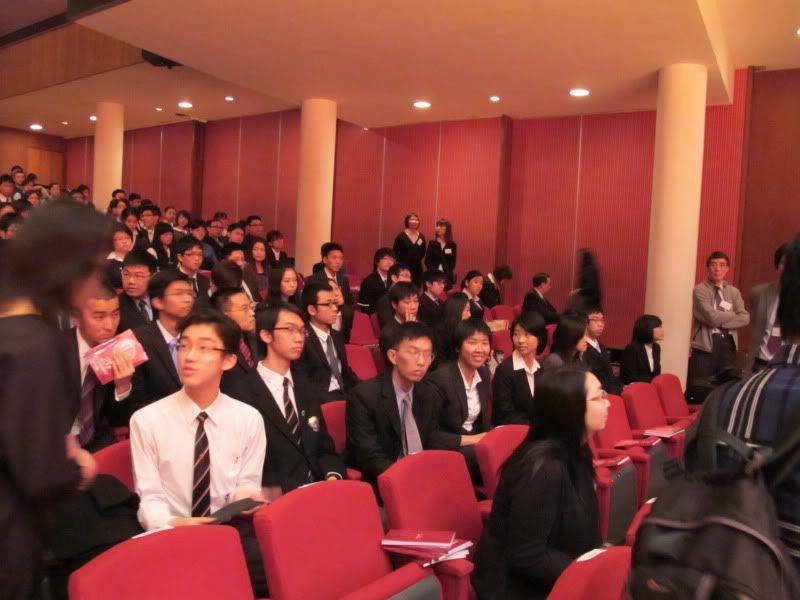
More recently, in late March, I attended an inspiring award ceremony. In fact, I would go so far to say that it was a “celebration of life” because it brought forth diverse personalities and more interestingly, awarded yet-to-be realized ideas and future success. The ceremony highlighted the broad vision of the funder (i.e. the Sir Edward Youde Memorial Fund) and its belief that the basis of a dynamic society is diversity and innovation.
This year, the Fund gave out more than 800 prizes, among which were a few “grand prizes” covering overseas studies tuition costs. The “grand prize,” in my humble opinion, was an unlikely award for me, as I have been involved in a professional field often considered “impractical” and “unconventional.” Unlike those studying in popular fields, I could not present any professional certifications (e.g. CFA, CPA, etc.), boast my internships in renowned corporations or show off my hefty paycheques.
But I ended up sitting among six other grand prize awardees. It was then I realized that the seven of us were really different. There were a future medical engineer, East Asian archaeologist, education psychologist, urban planner and violinist. I planned to study development studies, specializing in public policy and civil society empowerment. Our success – whichever way it is being defined – is uncertain but we were nonetheless rewarded for steadfastly pursuing own interests despite popular pressure. Perhaps, these awards may enhance the city’s future stake as a medical services hub, a centre for ancient and contemporary arts, a confluence of world-class educators, a resource centre for urbanizing Asian cities, etc.
Interacting with these awardees affirmed my belief that, if one considers a society as a human body, there needs to be body parts of differentiated and coordinated functions. If we take a long view of societal development, instead of the narrow view of immediate financial and material satisfaction, there requires an environment that encourages a broader definition of “achievement” and multiple paths to “success.”
Soon after, prizes for disabled students were conferred. The Fund also offers scholarships for students with physical disabilities and provides financial support for such students to purchase gears that will enhance their studies. Although most people knew about disabilities, it was heart-warming to see almost twenty disabled students being recognized for not only their academic achievements but more importantly, their life stories of overcoming obstacles and challenges. One by one, the awardees slowly rolled out their wheelchairs; others, being blind, clinched tightly onto student assistants as they mounted the stage. Yet others, perhaps with other less visible disabilities, received the award unaccompanied.
One of the awardees, I later learned, was a mathematics enthusiast. But in all these years, she attended classes on her electric wheelchair. Her body is paralyzed from the neck down except for a few fingers. I cannot imagine her difficulties learning to read and write, let alone formulating and visualizing complex equations in her brain.
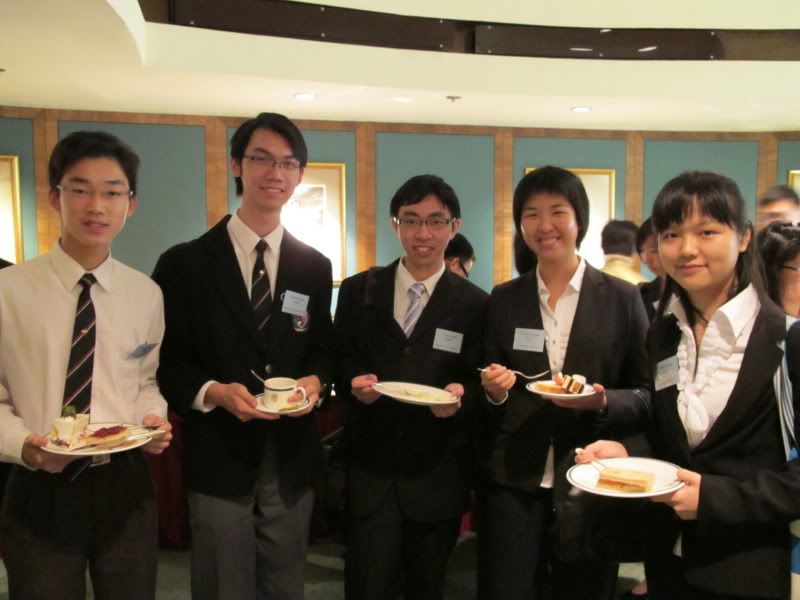
The tea reception which followed the ceremony offered an excellent opportunity to interact with the board members and interviewers who had grilled the awardees with difficult questions (and made us feel terrible – it appeared to be intentional, as I found out in casual conversations with the other awardees).
One of the board members, a professor, was an awardee ten-plus years ago. She remembered and further discussed my propositions about civil society movement and public policy-making. While she wore an interested smile, she delivered a heavy comment at the end. Returning from her PhD in urban planning, she felt that she was treated as an “alien.” She found her peers uninterested about the government’s urban planning policies. Few people understood (not to mention echoed) the concepts of sustainable development. Even fewer in the government would listen to her. She noted, “Now, after ten years, we finally hear about protecting historical sites, restricting reclamation, planning sustainable urban development, etc. It takes a long time to change people’s minds. More importantly, it may be the same for you.”
I left this award ceremony in deep thoughts about the expectations and responsibilities that inevitably came with this award. It felt as if a mission has been bestowed on all the awardees. It seemed to have marked the start of a life marathon and a test of patience, perseverance and determination.