I returned home one evening and saw my landlady captivated by the TV. She is a 60-year-old grandmother – very old considering that thousands of Cambodians died during the Khmer Rouge (1975-1979) and the civil war which followed. Perhaps due to the physical and emotional trauma she had experienced during those dreadful years, she lacks the energy of the 60-year-olds at home (in Hong Kong) who often still claim to be “young” – at least at heart. In fact, in most developed countries, 60 years old may still be considered the “golden age.” Many successful businessmen and politicians are in their 60s.
Most likely because of her traumatic memories, my landlady is also obsessive about security. During my first months here, she advised that I should come home before 8 o’clock in the evening, the time which she habitually locks the front gate. My bicycle must be parked inside the ground floor apartment (I live on the second floor). Lock the bicycle around the wheels if I return home late; otherwise, she warned, thieves would come.
Taking her advice, whenever I returned home late from a drink or dinner, I would lock according to her instructions. Later on, however, I noticed that she would always wake up in the middle of the night and take my bicycle back into the house. She just did not feel safe. Also, the next day, I would have to sit through her ranting, in Khmer, most likely about the dangers in the streets.
After a few months, she asked that I lock my bicycle to the metal staircase if I were to return late.
With her son working in Battambang Province, she lives with her two busy grandchildren. Both of them are universities students and work part-time. Therefore, she spends many mundane days alone, watching TV, washing clothes, cooking food, doing housework and running errands. She is usually the only one to greet me when I return home from work.
Because of her alertness and her (sometimes-over-the-top) sensitivity to safety and security issues, it was uncommon that she did not sense my coming into the house. That evening, she was so absorbed in the television that she only turned around in surprise when I sat down in a chair next to her.
She was watching a volleyball game. When she saw my puzzled face, she briefly withdrew her attention from the television screen. In an instant, as if gaining a rare wave of energy, she waved her arms, stamped her feet and began speaking in Khmer in a rather loud voice. I continued to look at her, puzzled. But the more puzzled I looked, the more frantically she pointed to her arms and knees and tried to make me understand.
From my limited Khmer, I understood that the game was volleyball – g’baal p’dtea and that the competition was held at the Olympic Stadium in Phnom Penh. From the broadcast, it also looked like that the Cambodian Team had won two sets already and was ten points ahead of the Indian Team in the third set. Whenever the Cambodian Team score, I could see my landlady slowly lifting the edge of her lips and gradually forming a reserved smile. The motion was subtle; but for her, this action culminated from much excitement and joy.
Watching the game, I could only see poorly trained players who could barely control the ball. Rarely could I see the effortless jumps, accurate passes, impenetrable defence and powerful spikes demonstrated by world-class volleyball players at the real Olympic Games held at furnished and well-maintained stadiums. My landlady must be happy just because she supported the home team.
With both teams weak in their volleyball techniques, each play was short and the scores moved along quickly. Very soon, the score became 20-10 – the Cambodian Team only needed five more points to win. A Cambodian player served again and the Indian players could not return the serve and the ball bounced off to the spectator stand. I was about to smirk at this ridiculously incompetent play, tell my landlady that I have had enough and go upstairs to prepare dinner.
But then, for a split second, I noticed something strange about this Indian player: he had no arm!
At a closer look, among the other players, quite a few had artificial limbs. Most probably, the rest of the players had other less visible forms of disabilities, such as mild epilepsy, deafness and learning disabilities.
Almost immediately I felt ashamed of my silent criticism and negative thoughts. Coming from a war-striken era, my landlady must have seen many people disabled by landmines, machetes, guns and accidents. She would understand the unspeakable emotional and physical experienced by those stripped of good and healthy bodies. Among her close relatives and neighbours, there may be individuals who were discriminated for their disabilities and were demoted to living in shame as outcasts. There must be families with breadwinners handicapped by landmines and fighting and could no longer find productive work. There would be many children who were denied education and social support due to injuries from a young age. Encountering disabled people and dealing with the hardships stemming from disabilities were inevitable parts of Cambodian life.
The victory of the Cambodian Team in disability sports therefore represents more than winning the Trophy. This victory indicates recognition for physically and intellectually handicapped people and honours their efforts to overcome physical limitations and accomplish “the impossible.” In Cambodia, this message serves as a crucial encouragement for many disadvantaged groups – not only the disabled. Many more who live in chronic poverty, suffer from diseases (e.g. HIV/AIDS) and are forced into demeaning jobs (e.g. prostitution) may be encouraged to take a bold step for their own well-being. The society may have doomed them, but they can – if they want – to live a life of dignity and be inspiration for others.
During these few months in Cambodia, I have heard about and met people who live with disabilities and diseases as well as those suffering from chronic poverty. The media also often reports about women forced into demeaning occupations and children working in the worst forms of child labour. However, there are also many international organizations, NGOs and civil society groups which work actively to withdraw people from destitute. Their success stories should be publicized to direct disadvantaged people away from fatalistic and pessimistic attitude; beneficiaries should stand out as role models and spread the message that individuals can make a different in their own lives.
At the end of broadcast, my landlady expressed joyously, “S’bay jet na.. m’sell min grom Kampuchea ban ch’nea dae… s’rok ey? Knom pleck hi… Bundai, s’bay jet na… (I am very happy… Yesterday, the Cambodian Team won also… Against which country? I forgot already… But anyway, I am very happy…)” She went on and on as I gestured goodbye and moved slowly out of her living room.
Friday, 18 December 2009


Friday, 11 December 2009
The Difficult Peace
The Cambodia Daily published a horrific report of the massacre in the southern Philippines on 25 November 2009. Printed in colour and accompanied by large fonts, the headline photo showed bloated bodies and headless corpses scattered on the ground. Reports claimed that the perpetrators intended to intimidate their electoral rivals from the Mangudadtu clan. Around 100 gunmen then held up a convoy of Mangadadatus, lawyers and journalists and attacked them with M-16 rifles and machetes. 57 were killed; among them about 30 were journalists. These gruesome reports remind us that there are still fault-lines within and among Southeast Asian countries. Where simmering tensions are not identified and cooled down, conflicts may erupt violently.
A few days after reading this news article, on 27 November, a Filipino friend invited me to watch a Filipino staged play, the closing performance of the Mekong Arts Festival in Phnom Penh. Coincidently, the play’s plot depicts conflicts in southern Philippines.
In the story, Ismael and Isabel were childhood friends in a religiously diverse community. Ismael’s parents, Muslims, were killed by intolerant Christian radicals. Isabel, though a Christian, was also separated from her parents during the armed conflicts. The fighting destroyed their village and they made their way to Manila, the capital city. There, Ismael joined a Muslim gang and terrorized Christians through kidnapping and assassination. Isabel became a maid for a Christian British family.
The story then fast-forwarded to two years later. The two main characters crossed paths again as Ismael attempted to kidnap Isabel’s master. Reminiscent of their friendship prior to the conflicts, Ismael and Isabel reconciled. Hand in hand, they fled to a new world without any conflicts.
Amidst lively dances and upbeat music, the play advocated for peace. The playwright certainly conveyed the urgent need to mitigate hatred and create a harmonious society.
When I first arrived at Phnom Penh, I followed the United Nations protocol and reported to the UN Department of Safety and Security (UNDSS). The officer there assured us “newbies” that Cambodia is “very safe.” But as I stayed on longer, I learned that beneath this peaceful façade, there are actually hidden fissures:
Further reading
Mekong Arts Festival 2009: Weaving Cultures, Weaving Vision
“Cambodia Tit-for-Tat over Thaksin,” BBC, 6 November 2009
“Sam Rainsy Uproots Vietnamese Border Markers,” Phnom Penh Post, 27 October 2009
“AIDS Day Event Sparks Debate,” Phnom Penh Post, 2 December 2009
A few days after reading this news article, on 27 November, a Filipino friend invited me to watch a Filipino staged play, the closing performance of the Mekong Arts Festival in Phnom Penh. Coincidently, the play’s plot depicts conflicts in southern Philippines.
In the story, Ismael and Isabel were childhood friends in a religiously diverse community. Ismael’s parents, Muslims, were killed by intolerant Christian radicals. Isabel, though a Christian, was also separated from her parents during the armed conflicts. The fighting destroyed their village and they made their way to Manila, the capital city. There, Ismael joined a Muslim gang and terrorized Christians through kidnapping and assassination. Isabel became a maid for a Christian British family.
The story then fast-forwarded to two years later. The two main characters crossed paths again as Ismael attempted to kidnap Isabel’s master. Reminiscent of their friendship prior to the conflicts, Ismael and Isabel reconciled. Hand in hand, they fled to a new world without any conflicts.
Amidst lively dances and upbeat music, the play advocated for peace. The playwright certainly conveyed the urgent need to mitigate hatred and create a harmonious society.
When I first arrived at Phnom Penh, I followed the United Nations protocol and reported to the UN Department of Safety and Security (UNDSS). The officer there assured us “newbies” that Cambodia is “very safe.” But as I stayed on longer, I learned that beneath this peaceful façade, there are actually hidden fissures:
- Territorial disputes between Cambodia and Thailand over the Preah Vihear Temple, a UNESCO World Heritage Site in northwestern Cambodia. The Site now sits within the Cambodian border but the Thai authorities also claim sovereignty. In an attempt to uphold national pride, the Cambodian Prime Minister recently received Thaksin, the fugitive former Thai President, and appointed him an Economic Advisor. This action may heighten diplomatic tensions (ambassadors have already been recalled) and spark new fighting at the border.
- Sam Rainsy, Leader of the Cambodian opposition party, removed six markers along the Cambodian-Vietnamese border in Svay Rieng province in October 2009. Rainsy undertook this provocative action in reaction to complaints that Cambodian farmland was illegally occupied by the Vietnamese. Indeed, the two countries has 1,270km of contentious border. Some efforts have been started since 2006 to demarcate the border but disputes still arise occasionally.
- Entertaining private sector or individual interests, government officials from some provinces and districts have evicted many families and ignored the hardships experienced by the evictees. In addition, the recent relocation of some 40 HIV affected families to the outskirts of Phnom Penh have prompted international outcry. Rights groups especially cited the oppressive heat, lack of access to health care, poor supply of food and limited job opportunities at the relocation site. Some activists even called the area an “AIDS colony.” Prolonged dissatisfaction over these forced evictions may gradually fuel public action and unrest.
- Corruption within the government bureaucracy has potential to stir up public dissent. According to Transparency International, Cambodia ranks among the most corrupt nations in the world, just on par with such countries as Laos, Tajiskistan and the Central African Republic. Without strong political commitment and government institutions to formulate and implement anti-corruption laws, many Cambodians and foreign businesses have to pay bribes. Corruption may also limit the public funds available for concrete reforms and public welfare. If public discontent against corruption and ineffective public services reaches a critical mass, there may more and more protests against the government.
Further reading
Mekong Arts Festival 2009: Weaving Cultures, Weaving Vision
“Cambodia Tit-for-Tat over Thaksin,” BBC, 6 November 2009
“Sam Rainsy Uproots Vietnamese Border Markers,” Phnom Penh Post, 27 October 2009
“AIDS Day Event Sparks Debate,” Phnom Penh Post, 2 December 2009
Tuesday, 8 December 2009
Job Centre Launch Photos
Following the blogpost above, I am putting some pictures of the Job Centre launch in Phnom Penh and Battambang Province:
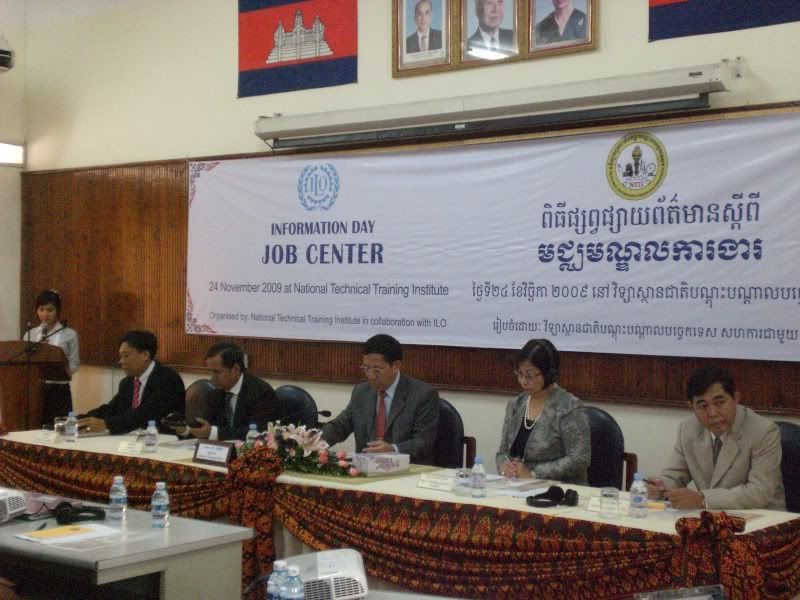
Our panel of distinguished guests, including HE Mr. Laov Him (most left), Director General of the Department of Technical and Vocational Education and Training (DTVET); HE Mr. Pich Sophoan (centre), Secretary of State, Ministry of Labour and Vocational Training; Ms. Carmela Torres, Senior Skills Specialist, ILO Subregional Office; and Mr. Tun Sophorn, National Coordinator, ILO Cambodia.
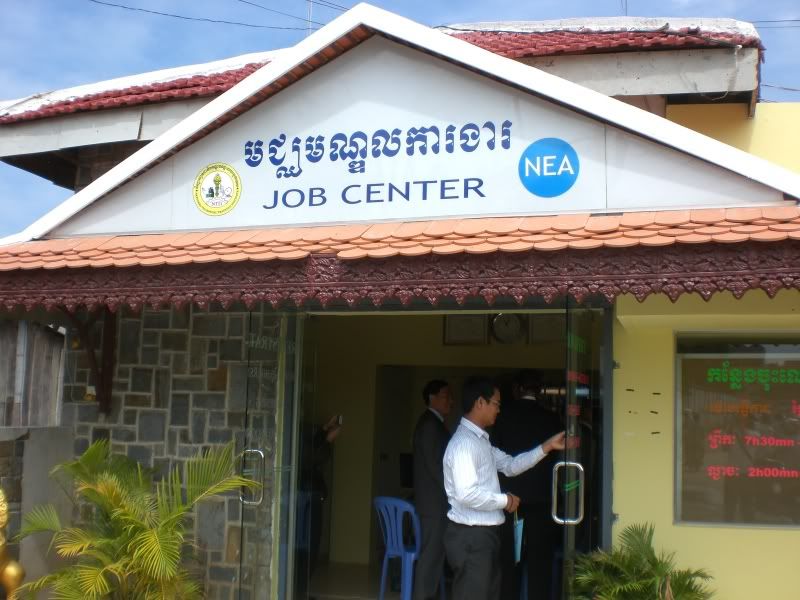
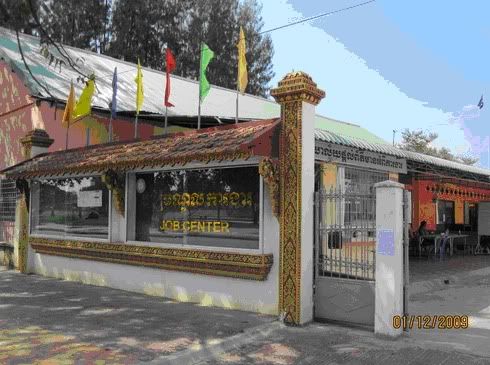
Front entrance of the Job Centre, together with the logo of the National Employment Agency (NEA) which was established by a government sub-decree this year.
Our panel of distinguished guests, including HE Mr. Laov Him (most left), Director General of the Department of Technical and Vocational Education and Training (DTVET); HE Mr. Pich Sophoan (centre), Secretary of State, Ministry of Labour and Vocational Training; Ms. Carmela Torres, Senior Skills Specialist, ILO Subregional Office; and Mr. Tun Sophorn, National Coordinator, ILO Cambodia.
Front entrance of the Job Centre, together with the logo of the National Employment Agency (NEA) which was established by a government sub-decree this year.

Friday, 4 December 2009
I Need Employment Advice?!
The problems associated with aging in developed countries have been widely discussed. Some governments have rolled out cash and tax incentives for their citizens to have more children; others have encouraged in-migrants. Many more have put in place mandatory pension schemes to reduce the state’s financial burden on old-age-related public services. Policy makers may be reminiscent of the “youthful” economy, when the working population was large and economic activities were active.
On the contrary, in Cambodia, I have seen the problems of a “youthful” nation. Although the economy grew at above 10 percent between 2004 and 2007, the increase of job opportunities remained sluggish. In effect, almost 300,000 youth flood into the market each year. But less than 40 percent of them can find employment.
Coming on the heels of the global economic crisis, these unemployed young people are experiencing more severe hardships.
These labour market conditions contributed to an initiative from the Royal Government to strengthen employment services through the establishment of Job Centres. Ideally, these public employment services will serve as the basic steps to full employment of individuals at various skills levels. However, the extent and the variety of services these Centres can offer likely depend on the different countries’ market environment and the availability of financial resources, political commitment and capable personnel.
According to the International Labour Organization (ILO), an efficient and functioning labour market should comprise a wide array of employment services:
On the contrary, in Cambodia, I have seen the problems of a “youthful” nation. Although the economy grew at above 10 percent between 2004 and 2007, the increase of job opportunities remained sluggish. In effect, almost 300,000 youth flood into the market each year. But less than 40 percent of them can find employment.
Coming on the heels of the global economic crisis, these unemployed young people are experiencing more severe hardships.
These labour market conditions contributed to an initiative from the Royal Government to strengthen employment services through the establishment of Job Centres. Ideally, these public employment services will serve as the basic steps to full employment of individuals at various skills levels. However, the extent and the variety of services these Centres can offer likely depend on the different countries’ market environment and the availability of financial resources, political commitment and capable personnel.
According to the International Labour Organization (ILO), an efficient and functioning labour market should comprise a wide array of employment services:
- Employment counselling: information on job search techniques, advice on small and medium enterprise (SME) development and linkage to job fairs/clubs, etc.
- Vocational counselling: information on skills requirements and training institutions, referral to universities, apprenticeships and on-the-job training, linkage to entrepreneurship and financial literacy training, etc.
- Career counselling: information on current and projected jobs in demand, assessment of interests, aptitude and abilities, information on occupation and work conditions, introduction to employment networks, linkage to volunteer work, summer job, part-time work, internships, etc.
- Labour market adjustment programmes: registration of individuals for unemployment insurance, collection of unemployment insurance claims, advice from trained social worker and counsellor on other personal issues
- Labour market exchange: participation from employers for regularly updated job postings
In Cambodia, although the demand for these services has especially intensified, experiences from the Job Centres highlight the limitations to deliver job placement services, manage labour market information and analyze data and trends. For instance, some employers would have few incentives to use employment services for finding suitable job candidates. They also have little immediate motivation to contribute to setting up a labour market information system. As an example, the garment industry employs mostly young women with little education and few vocational skills. Thousands of low-skilled women in Phnom Penh and other provinces would desire factory work for stable incomes. Since factories can readily replenish worker losses, investing extra time and resources in employment services may become an unnecessary nuisance.
However, Job Centres would not succeed unless employers also participate and provide precious information on job openings and future skills needs. This dilemma hence suggests the need for an assertive and confident team of Job Centre staff. These staff members should proactively liaise with employers and make every attempt to solicit needed information from the private sector.
Noting the vast supply of low-skilled and undereducated workers, Job Centres would likely be overwhelmed by job-seekers who have few employable skills. In effect, one must bear in mind that even the best employment services may not help all unemployed people to seek jobs immediately.
What, then, can the Job Centres offer clients who are not matched to any job or training opportunities? In the Cambodian context, Job Centre staff members would likely be the unemployed people’s only source of information about the labour market. At the least, these trained counsellors and analysts should offer timely advice on jobs and skills in high demand and encourage the jobless to consider an alternative career path. In cases where the jobseeker is committed to certain types of employment, the Job Centre should provide information on the skills needed for the desired job and the availability of relevant training opportunities. More crucially, counsellors should encourage their clients to be realistic about their wishes and their actual skills levels. In the end, every client should leave the Job Centre with better knowledge about the job market, their own skills and next steps to be taken.
Surely, there would also be a group of jobseekers who are relatively qualified and more motivated. The Job Centres should have a clear line of services to help those who are more likely to succeed. For instance, would the Job Centre help to arrange for interviews with potential employers? Would these candidates be referred to entrepreneurship or other vocational skills training? And at what point should clients be advised on microfinance opportunities? In short, the Job Centre team should ponder on these questions and take concrete steps to create solid linkages between workers, employers and training providers.
In addition to concerns about market data collection and service delivery, knowledge management would also likely be a challenge. To match the information of thousands of unemployed people with the specific skills demanded by hundreds of employers, the Job Centres require an efficient data processing system. As some examples, electronic forms, data analysis software and other programmes for inputting, collating and comparing information would be most helpful. In the longer run, as more and more Job Centres become operational within the country, networked computers may be needed for exchanging labour market information at various localities.
Most recently, on 24 November 2009, the Ministry of Labour and Vocational Training and the ILO launched the first Job Centre in Phnom Penh. On 1 December, the second pilot Job Centre was opened in Battambang Province. The challenges elaborated in the previous paragraphs will likely become more and more real. Will the unemployed flood the Job Centres? Or will there be no clients? Will the employers buy into employment services? Will training providers be willing to take advice from the Job Centres? How many jobless persons will be directly linked to jobs or training courses? And how many more will be indirectly benefited, such as through obtaining a better understanding of labour market conditions? These questions may be answered in the next few months.
References:
“Employment Services: International Perspectives and ILO Experience,” PowerPoint Presentation for the Employment Services Workshop in Vientiane, Lao PDR, 13 November 2009
“First of 11 Job Centres Opened in Capital City,” Phnom Penh Post, 25 November 2009, http://www.phnompenhpost.com/index.php/2009112529759/Business/first-of-11-job-centres-opened-in-capital-city.html
Monday, 30 November 2009
Creating Safe “Safety Nets” for the Poor
A recent study published by the ILO, UNICEF and World Bank estimated 310,000 children in the worst forms of child labour (WFCL) in Cambodia based on the 2004 Census. The National Plan of Action for Eliminating the Worst Forms of Child Labour specifies 16 WFCL, including deep water fishing, salt-making, rubber-planting, child-portering, brick-making, scavenging, domestic work and sex work, etc. To reach the global target of eliminating these WFCL by 2016, the ILO has especially raised attention to how “social safety net” measures may empower vulnerable families as well as contribute to withdrawing child labourers and preventing any fresh entry of children into the workforce.
Specifically, in the context of Cambodia, conditional cash transfers (CCT) appears to have the greatest potential to reduce child labour. A nationwide CCT Scheme will likely be a social assistance programme giving cash benefits to very poor households in exchange of pre-specified investments in their children’s education and health. CCT schemes have been implemented in various parts of the world, especially in Latin America. However, although the concept of CCT has been widely accepted, the implementation challenges faced by each country may differ significantly. In Cambodia, in particular, the incidence of child labour is much higher than in Latin American countries. Therefore, mechanisms for beneficiary targeting, conditionality setting, monitoring and evaluation and fraud safeguard must be adapted according to the local context.
A key first step to operationalizing a CCT Scheme is the identification of beneficiaries. A targeting system may focus on all households of districts with the lowest school enrolment rates and the highest incidence of child labour. The Scheme may also target all households below certain income or asset levels. As well, CCT can also target vulnerable groups, such as pregnant women, infants, disabled persons, elderly and street children, etc. Any decisions regarding this targeting mechanism must be supported by a clear rationale and realistic predictions about the programme’s cost. More importantly, this system must comprise well-tested surveying and analytical tools for capturing poorest of the poor households.
Conditionality is key to the design of any CCT Scheme. A CCT scheme may directly contribute to promoting education and reducing child labour by specifying that children from beneficiary households must be enrolled in school and achieve satisfactory attendance.
However, this list of conditions may also be adapted to address weaknesses in the Cambodian education system and the high incidence of child labour. In the past few years, for instance, the ILO’s International Programme for the Elimination of Child Labour (IPEC) have set up community learning centres and transitional education activities for rehabilitating child labourers. Eligible households should also be rewarded for supporting former child labourers in informal courses in order to facilitate their integration into formal academic and vocational institutions. Furthermore, experiences from practitioners have indicated that after school programmes can effectively increase children’s time spent in schools and directly reduce their likelihood in working. Thus, the Cambodian CCT Scheme may incorporate after school activities and extra classes as conditionality. Noting low transition rate from primary to secondary schools, graduation and promotion bonuses may also be delivered.
More crucially, policy makers must bear in mind that each additional condition entails extra administrative costs. Due to geographical and resource constraints, some localities also lack the infrastructure for eligible families to fulfil these conditions. Therefore, the Royal Government and donors should generate clear justifications for the conditions chosen and the financial resources devoted to monitoring and evaluating compliance. At the same time, external and internal resources to be mobilized for putting in place appropriate infrastructure and facilities.
Any social protection scheme which involves cash benefits is prone to corruption and fraud. Thus, a fraud-proof and easily accessible cash distribution system should accompany the CCT Scheme. Ideally, the programme should utilize only one channel, such as the local/district/commune Department of Social Affairs, to distribute funds throughout the country. However, given geographical differences, some government officials may be incapable of managing meticulous accounts. In Cambodia, more decentralized methods of delivering cash benefits may be more practical and the district/commune may take leadership to explore viable means to channel these funds. In effect, there will likely be several parallel forms of delivery mechanisms within the country.
Nonetheless, the exact means for delivering cash benefits in various communities are still to be discussed. Some possibilities include distribution through well-established local businesses and convenience stores located near a local market. Transactions and payments may take place over the counter as beneficiary families present government-issued identification cards. Alternatively, experiences in Africa have shown that mobile banking is a growing possibility in developing countries. Rural households with mobile phones may check their balances via text messages or phone calls. Those without phones may approach local service providers to monitor their account activities at a low cost. Distribution by trusted local village chiefs, commune council representatives and school/health care directors are likely choices as well. In sum, the system chosen at various localities must be reliable and be able to deliver benefits in a timely fashion.
Going hand in hand with the transparent cash delivery system, the CCT Scheme should include an independent fraud safeguard, appeals and dispute resolution mechanism. A hotline, for instance, may be set up to receive feedback on the shortcomings of the targeting system (such as missing out some needy persons) and to prevent abuse of the CCT Scheme. A follow-up mechanism, manned by trusted officials and trained arbiters, may then step in to investigate valid complaints. These measures would help to ensure the transparency and integrity of the CCT Scheme. Noting reports on corruption and bureaucratic red-tape, these safeguards will be especially crucial for delivering benefits to the needy.
All in all, although the efficacy of CCT schemes have been proven in many countries, success should be taken as granted or automatic. When considering CCT as the main tool for promoting education and reducing child labour, more discussions and research would be needed to identify remedies for these abovementioned implementation challenges.
Reference:
Hamid Tabatabai, “Eliminating Child Labour: The Promise of Conditional Cash Transfers,” International Labour Organization (ILO/IPEC), October 2006.
“Towards Eliminating the Worst Forms of Child Labour in Cambodia by 2016: An Assessment of Resource Requirements,” Understanding Children’s Work, May 2009.
Specifically, in the context of Cambodia, conditional cash transfers (CCT) appears to have the greatest potential to reduce child labour. A nationwide CCT Scheme will likely be a social assistance programme giving cash benefits to very poor households in exchange of pre-specified investments in their children’s education and health. CCT schemes have been implemented in various parts of the world, especially in Latin America. However, although the concept of CCT has been widely accepted, the implementation challenges faced by each country may differ significantly. In Cambodia, in particular, the incidence of child labour is much higher than in Latin American countries. Therefore, mechanisms for beneficiary targeting, conditionality setting, monitoring and evaluation and fraud safeguard must be adapted according to the local context.
A key first step to operationalizing a CCT Scheme is the identification of beneficiaries. A targeting system may focus on all households of districts with the lowest school enrolment rates and the highest incidence of child labour. The Scheme may also target all households below certain income or asset levels. As well, CCT can also target vulnerable groups, such as pregnant women, infants, disabled persons, elderly and street children, etc. Any decisions regarding this targeting mechanism must be supported by a clear rationale and realistic predictions about the programme’s cost. More importantly, this system must comprise well-tested surveying and analytical tools for capturing poorest of the poor households.
Conditionality is key to the design of any CCT Scheme. A CCT scheme may directly contribute to promoting education and reducing child labour by specifying that children from beneficiary households must be enrolled in school and achieve satisfactory attendance.
However, this list of conditions may also be adapted to address weaknesses in the Cambodian education system and the high incidence of child labour. In the past few years, for instance, the ILO’s International Programme for the Elimination of Child Labour (IPEC) have set up community learning centres and transitional education activities for rehabilitating child labourers. Eligible households should also be rewarded for supporting former child labourers in informal courses in order to facilitate their integration into formal academic and vocational institutions. Furthermore, experiences from practitioners have indicated that after school programmes can effectively increase children’s time spent in schools and directly reduce their likelihood in working. Thus, the Cambodian CCT Scheme may incorporate after school activities and extra classes as conditionality. Noting low transition rate from primary to secondary schools, graduation and promotion bonuses may also be delivered.
More crucially, policy makers must bear in mind that each additional condition entails extra administrative costs. Due to geographical and resource constraints, some localities also lack the infrastructure for eligible families to fulfil these conditions. Therefore, the Royal Government and donors should generate clear justifications for the conditions chosen and the financial resources devoted to monitoring and evaluating compliance. At the same time, external and internal resources to be mobilized for putting in place appropriate infrastructure and facilities.
Any social protection scheme which involves cash benefits is prone to corruption and fraud. Thus, a fraud-proof and easily accessible cash distribution system should accompany the CCT Scheme. Ideally, the programme should utilize only one channel, such as the local/district/commune Department of Social Affairs, to distribute funds throughout the country. However, given geographical differences, some government officials may be incapable of managing meticulous accounts. In Cambodia, more decentralized methods of delivering cash benefits may be more practical and the district/commune may take leadership to explore viable means to channel these funds. In effect, there will likely be several parallel forms of delivery mechanisms within the country.
Nonetheless, the exact means for delivering cash benefits in various communities are still to be discussed. Some possibilities include distribution through well-established local businesses and convenience stores located near a local market. Transactions and payments may take place over the counter as beneficiary families present government-issued identification cards. Alternatively, experiences in Africa have shown that mobile banking is a growing possibility in developing countries. Rural households with mobile phones may check their balances via text messages or phone calls. Those without phones may approach local service providers to monitor their account activities at a low cost. Distribution by trusted local village chiefs, commune council representatives and school/health care directors are likely choices as well. In sum, the system chosen at various localities must be reliable and be able to deliver benefits in a timely fashion.
Going hand in hand with the transparent cash delivery system, the CCT Scheme should include an independent fraud safeguard, appeals and dispute resolution mechanism. A hotline, for instance, may be set up to receive feedback on the shortcomings of the targeting system (such as missing out some needy persons) and to prevent abuse of the CCT Scheme. A follow-up mechanism, manned by trusted officials and trained arbiters, may then step in to investigate valid complaints. These measures would help to ensure the transparency and integrity of the CCT Scheme. Noting reports on corruption and bureaucratic red-tape, these safeguards will be especially crucial for delivering benefits to the needy.
All in all, although the efficacy of CCT schemes have been proven in many countries, success should be taken as granted or automatic. When considering CCT as the main tool for promoting education and reducing child labour, more discussions and research would be needed to identify remedies for these abovementioned implementation challenges.
Reference:
Hamid Tabatabai, “Eliminating Child Labour: The Promise of Conditional Cash Transfers,” International Labour Organization (ILO/IPEC), October 2006.
“Towards Eliminating the Worst Forms of Child Labour in Cambodia by 2016: An Assessment of Resource Requirements,” Understanding Children’s Work, May 2009.
Wednesday, 25 November 2009
Creating a Social Protection System from Scratch
Imagine you are the head of a household of four in rural Cambodia. One day, as you walk in the local market and buy your regular groceries, you realize that the price of rice has doubled. The prices of meat and vegetables have also risen by 50 percent. The next day, your sister from Phnom Penh calls and weeps over the phone. She has been sacked by her employer, a garment factory, and cannot send money home. Gazing at the small plots of rice fields around your house, you begin to worry: what can you do to feed your children?
This story may resemble the experiences of a sizable number of rural households in the past year. The “double shock” of the food price crisis and the global economic crisis has especially dragged many poor and near poor families back into poverty. Absent of social protection measures, many resort to coping strategies such as reducing food consumption (especially of adult and women), selling productive assets, incurring high-interest loans, withdrawing children from school and putting school-age children and youth to work. These hardships have caught the attention of the Royal Government and development partners and hence stimulated discussions on formulating a National Social Protection Strategy.
However, among the broad array of social protection instruments, which one(s) would most likely uplift the rural poor?
Social protection is divided into two major categories, social insurance and social assistance. Social insurance schemes include pension funds and workers’ compensation funds which are contributions-based. Workers and employers (and sometimes also the government) would pay regularly a certain percentage of their earnings into the fund. In turn, employees who are retiring or have suffered from work injury may receive some financial support for their livelihoods. In Cambodia, the National Social Security Fund (NSSF) has been set up to provide work injury compensation for civil servants and private sector employees. However, these schemes appear to be most effective for the formal economy where employers and their businesses are clearly registered and workers earn stable incomes. In the vast rural areas where farmers engage in informal subsistence activities, a National Social Insurance Scheme administered by the central government may therefore be a difficult concept to practice.
Nonetheless, noting that limited access to capital and entrepreneurship training are the root causes of chronic poverty, some development partners have pioneered innovative projects, such as community-based insurance. The experiences of two ILO projects, the International Programme for the Elimination of Child Labour (IPEC) and the Women Entrepreneurship Development and Gender Equality (WEDGE) Project, especially highlight the efficacy of Self Help Groups (SHG).
SHGs are semi-formal savings associations, formed based on trust among families within target communities. Each group consists of 10 to 25 persons, normally close relatives or neighbours, and the members would elect a group leader and a bookkeeper. Thereafter, each member contributes 4,000 riel (equivalent of $1) each month. When the fund becomes sufficiently large, then members can make small loans for small business development and family emergencies. At the same time, the ILO and its NGO partners would provide training on financial management, income generation strategies and livelihood skills. Between 2004 and 2007, 166 SHGs were established in seven provinces and municipalities. Combined with access to small loans and improved skills in business operations, poor families have become more capable of generating supplemental income (which sufficiently replace income lost when child labourers stop working and return to schools). With proven success, this community-centred strategy is now being replicated and up-scaled.
The second category of social protection instruments is social assistance, now also referred to as “social safety nets” (World Bank-invented term). Social assistance schemes are non-contributions-based and are usually financed by government and donor groups. To become eligible for benefits, households or individuals must fulfil certain criteria. For instance, in Nordic countries, residents are automatically entitled to free health care. Therefore, those who wish to be beneficiaries must register with the local commune and obtain a resident card. Other schemes may deliver cash and in-kind benefits to target low-income households and maybe specific for certain vulnerable groups, such as children, elderly and the disabled.
In Cambodia, some social safety net measures have been piloted or implemented in various regions. For instance, the World Bank, under its Cambodia Education Sector Support Project (CESSP), has piloted a scholarship programme for poor lower secondary school students. The scheme delivered $45 and $60 lump sums to students identified to be vulnerable of dropping out. Also, the Asian Development Bank (ADB), the World Food Programme (WFP) and the International Labour Organization (ILO) have implemented food-for-work, cash-for-work and labour-based public works projects to provide employment to poor households. The successes of these projects may be up-scaled if stakeholders take action to improve and replicate such programme design to more areas in Cambodia. Furthermore, other relevant schemes, such as unconditional cash transfers (e.g. disability allowances, non-contributory pensions and needs-based assistance), may be piloted and included as part of the National Social Protection Strategy.
As discussions on social protection ensue, there is growing consensus that both social insurance and social assistance measures are needed alleviating poverty, mitigating economic shocks and expanding opportunities for poor households. Nonetheless, more coordination between government ministries and donors would be necessary to create a comprehensive framework specifying the policies, schemes and instruments to be utilized. More crucially, this process must proceed smoothly with cautious consideration of the resources and technical capacities available.
References
“Impact of High Food Prices in Cambodia,” Cambodia Development Resource Institute, October 2008, http://documents.wfp.org/stellent/groups/public/documents/ena/wfp189739.pdf
“Good Practices and Lessons Learned from the ILO IPEC Time Bound Programme Support Project in Cambodia,” International Labour Organization, November 2008
Friday, 20 November 2009
Photos from Tonle Bati Resort
The Tonle Bati Resort in
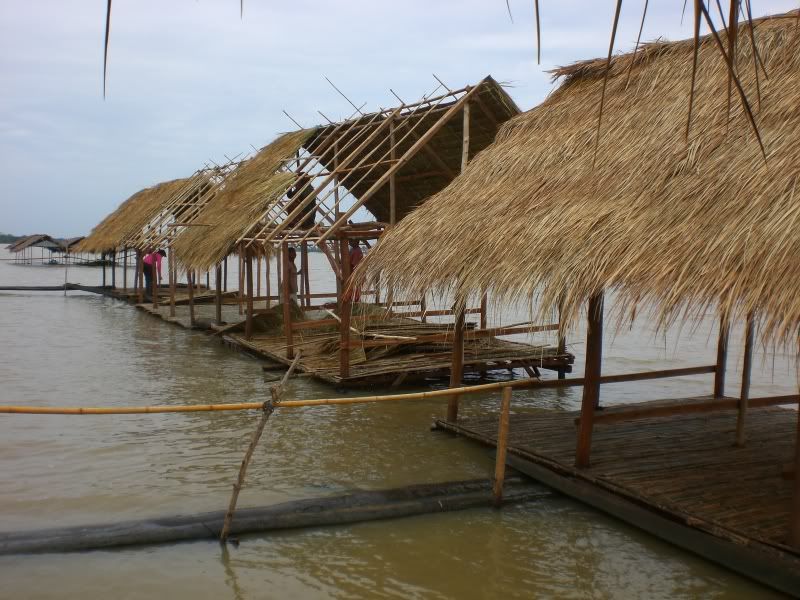
To access these huts, you must first walk and balance yourself on some flimsy floating wood. But once inside the huts, you would feel as if you are floating with the river. Really cool =)
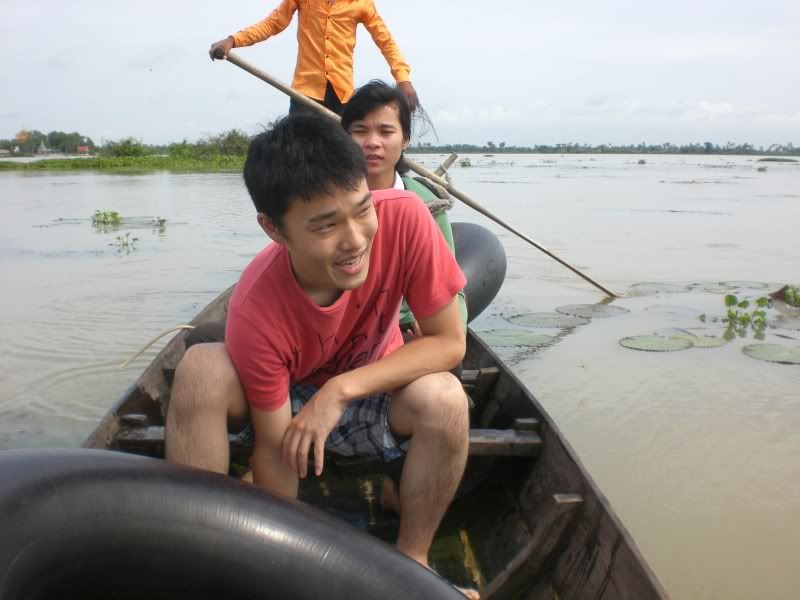
Ippei and Savon trying their best to throw water out of our little boat. Yes, it was leaking! Nonetheless, it was great to have a short 30-minute journey down the Tonle Bati river.
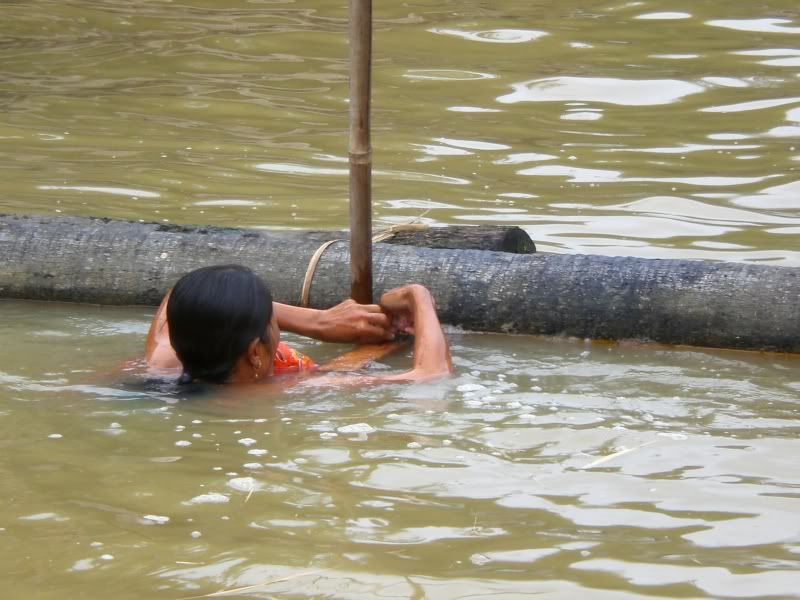
A Cambodian woman working to fasten the strings attached to this floating bridge.
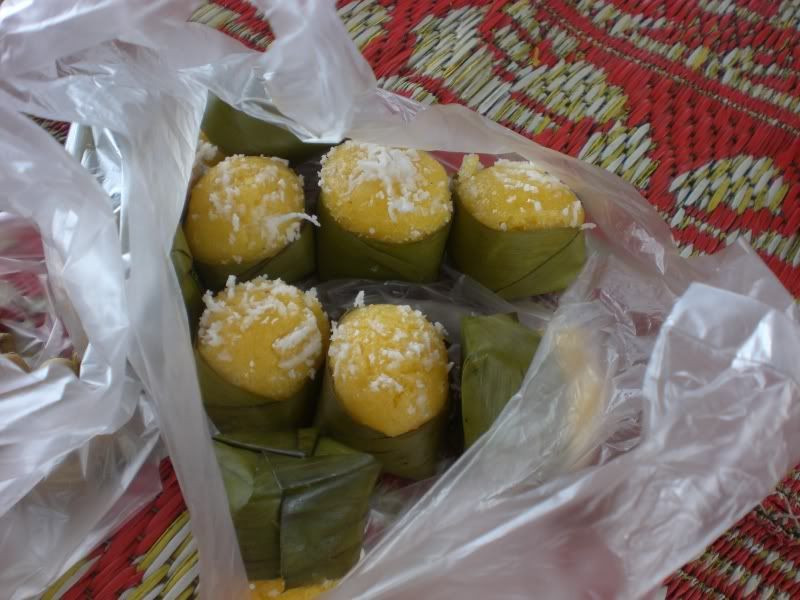 Cheap desserts made with palm tree fruit and bamboo leaves. Yummy!
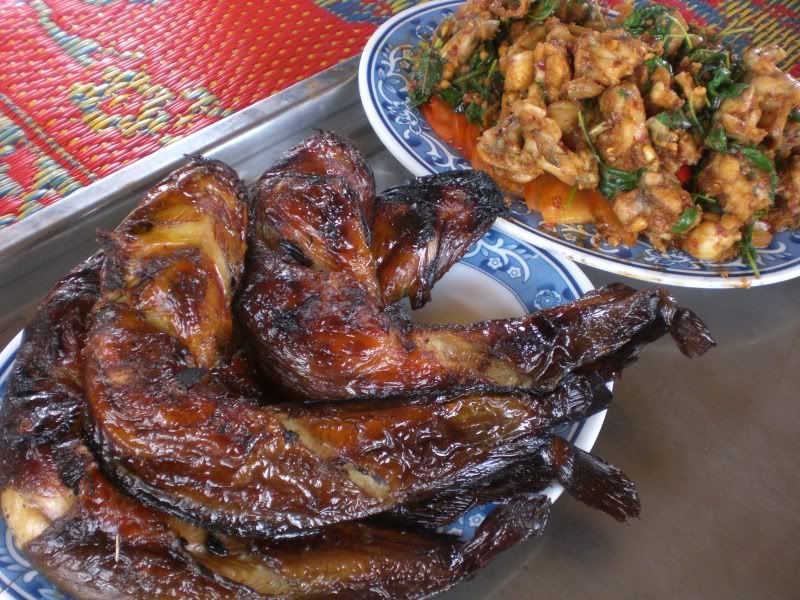 Cambodian "river cuisine" -- fried fish and FROG. The frog tasted weird.
  There are two ancient temples (plus pagoda) near the resort. This one, called the Grandmother Temple in Khmer, is made of sandstone. My friend says that the Angkor Wat was made with similar concepts -- except it was many many times bigger.
 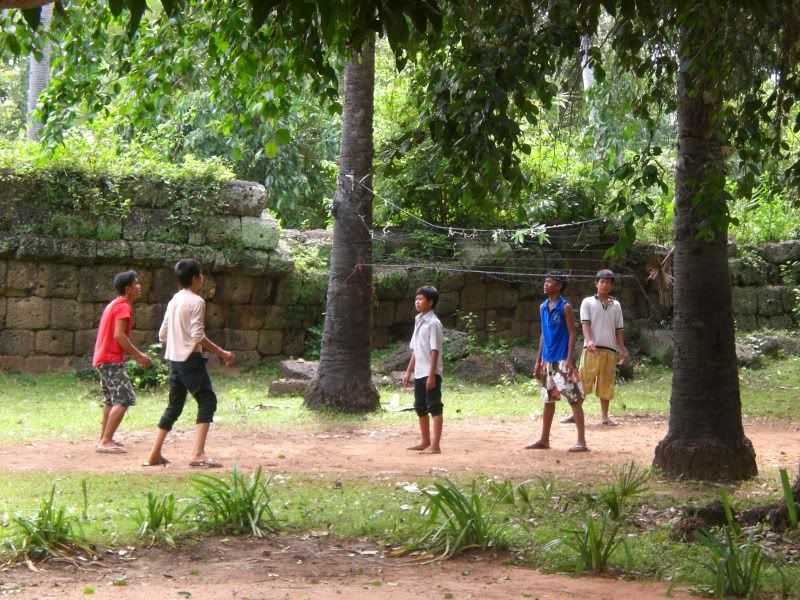 In Cambodia, pagodas are usually also places for people to relax. (And actually, Cambodian children can be really creative when it comes to games. Look at this -- a volleyball court made between two trees.)
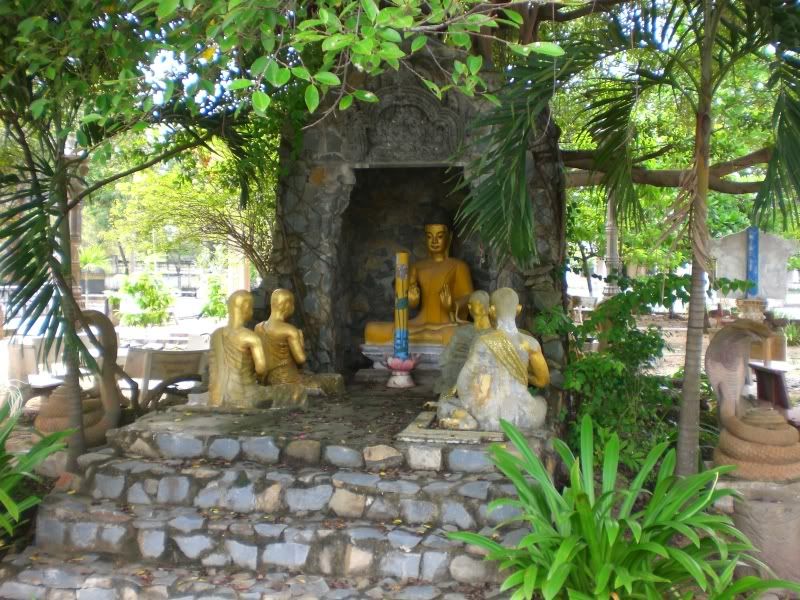 Right next to the Grandmother Temple is the Grandfather Pagoda. Surrounding the pagoda are many statues and stupas which tell the story of Buddha. According to the locals, this particular tree represents a "sacred place" because snakes are symbols of the gods.
 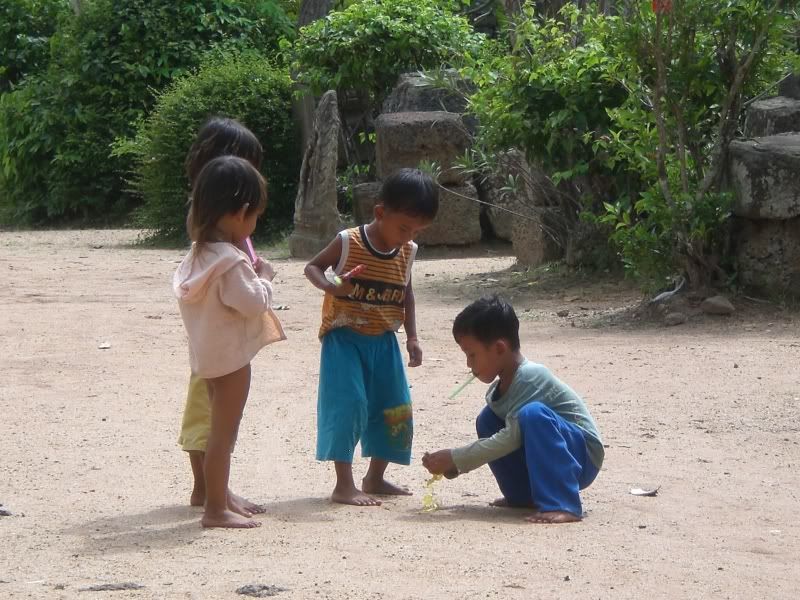 Children playing around the pagoda. They are very cute, but when they saw foreigners (such as me), they instantly began yelling m'roy, which means one hundred in Khmer. They were asking a hundred riels (around two cents). These scenes indicate that even though tourism may bring income to poor rural families, the influx of relatively wealthy locals and foreigners into the area may have a bad influence on the life and work attitudes of children and adults -- especially those who become accustomed to begging for money.
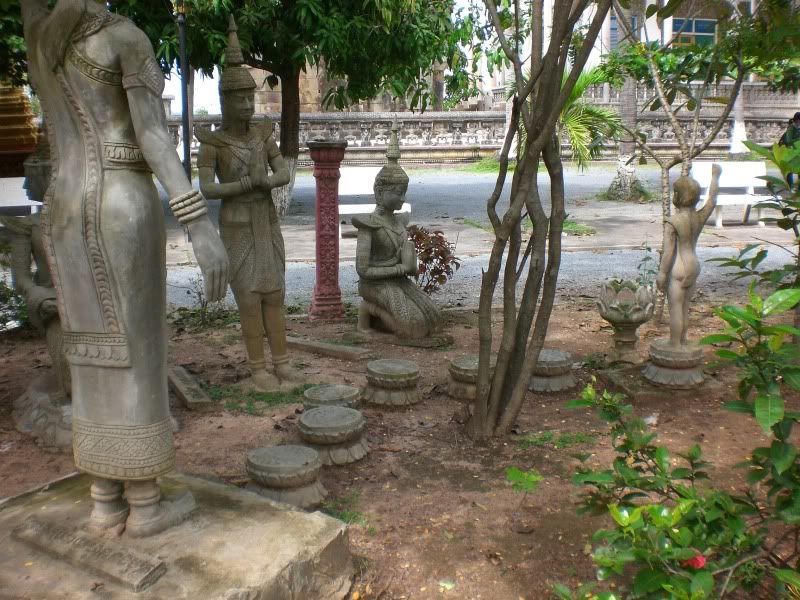 Another set of stupas representing the birth story of Buddha.
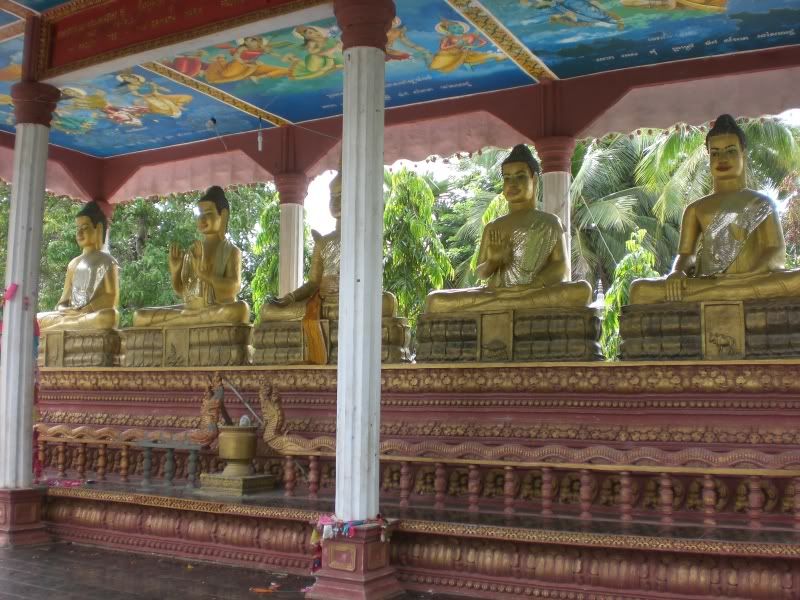 A series of statues made from donations by a Cambodian who migrated to the U.S. In Cambodia, it is customary for people to contribute to the construction of pagodas. In fact, most recently, there was the festival of Gut Ten. It was a huge fundraising period as Cambodian families collect hundreds and thousands of dollars from their family and friends and set off to the rural areas for a few weekends to start construction of a temple, monk's dormitory, statues, etc.
Thursday, 5 November 2009
The Majesty Capital of Phnom Oudong, Kampong Speu
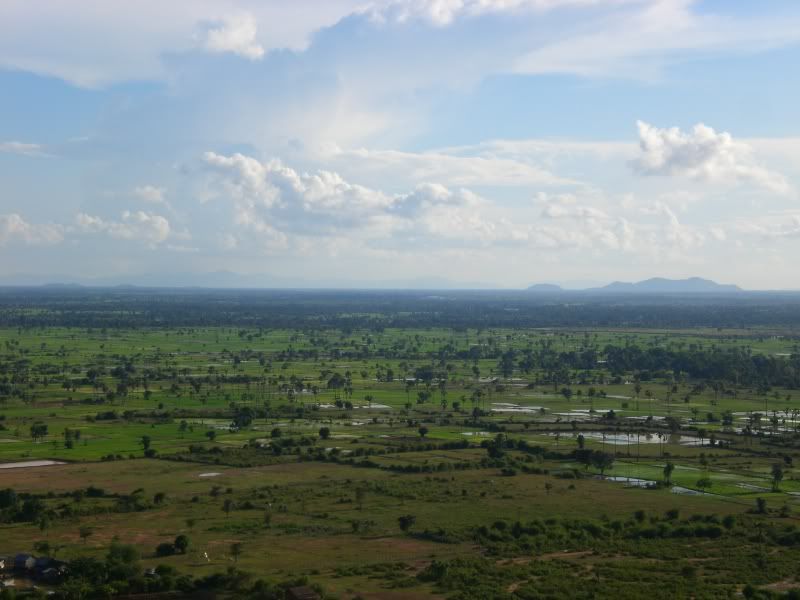
Phnom Oudong, or Oudong Mountain, in Kampong Speu Province is a local favourite. As the old capital of Phnom Penh, it houses magnificent temples and stupas at its peak. The precious ashes of Buddha are also said to be preserved here. I took these pictures back in September (sorry for not uploading after such long time). But I still feel compelled to post them because they are just gorgeous. It took about 20 minutes to hike up the hill. Along the way, there were "god" monkeys, fish ponds, child beggars, food sellers, handicapped people, etc., all trying to get some cash or blessing from the Gods and probably the visitors. The scenes from the top of the mountain made me speechless. The vast stretches of paddy fields, the aerial views of the river, the artistically scattered palm trees and coconut trees and the cloudless blue sky -- simply breath-taking. Please enjoy!


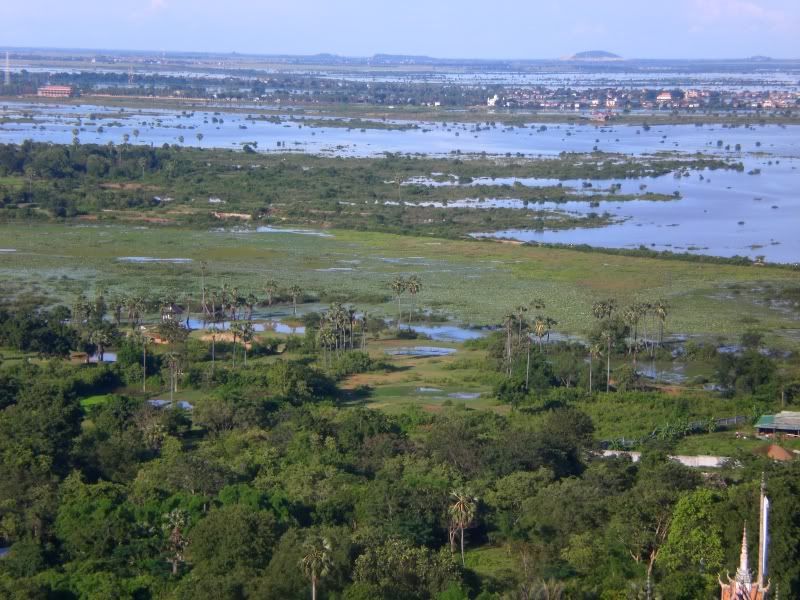
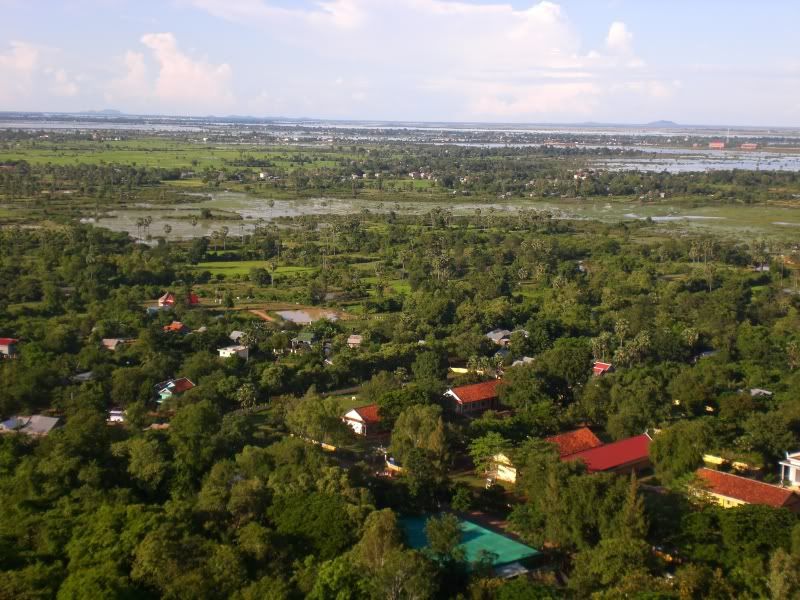
Here are some more pictures taken in Kampong Chhnang Province, the home of my landlord's wife. The city was basically built on the Mekong River. As you may see, the houses stood above water with flimsy wooden strcutures. Through the cracks, you may see fishermen and boatsmen patrolling the waters in their primitive boats, probably looking lotus, fish and other living things which can be sold in the market.
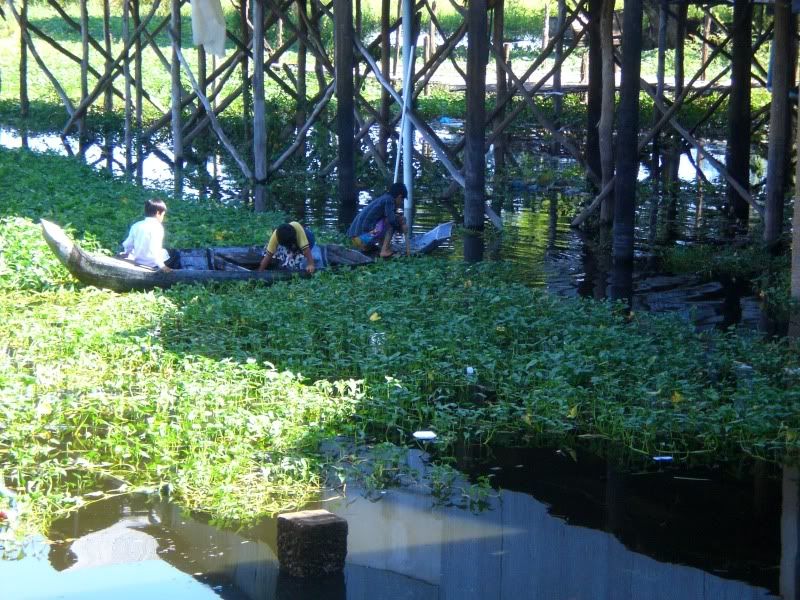

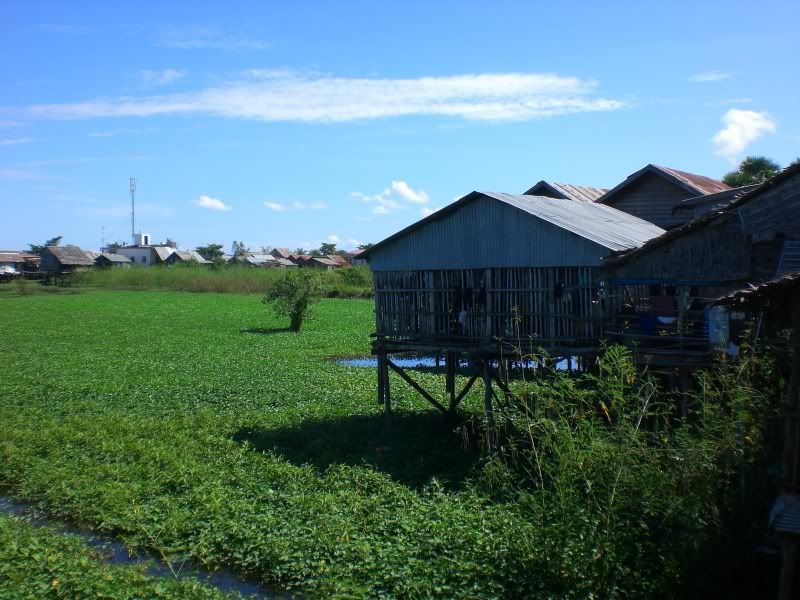
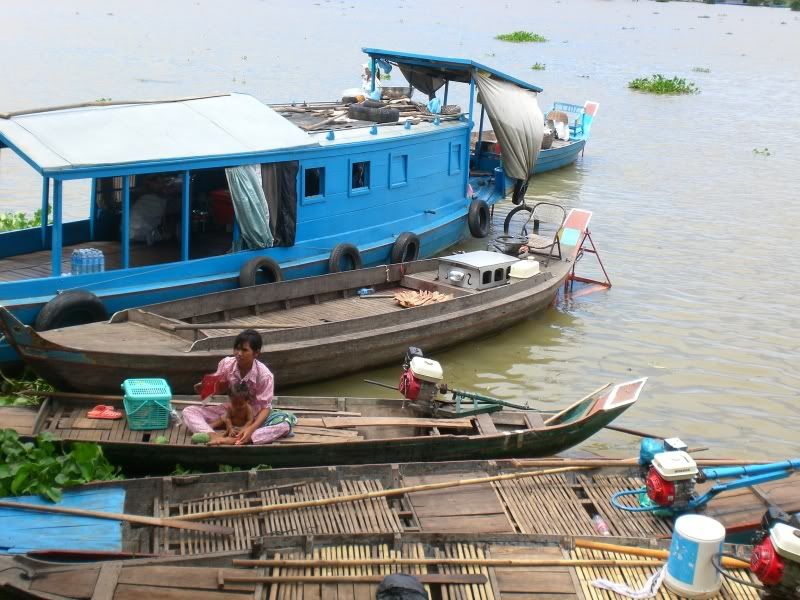

Here are some more pictures taken in Kampong Chhnang Province, the home of my landlord's wife. The city was basically built on the Mekong River. As you may see, the houses stood above water with flimsy wooden strcutures. Through the cracks, you may see fishermen and boatsmen patrolling the waters in their primitive boats, probably looking lotus, fish and other living things which can be sold in the market.
There Are More Cars and Prostitutes... So What?
When I first entered Grinnell College back in 2005, professors, my older peers and alums assured me that Grinnell will make me a “critical thinker” who knows how to read, speak and write well. In the following four years, I read, spoke and wrote. But when our final year started and the stock market crashed, it was impossible to find employment. Students, including me, then began to question the value of “critical thinking.” We asked, “Wouldn’t knowledge of accounting principles, business statistics, econometrics, computer programming, etc. be more valuable?”
If an economy only needs accountants and bankers as well as internet connection to support their work, then my answer may be YES. However, in reality, all economies need people who can think outside the box and convey ideas clearly verbally and in the written form.
In late October this year, the consultants from my Job Centre project team trained 15 counterpart staff from local vocational training providers and the Ministry of Labour. The training reminds me of the value of “critical thinking.” For four days, we ran exercises to stimulate analytical thoughts. We asked, for instance, “Suppose there are more cars in Battambang province over the ten years – what would this fact mean for the local economy?” Participants were then asked to brainstorm a list of new direct and indirect employment opportunities.
We also asked participants to make sense of labour market information in Cambodia. For example, seeing more laid off garment workers, some researchers found empirical evidence that unemployed women are moving to the sex industry. Now, how can the Job Centre use this information? How would this information alter the target audience and operation protocol of the Job Centre? What are the implications on skills needs?
Imagination is desperately needed for development-related work. There is no precedence in the country. There may be precedence from other countries, but their experiences must be adapted appropriately and tested in the local context. There are no textbooks. There are no authoritative supervisors who can tell staff members what exactly to do. In effect, people need to imagine and take up challenges and responsibilities.
From the trainers, I learned to get “the idea” across – the idea that their trainees must be imaginative and innovative. When asked to analyze certain data, some trainees refused to do so because “analysis is the job of the experts.” Little did they know that they were the experts! When asked to formulate the standard operating procedures of the Job Centres, some trainees suggested that “the ILO” should be responsible. Not them. The project consultants, therefore, spent much time conveying the idea of “critical analysis” in many different ways. Surely, there is much value of asking “so what?” and not receiving answers or facts as granted.
Photos from training course and training venue (project site):
 Consultants explaining to trainees the preparations needed to set up a Job Centre at the forthcoming project site.
 Construction of the National Employment Agency, due to be finished early next year. The NEA will forecast labour market needs and develop vocational training and employment policies.
 Renovation of the Job Centre site in Phnom Penh.
 The Job Centre site is located at the National Technical Training Institute, one of the first vocational training schools operated by the Cambodian government.
 Main building of NTTI. The building follows French architectural styles and has been recently repainted.
 The NTTI campus hosts three other schools -- the Cambodia-India Entrepreneurship Centre, Krossomak Polytechnic and Industrial Polytechnic (under construction). This is another view of the campus.
 Breakfast at NTTI canteen. In Cambodia, restaurants often cook the food and lay them out for customers to choose -- not very hygienic but nonetheless interesting to see.
 Sweets can also be part of breakfast...
 After the training course, the consultant joined some Cambodians in playing a "sports" game.
If an economy only needs accountants and bankers as well as internet connection to support their work, then my answer may be YES. However, in reality, all economies need people who can think outside the box and convey ideas clearly verbally and in the written form.
In late October this year, the consultants from my Job Centre project team trained 15 counterpart staff from local vocational training providers and the Ministry of Labour. The training reminds me of the value of “critical thinking.” For four days, we ran exercises to stimulate analytical thoughts. We asked, for instance, “Suppose there are more cars in Battambang province over the ten years – what would this fact mean for the local economy?” Participants were then asked to brainstorm a list of new direct and indirect employment opportunities.
We also asked participants to make sense of labour market information in Cambodia. For example, seeing more laid off garment workers, some researchers found empirical evidence that unemployed women are moving to the sex industry. Now, how can the Job Centre use this information? How would this information alter the target audience and operation protocol of the Job Centre? What are the implications on skills needs?
Imagination is desperately needed for development-related work. There is no precedence in the country. There may be precedence from other countries, but their experiences must be adapted appropriately and tested in the local context. There are no textbooks. There are no authoritative supervisors who can tell staff members what exactly to do. In effect, people need to imagine and take up challenges and responsibilities.
From the trainers, I learned to get “the idea” across – the idea that their trainees must be imaginative and innovative. When asked to analyze certain data, some trainees refused to do so because “analysis is the job of the experts.” Little did they know that they were the experts! When asked to formulate the standard operating procedures of the Job Centres, some trainees suggested that “the ILO” should be responsible. Not them. The project consultants, therefore, spent much time conveying the idea of “critical analysis” in many different ways. Surely, there is much value of asking “so what?” and not receiving answers or facts as granted.
Photos from training course and training venue (project site):
Consultants explaining to trainees the preparations needed to set up a Job Centre at the forthcoming project site. Construction of the National Employment Agency, due to be finished early next year. The NEA will forecast labour market needs and develop vocational training and employment policies.Renovation of the Job Centre site in Phnom Penh. The Job Centre site is located at the National Technical Training Institute, one of the first vocational training schools operated by the Cambodian government. Main building of NTTI. The building follows French architectural styles and has been recently repainted. The NTTI campus hosts three other schools -- the Cambodia-India Entrepreneurship Centre, Krossomak Polytechnic and Industrial Polytechnic (under construction). This is another view of the campus. Breakfast at NTTI canteen. In Cambodia, restaurants often cook the food and lay them out for customers to choose -- not very hygienic but nonetheless interesting to see. Sweets can also be part of breakfast... After the training course, the consultant joined some Cambodians in playing a "sports" game.Wednesday, 21 October 2009
Demand-Side “Carelessness”
In Cambodia, doctors, nurses, pharmacists, drug dispensers, potion-makers, and folk-medicine practitioners are all referred to as “pheet.” Although the local language has gender-specific names for these occupations, those terms are seldom used colloquially.
This choice of word is indicative of the local people’s perceptions about health care. When someone gets sick, instead of seeing a doctor, he may visit the pharmacist. He would ask for a quick diagnosis and purchase the medicine without questions. No taking the temperature. No inquiry into medical history. No doctor’s prescription. Hence, walking along the streets of Phnom Penh, you can see pharmacy after pharmacy because they are more “popular” than “clinics” and “hospitals.”
These local perceptions represent the demand-side constraints for improving health and nutrition, especially among poor people with little education. In terms of social development, these demand-side constraints are best exemplified by low utilization rates of public services. Pregnant women, for example, may not bother to attend pre-natal check-ups or to have a facility-based delivery. Mothers also do not vaccinate or breastfeed their newborns. They are not motivated to comply with health and nutrition advice. In their minds, these services are simply “not important.”
On the other hand, the lack of health care specialists and facilities may represent supply-side constraints (which is itself a complicated topic and not to be addressed here).
To incentivize utilization of medical facilities and adherence to high-quality diets, some countries have introduced “conditional cash transfers” (CCTs) schemes. As the term implies, these schemes are social assistance programmes which deliver cash to poor households on a regular basis on condition that they fulfil certain obligations. In the context of health, these conditions may be mandatory pre-natal and post-natal visits, delivery process handled by qualified medical doctors or midwives, completion of vaccination protocols, and regular growth monitoring of young infants. Households consisting of pregnant women or babies may then receive some cash benefits through regular compliance to the checklist.
In some Latin American countries, CCTs have shown a good track record of boosting hospital and clinic utilization and reducing malnutrition rates. These successes suggest potential benefits for replicating such programme designs in Asian countries, such as Cambodia.
Nonetheless, the health and nutritional benefits of CCTs are not automatic. A thorough understanding of demand-side constraints in the local context is necessary. Perceptions and cultural norms may influence compliance to conditionality as well as usage of the cash benefits.
Take the example of feeding practices. Also assume that mothers obtain a $10 incentive for bringing their babies to health centres for growth monitoring and vaccination. With higher purchasing power, the family can spend more on food. However, instead of getting a higher quality diet, the family may switch to more preferred food items, such as white bread and milled rice, which do not add any nutritional value.
In Cambodia, malnutrition among the poor and the non-poor affirms that increased income is not always correlated with better health. In the rural areas, in particular, 8.9% of children from non-poor households suffer from malnutrition (technical term: “wasting”), similar to the 9.8% among poor households. These statistics suggest that more education on nutrition and dietary choices, in the form of cooking classes, focus groups, health care advice, etc., should be delivered in line with cash incentives.
Improper parenting practices, also evident in the Cambodian context, may also hamper nutrition and health. Statistics show the percentage of infants receiving complementary feeding decreases significantly from the 12-to-17-month-old group to the 18-to-23-month-old group. In effect, among two-year-olds, there is a greater prevalence of anaemia (lack of iron), vitamins and other minerals. This decline, as some experts suggest, was driven by cultural perceptions that two-year-olds are “old enough” to feed themselves. These perceptions, surely, must be changed through education as well.
In a country which had experienced much trauma and poverty, the problem of “cultural poverty” is also serious. This term refers to households which have adopted a fatalistic attitude about their livelihoods and are unable to take advantage of opportunities to improve their livelihoods. The lack of information about their rights and the lack of means to exercise these rights are also factors sustaining chronic poverty. In turn, once the households receive the money, they take little care to spend wisely. They may buy more wine, cigarettes, and furniture, etc.; but not food. And they may spend all the money in one go. In face of these attitudes, some practitioners have suggested delivering cash directly to women (not the head of the household), who are more likely to make appropriate spending decisions, and disseminating positive messages to children and youth.
On the surface, the reluctance to attend medical check-ups, to purchase nutritious food, and to spend money wisely may look like “carelessness,” “thoughtlessness,” stubbornness”… But at the core of these decisions is ignorance. (It is also a matter of habit. Imagine yourself growing up in the U.S. eating with fork and knife. Then imagine flying into India or China. Instantly you have to eat with your hands or with chopsticks. Note your uneasiness.) In the end, these attitudes have to change so that more people from developing countries would demand health care services. But these changes rely not only on monetary incentives but also widespread and persistent public education.
***
The above analysis includes personal reflections from the author and information synthesized from the Technical Consultation on Safety Nets and Human Capital: The Role of Cash Transfers in Supporting the Poor While Addressing Maternal and Child Malnutrition (Raffles Hotel, Phnom Penh, 19 October 2009). This one-day meeting is a second of a series of consultations working towards a national social safety nets strategy in Cambodia. This article utilized presentations by H.E. Dr. Prak Sophonneary (Deputy Director of the National Maternal and Child Health Centre, Ministry of Health), Dr. Makmur Sunusi (Deputy Minister, Ministry of Social Affairs, Republic of Indonesia), and Mr. Harold Alderman (World Bank Social Protection Advisor, Africa Region).
This choice of word is indicative of the local people’s perceptions about health care. When someone gets sick, instead of seeing a doctor, he may visit the pharmacist. He would ask for a quick diagnosis and purchase the medicine without questions. No taking the temperature. No inquiry into medical history. No doctor’s prescription. Hence, walking along the streets of Phnom Penh, you can see pharmacy after pharmacy because they are more “popular” than “clinics” and “hospitals.”
These local perceptions represent the demand-side constraints for improving health and nutrition, especially among poor people with little education. In terms of social development, these demand-side constraints are best exemplified by low utilization rates of public services. Pregnant women, for example, may not bother to attend pre-natal check-ups or to have a facility-based delivery. Mothers also do not vaccinate or breastfeed their newborns. They are not motivated to comply with health and nutrition advice. In their minds, these services are simply “not important.”
On the other hand, the lack of health care specialists and facilities may represent supply-side constraints (which is itself a complicated topic and not to be addressed here).
To incentivize utilization of medical facilities and adherence to high-quality diets, some countries have introduced “conditional cash transfers” (CCTs) schemes. As the term implies, these schemes are social assistance programmes which deliver cash to poor households on a regular basis on condition that they fulfil certain obligations. In the context of health, these conditions may be mandatory pre-natal and post-natal visits, delivery process handled by qualified medical doctors or midwives, completion of vaccination protocols, and regular growth monitoring of young infants. Households consisting of pregnant women or babies may then receive some cash benefits through regular compliance to the checklist.
In some Latin American countries, CCTs have shown a good track record of boosting hospital and clinic utilization and reducing malnutrition rates. These successes suggest potential benefits for replicating such programme designs in Asian countries, such as Cambodia.
Nonetheless, the health and nutritional benefits of CCTs are not automatic. A thorough understanding of demand-side constraints in the local context is necessary. Perceptions and cultural norms may influence compliance to conditionality as well as usage of the cash benefits.
Take the example of feeding practices. Also assume that mothers obtain a $10 incentive for bringing their babies to health centres for growth monitoring and vaccination. With higher purchasing power, the family can spend more on food. However, instead of getting a higher quality diet, the family may switch to more preferred food items, such as white bread and milled rice, which do not add any nutritional value.
In Cambodia, malnutrition among the poor and the non-poor affirms that increased income is not always correlated with better health. In the rural areas, in particular, 8.9% of children from non-poor households suffer from malnutrition (technical term: “wasting”), similar to the 9.8% among poor households. These statistics suggest that more education on nutrition and dietary choices, in the form of cooking classes, focus groups, health care advice, etc., should be delivered in line with cash incentives.
Improper parenting practices, also evident in the Cambodian context, may also hamper nutrition and health. Statistics show the percentage of infants receiving complementary feeding decreases significantly from the 12-to-17-month-old group to the 18-to-23-month-old group. In effect, among two-year-olds, there is a greater prevalence of anaemia (lack of iron), vitamins and other minerals. This decline, as some experts suggest, was driven by cultural perceptions that two-year-olds are “old enough” to feed themselves. These perceptions, surely, must be changed through education as well.
In a country which had experienced much trauma and poverty, the problem of “cultural poverty” is also serious. This term refers to households which have adopted a fatalistic attitude about their livelihoods and are unable to take advantage of opportunities to improve their livelihoods. The lack of information about their rights and the lack of means to exercise these rights are also factors sustaining chronic poverty. In turn, once the households receive the money, they take little care to spend wisely. They may buy more wine, cigarettes, and furniture, etc.; but not food. And they may spend all the money in one go. In face of these attitudes, some practitioners have suggested delivering cash directly to women (not the head of the household), who are more likely to make appropriate spending decisions, and disseminating positive messages to children and youth.
On the surface, the reluctance to attend medical check-ups, to purchase nutritious food, and to spend money wisely may look like “carelessness,” “thoughtlessness,” stubbornness”… But at the core of these decisions is ignorance. (It is also a matter of habit. Imagine yourself growing up in the U.S. eating with fork and knife. Then imagine flying into India or China. Instantly you have to eat with your hands or with chopsticks. Note your uneasiness.) In the end, these attitudes have to change so that more people from developing countries would demand health care services. But these changes rely not only on monetary incentives but also widespread and persistent public education.
***
The above analysis includes personal reflections from the author and information synthesized from the Technical Consultation on Safety Nets and Human Capital: The Role of Cash Transfers in Supporting the Poor While Addressing Maternal and Child Malnutrition (Raffles Hotel, Phnom Penh, 19 October 2009). This one-day meeting is a second of a series of consultations working towards a national social safety nets strategy in Cambodia. This article utilized presentations by H.E. Dr. Prak Sophonneary (Deputy Director of the National Maternal and Child Health Centre, Ministry of Health), Dr. Makmur Sunusi (Deputy Minister, Ministry of Social Affairs, Republic of Indonesia), and Mr. Harold Alderman (World Bank Social Protection Advisor, Africa Region).
Friday, 16 October 2009
You Get What You've Paid For
Speaking of pro-poor services, free access to education, free meals at school, free health care, free food rations and other social benefits often come to mind. Indeed, it sounds logical that poor people, already made disadvantaged by their financial constrains and social status, should be entitled to some “safety nets” which they can fall back to when they cannot feed themselves or maintain decent standards of living.
But from the point of view of practitioners, pro-poor programmes should not always deliver “free lunches.”
I know a few people in Phnom Penh operating dormitories (cum student centres) for young students from the provinces. More than roofed shelters, these dormitories offer a peer support network for the students. In the morning, they eat breakfast together. In the afternoon, they go to school together. In the evening, they chat with each other. In the night, they study together. Before they sleep, they say goodnight to each other. For many young Cambodians who travelled alone to the city for their education, the dormitories are where they find their first friends.
Students also have to pay a fee – the rent (most probably inclusive of an “activity fee”) – and to support their own daily expenditures on food, electricity, water and transportation. These sums may become a financial burden for those from poor rural villages.
Practitioners say, nonetheless, that there is greater utility, for both the facility and the students, when the centre charges rent and requires students to pay for basic necessities out of their own pockets.
Years ago, when the “dormitory business” first started, electricity was offered for free. Paul, my friend, recalled receiving the first electricity bill for the dormitory run by his NGO. It was more than $300 for the 30 students there. Surprised by the huge sum, he went to check each of the rooms. He tallied 15 rice-cookers, 10 fans and a couple of desk lamps. Many of the students also confessed that they would sometimes forget to turn the fan off when they left for school. Other times, they would forget to switch off the corridor or bathroom lights in the night.
During the following year, the dormitory lacked funding to continue. A few months after the students had moved out, Paul went to visit them around the city. Casually, he asked about their electricity bills. It was just $2 per person each month. They shared only one desk lamp and woke up early to take advantage of the morning sunlight. They cooked together and avoided turning on the fan unless it was above 33 degrees Celsius. The lesson then is that even poor Cambodian students, like any others, have a tendency to be “free riders.” When electricity and water are given for free, there is little incentive to conserve.
Food costs are also not paid for in the dormitories. Dormitories which used to provide food found that the per person food cost can be $10 each week. However, students can bring in rice from their own villages at a much cheaper price. Also, for each meal, students can buy cooked food to be shared among three or four people. From roadside vendors, such freshly fried meat and vegetables cost only 4,000 riels (one dollar). In other words, without compensating the students’ health, the facility and the centre can save $7 for each person altogether.
Hence, in economic terms, it is more socially desirable to leave students with their utility and food bills. At the same time, to make sure that these expenses do not exclude the poorest qualified students from education, subsidized rent can be offered for students with special needs.
This system of subsidized rent can also come in several tiers. In one case, I heard that dormitory managers would charge $6 for students with a motorbike, $4 for those with bicycles and $2 for those who has no means of transportation. Physical property is a good proxy for wealth. In rural areas, in particular, transactions are more likely conducted through a barter system than through fiat money. Possessions, such as acres of land, motorbikes, houses, cows, chickens and coconut trees, are the best “currency” for exchange. It is based on these assumptions that those with motorbikes are judged to be “wealthier” and should be able to afford a higher rent.
Dormitories, surely, are not the only type of non-free pro-poor services. In the rural areas, pilot programmes with self-help groups, community lending schemes and social insurance have tremendously boosted communal wealth. With a community fund, villagers who have contributed money can also draw out sums for starting businesses. Hence the “community lending scheme.” Including repayments and interest, some community funds in Cambodia have already saved thousands of dollars for their community!
This surplus of money then serves to provide public goods and social services to the villagers. When their family members get sick, for instance, they can withdraw money for medicines. This mechanism is referred to as “social insurance.” Surplus funds can also be used for promoting children’s education and for hiring trainers to upgrade the entrepreneurship and agricultural skills of the adults. In these cases, the fund has facilitated “self-help groups” in support of income generation.
These stories remind me of the debate on whether to hand poor people fish or to teach them to fish. Sometimes the government and the donor community must give out fish, in such cases as providing free access to primary education and affordable maternal health care. However, in other circumstances, it is more important to be innovative than to offer everything for free.
One of my colleagues, when speaking of poor people obtaining vocational and technical training, commented, “Even for poor people, they get what they have paid for. If they value training at zero, then they learn nothing. But when they invest a bit on their education, the benefits are far beyond what they have initially struggled to pay for.” This statement may sound counterintuitive, but its truth resonates in the cases of dormitories and community funds and possibly more examples in the developing world.
But from the point of view of practitioners, pro-poor programmes should not always deliver “free lunches.”
I know a few people in Phnom Penh operating dormitories (cum student centres) for young students from the provinces. More than roofed shelters, these dormitories offer a peer support network for the students. In the morning, they eat breakfast together. In the afternoon, they go to school together. In the evening, they chat with each other. In the night, they study together. Before they sleep, they say goodnight to each other. For many young Cambodians who travelled alone to the city for their education, the dormitories are where they find their first friends.
Students also have to pay a fee – the rent (most probably inclusive of an “activity fee”) – and to support their own daily expenditures on food, electricity, water and transportation. These sums may become a financial burden for those from poor rural villages.
Practitioners say, nonetheless, that there is greater utility, for both the facility and the students, when the centre charges rent and requires students to pay for basic necessities out of their own pockets.
Years ago, when the “dormitory business” first started, electricity was offered for free. Paul, my friend, recalled receiving the first electricity bill for the dormitory run by his NGO. It was more than $300 for the 30 students there. Surprised by the huge sum, he went to check each of the rooms. He tallied 15 rice-cookers, 10 fans and a couple of desk lamps. Many of the students also confessed that they would sometimes forget to turn the fan off when they left for school. Other times, they would forget to switch off the corridor or bathroom lights in the night.
During the following year, the dormitory lacked funding to continue. A few months after the students had moved out, Paul went to visit them around the city. Casually, he asked about their electricity bills. It was just $2 per person each month. They shared only one desk lamp and woke up early to take advantage of the morning sunlight. They cooked together and avoided turning on the fan unless it was above 33 degrees Celsius. The lesson then is that even poor Cambodian students, like any others, have a tendency to be “free riders.” When electricity and water are given for free, there is little incentive to conserve.
Food costs are also not paid for in the dormitories. Dormitories which used to provide food found that the per person food cost can be $10 each week. However, students can bring in rice from their own villages at a much cheaper price. Also, for each meal, students can buy cooked food to be shared among three or four people. From roadside vendors, such freshly fried meat and vegetables cost only 4,000 riels (one dollar). In other words, without compensating the students’ health, the facility and the centre can save $7 for each person altogether.
Hence, in economic terms, it is more socially desirable to leave students with their utility and food bills. At the same time, to make sure that these expenses do not exclude the poorest qualified students from education, subsidized rent can be offered for students with special needs.
This system of subsidized rent can also come in several tiers. In one case, I heard that dormitory managers would charge $6 for students with a motorbike, $4 for those with bicycles and $2 for those who has no means of transportation. Physical property is a good proxy for wealth. In rural areas, in particular, transactions are more likely conducted through a barter system than through fiat money. Possessions, such as acres of land, motorbikes, houses, cows, chickens and coconut trees, are the best “currency” for exchange. It is based on these assumptions that those with motorbikes are judged to be “wealthier” and should be able to afford a higher rent.
Dormitories, surely, are not the only type of non-free pro-poor services. In the rural areas, pilot programmes with self-help groups, community lending schemes and social insurance have tremendously boosted communal wealth. With a community fund, villagers who have contributed money can also draw out sums for starting businesses. Hence the “community lending scheme.” Including repayments and interest, some community funds in Cambodia have already saved thousands of dollars for their community!
This surplus of money then serves to provide public goods and social services to the villagers. When their family members get sick, for instance, they can withdraw money for medicines. This mechanism is referred to as “social insurance.” Surplus funds can also be used for promoting children’s education and for hiring trainers to upgrade the entrepreneurship and agricultural skills of the adults. In these cases, the fund has facilitated “self-help groups” in support of income generation.
These stories remind me of the debate on whether to hand poor people fish or to teach them to fish. Sometimes the government and the donor community must give out fish, in such cases as providing free access to primary education and affordable maternal health care. However, in other circumstances, it is more important to be innovative than to offer everything for free.
One of my colleagues, when speaking of poor people obtaining vocational and technical training, commented, “Even for poor people, they get what they have paid for. If they value training at zero, then they learn nothing. But when they invest a bit on their education, the benefits are far beyond what they have initially struggled to pay for.” This statement may sound counterintuitive, but its truth resonates in the cases of dormitories and community funds and possibly more examples in the developing world.
Tuesday, 13 October 2009
Alas, The Language Genius
“Jae reh peep… saa haa jip… oo saa haa gaam… gaa vee peet… joh jaa…”
One by one, I read out these Khmer words which caught my attention at a recent tripartite meeting involving government officials, trade union representatives and factory managers.
“Sustainability… trade union… industry… schedule… negotiate…”
One by one, also, Savon, my Khmer friend, patiently explained to me the words’ meaning.
I continued to read from my list, including words which did not make any “Khmer sense,” and in the end, Savon commented, “Phoebe, you are so smart! You have caught such big words!”
“Oo-goon,” I said. Looking at her eager face, I repeated more earnestly, “Oo-goon jeraan.”
Thank you. Thank you very much. Ironically, of all the big words I have learned, “thank you” is the only phrase which came across my mind at that moment. Secretly, I asked myself, “Where is my daily life vocabulary?” Yes, I can listen and understand, but I cannot make any verbal comments. In fact, the more Khmer I get to understand, the more I realize my inability to speak.
Having lived in several countries, I know how it feels to enter a strange land and think that “foreign peoples” (from my point of view), speaking in foreign languages, are always talking about me. When my eyes meet those of a street vendor, and then when she turns around and speak with someone else, I would instinctively feel that I am their topic of discussion. To save myself from such anxiety, I would like to be able to understand and also be able to speak enough so that people know that I understand. But learning to speak is really easier said than done.
These thoughts remind me of a recent conversation with a missionary couple from Hong Kong who spent ten years in the Philippines with their three kids. They sent their eight-year-old son to a Christian international school which used English, Mandarin and Filipino as the languages of instruction. Hakka, a southern Chinese dialect, is sometimes used by the ethnic Chinese teachers as well. From day to day, the boy would return home, do his homework neatly and get good grades at tests and exams in all three languages. In fact, in their prayer letter back to their home church in Hong Kong, the missionaries cited with grace their son’s “smooth transition.” In response, the congregation wrote back in excitement, “Your son must be a language genius!”
Alas, their son was the “language genius” only until the parent-teacher day.
Sitting the classroom, the teacher looked at the boy’s excellent results but sternly commented, “This is all good… but is your son dumb?” Before the missionaries could talk back in protest, the teacher added, “He has not spoken one word in class or in recess time with us or his classmates.”
Puzzled, the parents insisted that the teacher visit their home for dinner one night. To the teacher’s surprise, at home, the son behaved just like any other kid. He played with his siblings, argued over toys, fought over the TV remote control and yelled for daddy and mammy when his older brother bullied him. Yes, he could listen and understand Mandarin, English and Filipino; but he just could not speak them. He could only speak Cantonese, the language the family spoke at home.
The son, from then on, got back on track with his speaking abilities. The point of this story, though, is that I sometimes feel like that poor little boy – understanding what people are saying but cannot make any verbal response.
Yesterday night, I returned home from a choir practice with my Singaporean neighbour. We spoke with the landlord’s mother, which I respectfully call yaay (grandmother in Khmer). Or, more accurately, she spoke with yaay; I listened. I knew they were talking about yaay’s health, an old shoulder injury which has started to che (hurt) again. I understood that she has been to the pheet (doctor) and that she has nyam tnam (take medicine). But medicines have not worked. My friend told her to haat braan (exercise) by swinging her arms, from bon dtik bon dtuuik (small actions) to klang klang (large movements). To start with, she advised yaay to repeat the motion bpram dong (five times) and then gradually do deeut deeut hi (more and more). I stood there and nodded to show that I understood. But really, I hope I could echo my friend’s advice and be part of this conversation.
One by one, I read out these Khmer words which caught my attention at a recent tripartite meeting involving government officials, trade union representatives and factory managers.
“Sustainability… trade union… industry… schedule… negotiate…”
One by one, also, Savon, my Khmer friend, patiently explained to me the words’ meaning.
I continued to read from my list, including words which did not make any “Khmer sense,” and in the end, Savon commented, “Phoebe, you are so smart! You have caught such big words!”
“Oo-goon,” I said. Looking at her eager face, I repeated more earnestly, “Oo-goon jeraan.”
Thank you. Thank you very much. Ironically, of all the big words I have learned, “thank you” is the only phrase which came across my mind at that moment. Secretly, I asked myself, “Where is my daily life vocabulary?” Yes, I can listen and understand, but I cannot make any verbal comments. In fact, the more Khmer I get to understand, the more I realize my inability to speak.
Having lived in several countries, I know how it feels to enter a strange land and think that “foreign peoples” (from my point of view), speaking in foreign languages, are always talking about me. When my eyes meet those of a street vendor, and then when she turns around and speak with someone else, I would instinctively feel that I am their topic of discussion. To save myself from such anxiety, I would like to be able to understand and also be able to speak enough so that people know that I understand. But learning to speak is really easier said than done.
These thoughts remind me of a recent conversation with a missionary couple from Hong Kong who spent ten years in the Philippines with their three kids. They sent their eight-year-old son to a Christian international school which used English, Mandarin and Filipino as the languages of instruction. Hakka, a southern Chinese dialect, is sometimes used by the ethnic Chinese teachers as well. From day to day, the boy would return home, do his homework neatly and get good grades at tests and exams in all three languages. In fact, in their prayer letter back to their home church in Hong Kong, the missionaries cited with grace their son’s “smooth transition.” In response, the congregation wrote back in excitement, “Your son must be a language genius!”
Alas, their son was the “language genius” only until the parent-teacher day.
Sitting the classroom, the teacher looked at the boy’s excellent results but sternly commented, “This is all good… but is your son dumb?” Before the missionaries could talk back in protest, the teacher added, “He has not spoken one word in class or in recess time with us or his classmates.”
Puzzled, the parents insisted that the teacher visit their home for dinner one night. To the teacher’s surprise, at home, the son behaved just like any other kid. He played with his siblings, argued over toys, fought over the TV remote control and yelled for daddy and mammy when his older brother bullied him. Yes, he could listen and understand Mandarin, English and Filipino; but he just could not speak them. He could only speak Cantonese, the language the family spoke at home.
The son, from then on, got back on track with his speaking abilities. The point of this story, though, is that I sometimes feel like that poor little boy – understanding what people are saying but cannot make any verbal response.
Yesterday night, I returned home from a choir practice with my Singaporean neighbour. We spoke with the landlord’s mother, which I respectfully call yaay (grandmother in Khmer). Or, more accurately, she spoke with yaay; I listened. I knew they were talking about yaay’s health, an old shoulder injury which has started to che (hurt) again. I understood that she has been to the pheet (doctor) and that she has nyam tnam (take medicine). But medicines have not worked. My friend told her to haat braan (exercise) by swinging her arms, from bon dtik bon dtuuik (small actions) to klang klang (large movements). To start with, she advised yaay to repeat the motion bpram dong (five times) and then gradually do deeut deeut hi (more and more). I stood there and nodded to show that I understood. But really, I hope I could echo my friend’s advice and be part of this conversation.
Thursday, 8 October 2009
So You Have Graduated.... Be a Cleaning Lady
Back in high school, I remember spending one night with Lena, my family’s Filipino domestic helper, and watching a movie starred by Matt Damon. About half an hour into the movie, Lena exclaimed, “I remember this story! It is in your book!”
With a puzzled face, I replied, “Which book?”
She immediately ran to the shelf and pulled out John Grisham’s THE CHAMBER. She has recently finished the book. I felt so ashamed of myself, for although I bought shelves full of books, I have not found the determination and energy to read all of them. While I was lazing around, though, Lena has probably read all the books and remembered well the details of my English fiction and non-fiction books.
What surprised me in that encounter was her ability to read and understand sophisticated English. No one would expect a domestic helper who does household chores to have excellent language abilities. Upon further inquiry, she revealed that she has already completed a university degree in the Philippines. From her demonstrated English skills, I assumed that her degree was of decent quality. But why are her skills so underused?
In many developing countries in Southeast Asia, there is a misalignment between developments in the education and the industrial sectors. Consider three scenarios. In some countries, education reforms can be so successful that more and more young people completes beyond basic education and pursue tertiary degrees. Most of these students acquire general/soft skills in business and financial management, language proficiency, information technology skills, etc. These skills would be valuable in a fully urbanized and industrialized society; but in countries where agriculture remains a sizable economic sector and the industrial base is narrow, these graduates would not be able to find jobs commensurate with their skills.
In other countries, both the education and industrial sectors may be growing rapidly. However, there is little coordination between universities and vocational training institutions. In effect, training efforts may be duplicated, leading to oversupply of certain skills and a dearth other needed skills. Also, since training institutions rarely interact with private sector employers, the industry-specific skills trainees obtained may be outdated or too shallow. In the end, employers would have to waste resources re-training their new employees again.
In the third group of countries, industrial development occurs at a faster rate than education reforms. There would be an influx of unskilled workers into the workforce but they lack the qualifications to land in a decent job. At the same time, training institutions lack the human resource and infrastructural capacities to deliver high quality training. In some cases, training institutions may be established but under-utilized because few resources have been invested in publicity and outreach.
In all three cases, different forms of misaligned educational and industrial developments lead to mismatch of skills. For some countries, workers respond to this mismatch through migration. The Philippines would serve as an example where, on the one hand, many educated women would choose to work as domestic helpers overseas. On the other hand, many professionally trained Filipinos would migrate to other Southeast Asian countries, the European Union or the USA to be teachers, nurses and doctors. For other countries with handicapped education systems and a vast pool of unskilled labour, youth unemployment rate maybe very high. Idle youth can represent forgone economic productivity and also contribute to social problems, such as violence and drug abuse.
There are two additional key issues related to tackling employment creation and skills mismatch. First, the informal economy, which includes mobile food stalls, small roadside shops and motorbike repair stations, represents a large (and growing) proportion of economic activities in developing countries. Most “workers” in the informal economy are sole proprietors or “own-account workers” with small and unstable income. Since their work requires low levels of skills, there is little incentive to obtain training. As many development economists have suggested, one solution to limited wage employment in the formal sector is to “formalize the informal sector.” Take the example of newspaper sellers on the roadside. Instead of having many small independent street vendors, there can be a large newspaper distribution company that hires these vendors (and they can wear a uniform, etc.). As formal employees, their welfare, wages and work conditions can be better monitored. With clearer job descriptions as formal sector employees, then employers, workers and training institutions can better pinpoint the areas of training needed.
The second issue related to the quality of education and training necessary to facilitate decent employment. More precisely, some mechanisms for obtaining professional certifications and qualifications, either through exams or coursework, would be needed. In many developed countries and some developing countries, there is a complex National Qualifications Framework, which specifies the various levels of skills in particular professions. The process of developing the framework can take years, but such accreditation and certification procedure would be crucial for making training courses widely recognized by employers. With clear guidelines for training, vocational training institutions nationwide can standardize their curriculum and employers can also predict the level of skills their new employees possess.
All in all, this brief article puts on the table several key issues to industrial development that must be discussed in detail in the future. The skills mismatch that propelled the migration of Filipinos is not an isolated case. This mismatch is indicative of the uneven pace of industrial growth and education reform. Its solution requires such multi-faceted and coordinated policies as “formalization” and skills standards formulation.
References
Cristina Martinez-Fernandez and Marcus Powell, "Employment and Skills Strategies in Southeast Asia: Setting the Scene," OECD LEED Programme, July 2009.
Wednesday, 30 September 2009
Photos of P'Chum Ben
Please enjoy photos from P’Chum Ben: Scenes around the inside the “national pagoda,” mentioned in my previous article. Please enjoy pictures of the magnificent building, the women in traditional dresses, the huge families praying for blessing and my landlord’s family offering rice and receiving the “holy water.”
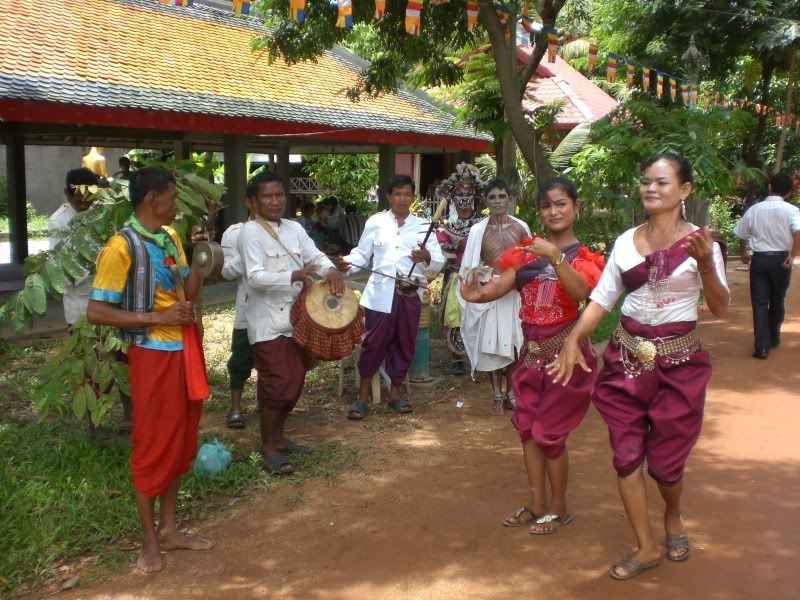
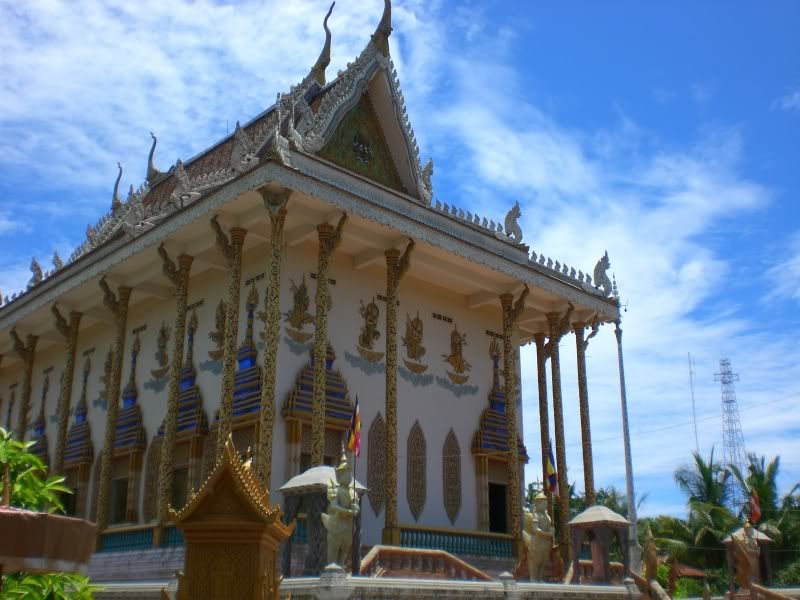
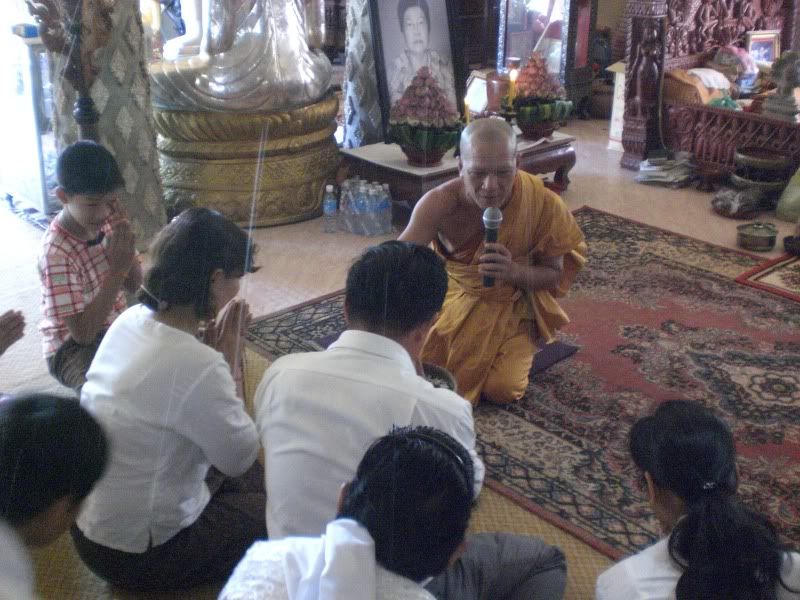
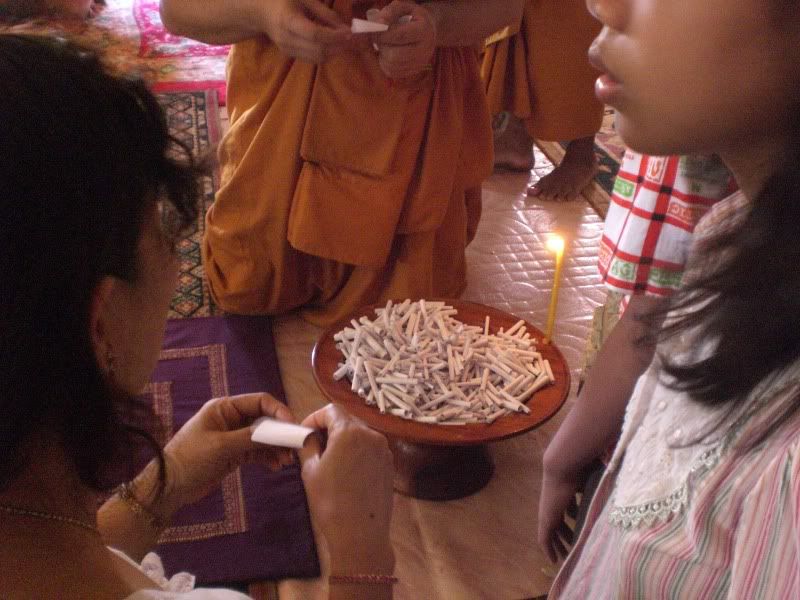
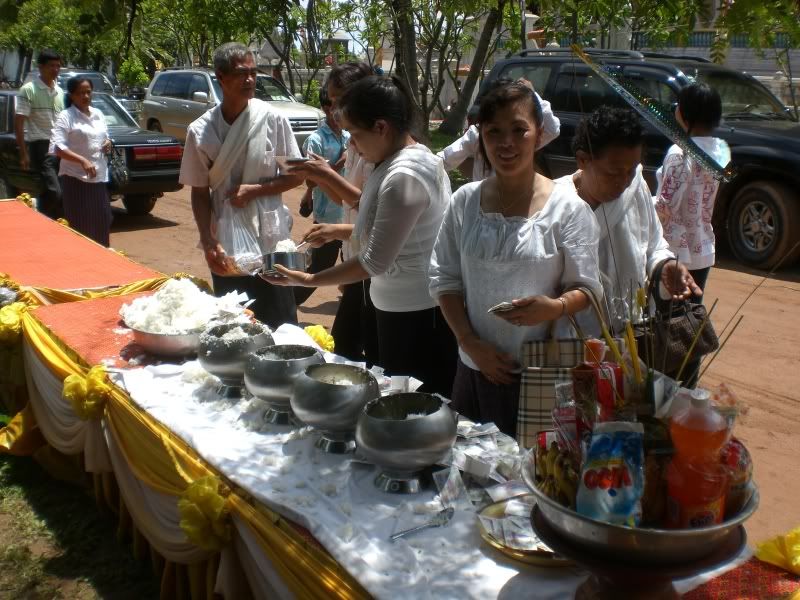
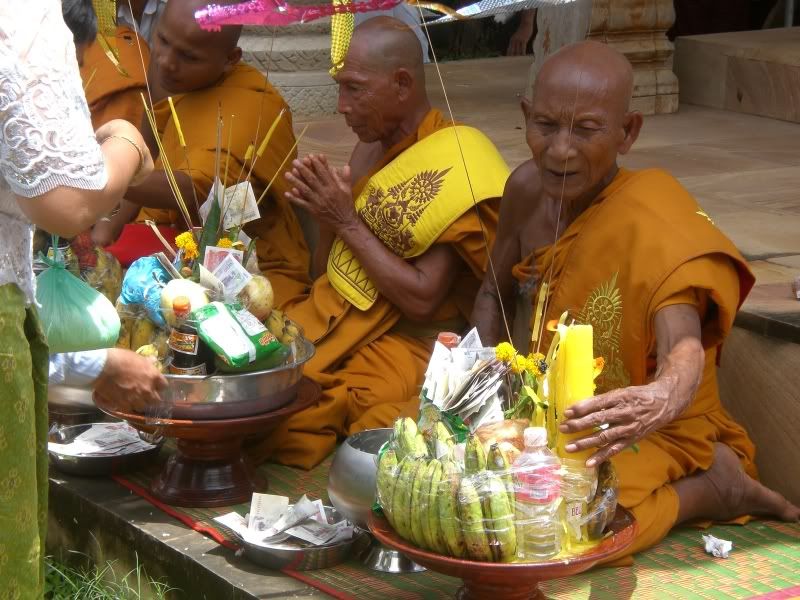
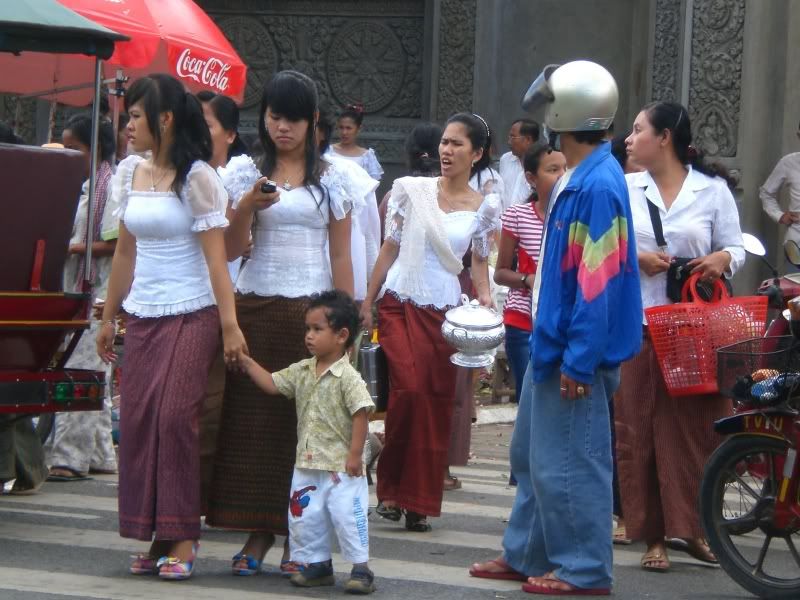
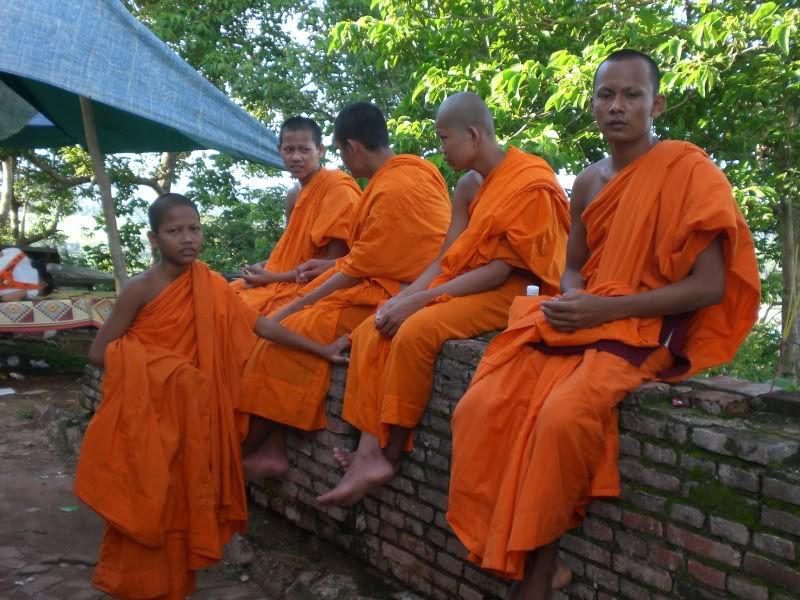


Tuesday, 29 September 2009
P'Chum Ben -- Pagodas, Food, Monks, Money, Prayers...
At the doorsteps of the pagoda, the noise of traditional Cambodian music and the smell of incense instantly overwhelmed me. I took off my shoes and hastily left them next in a pile of at least a hundred others. Once inside, my landlord, his wife and his two young children, age fourteen and twelve, dropped to their feet. Bowing repeatedly, they murmured some Khmer words, possibly a prayer for safety and wealth. Upon paying brief respects, the family “diversified” their responsibilities. The kids, as if pre-programmed to do so, swiftly took jasmine flowers to the front alter, bowed again and laid them down respectfully. My landlord prepared a handful of incense while his wife prepared food and drinks as offering. The family then gathered at the feet of a monk, pushed the food towards him and asked for blessings. Holding a microphone, the monk began his prayer in monotone. He put his hand into a bowl of “holy water” and sprayed them onto the family as he chanted. It was only afterwards which the family showed some sign of relief – at least the first parts of the necessary rituals had been completed.
The family continued their busy errands around the temple. There were numerous statutes of Buddhist gods, all in different emotions. The family rushed around the temple to make sure that they did not neglect to put down money, food and incense for any one of them. As I watched them and others in silent amazement, my landlord quietly came over.
“This is a national-level temple,” he said proudly. He pointed to the picture of Hun Sen, the Prime Minister, and the King’s family on the left. “They worship their ancestors here too,” he added and hurried off again.
These scenes reminded me of the Chinese tradition in which two calendar days are allocated each year for visiting the graves of ancestors. The anxious crowd inside pagodas also reminded me of the people elbowing each other every Lunar New Year to get the first blessings and pay the first respects at the temples.
Except these Chinese festivities do not quite match the frenzy of Cambodia’s P’Chum Ben.
According to my local colleague, P’Chum Ben is all about going to the right pagoda, praying at the right time, using the right monk, bringing the right food, paying the right amount of money (and to the right person)… In short, it involves meticulous actions. And the scale of the activities during the P’Chum Ben period is certainly unmatched. Tuktuk drivers, instead of screaming for tourists, wait patiently outside pagodas for business. My landlord’s car ran on snail’s pace for two hours before reaching the pagoda. Everybody seems to be heading somewhere, to all different directions. Some travel as a big family, others travel with just a few relatives. In any case, congestion and frenzy may be the two best words to describe the activities at this time.
P’Chum Ben appears to be an expensive but necessary part of Cambodian life. The period lasts for 15 days and almost every family, from poor to rich, would visit pagodas in their ancestral homes. Visiting one pagoda, however, is not enough. Cambodians believe that their ancestors’ spirits fly to different pagodas in search of their living relatives but they cannot eat the food offered by other families. The locals would not stand a chance of “starving” their ancestors by visiting just one. Seven. Seven is the perfect number.
What’s also important is the food and money offered. Around the pagodas are lines of silver-plated containers where visitors lined up to dump in rice. Small alters decorated with bananas, apples, oranges, bamboo-leaf-wrapped sticky rice, etc. have little basins on the front to collect money. Money is attached to the baskets of food which women carried in for the monks. I saw an extended family coming in with two bags of 50kg rice, several boxes of water and soft drinks, fruits and rice. Food and money is surely a big deal. You cannot offer enough.
Finally, by noon, the crowds began to dissipate. According to my landlord, you can only pay respects in the morning. Some old people would come once in early morning, say, at 4am, and return again at 10am or 11am.
I left the pagoda with many questions which I do not dare to ask. For instance, what may happen when you visit seven pagodas and still fail to “meet” your ancestors? How can you be sure not to miss your ancestors? Where would poor people get the money to prepare all these food and travel to seven pagodas in the provinces? And what happens to the mountains of food given to the monks? I wonder if all these rituals are out of respect or out of fear, whether people are asking for forgiveness, protection or wealth. Do people know what they are praying for? Do they know what the monks are praying?
Returning to the office on the following week, I saw several colleagues who, in subtle ways, gave different answers to these questions. When asked about his four-day P’Chum Ben holiday, one joked that his wife and mother did all the work. He just waited outside because, according to him, “how can one pray when the pagoda is so noisy and crowded?” Another also smiled when talking about P’Chum Ben, but for a different reason. He was sincerely praying for his ancestors, especially relatives who died in the wars. He also enjoyed his time with the extended family. “We went to Kampong Som (or Sihanoukville) together. We only meet like this once each year.” Surely, P’Chum Ben appears to have multiple layers of meaning – what you make of it, I guess, matters more than what others feel as well as what the original Buddhist, religious or spiritual meaning was.
Thursday, 24 September 2009
T'wer Dam K'nia -- Do as Your Neighbours Do
A few weekends ago, I went on two trips to Takeo and Kandal, both provinces south of Phnom Penh. The Takeo trip was with Savon, my co-worker at the ILO, and with the purpose of visiting her rural home and her parents. The Kandal trip, with two Hong Kong missionaries Miu-Ling and Piano, was to visit a children sponsorship centre and a village church set up by the Asia Pacific Free Methodist Association (APFMMA).
It was especially interesting to count the number of road-side food stalls along the way. For example, while on the back of Savon’s motorbike for the three-hour trip, I counted 35 stalls selling grilled beef on one five-minute stretch. About half an hour later, we saw a line of 19 stalls selling melons right next to each other. After a while, yet another 10 stalls sold grapefruits next to each other. There were similar scenes on my trip to Kandal. There was a line of stalls selling lemons and ten-plus stalls selling preserved vegetables. But… how can these stalls make money when they all sell the SAME THING? I became very puzzled by this foolish business strategy (which seems to be quite prevalent).
When I posed this question to Miu-Ling, a missionary here for six years already, she noted that the locals have a “t’wer dam k’nia” attitude. The phrase literally means “to do and follow together.” In other words, when some business seems to work, then all neighbours would imitate. Imitation is not only acceptable but encouraged; in fact, in extreme cases, people doing something different (such as selling fresh vegetables when everybody else sells preserved ones) would be despised upon. In my opinion, the resilience of this deep-seated attitude is indicative of the lack of entrepreneurship development, i.e. the lack of training and economic opportunities.
Let’s go back to the 35 grilled beef stalls and the 19 melons stalls. Why would a seller decide to sell identical products as their neighbours? One reason is poor sourcing. Located in remote area and often operating in small-scale, it is difficult to source products from big wholesalers or at cheap prices. In effect, all neighbours may source from the same middlemen and end up getting products of the same type and quality. Another reason would be poor market information. Since the provincial government, communes and local communities lack resources to access information about market supply and demand, sellers have no idea what products they should sell and at what prices, as well as where they can best source their products. Thirdly, there is poor access to markets. On the one hand, rural producers do not know where they can sell at good prices; on the other hand, they have no money and facility to help store their products or transport them to larger cities, such as Phnom Penh. In the end, they begin to sell on the side of national roads with minimal, if any, profits.
Nonetheless, more fundamental problems leading to poor entrepreneurship skills include poor capital base, which in turn relates to the lack of income generation opportunities, productivity-enhancing skills, vocational training and adequate infrastructure. A recent report released by the International Finance Corporation (IFC), the private sector arm of the World Bank, and the Asia Foundation highlighted limited job creation despite overall economic growth in Cambodia. Surveying 65,507 businesses operating within three kilometres from all 24 provincial capitals, researchers found that 97% of businesses fall under the category of “micro-enterprises,” hiring less than 10 workers. More specifically, 68.8% of businesses responded that they are sole proprietors (hiring no workers). Many of these surveyed businesses are also “young” – 41.5% have been in operation for two years or less. An additional 21.8% have been open for three to five years. This trend could be indicative of the growth of entrepreneurship, but may also imply an unstable business environment. This detailed study also shed light on the types of businesses most operators engage in. In Phnom Penh, for example, 12.3% businesses are small “neighbourhood stores” and 14.5% are “street stalls” (different from “restaurants”), while most types of professional services each occupy just between one and three percent of all businesses. The overall picture generated by these statistics suggests that there are limited opportunities for productive wage employment in urban areas, let alone rural areas. In effect, most rural families and even urban workers earn low wages as low-skilled workers and in the informal economy. They would not have the savings for setting up profitable businesses or have access to credit lines necessary to finance business operations.
This lack of productive employment complements other problems of income generation. Travelling to rural areas of Takeo and Kandal, I was struck by the fact that ALL (not an exaggeration) households grow rice. Most families might grow other subsistence crops, such as green onions, for their own consumption. Since paddy-growing requires much irrigation, fields near the river may get two crops each year; but those located further away may only harvest one crop. This stubborn specialization in rice-growing can be partly attributed to cultural perceptions. Farmers fear criticisms from neighbours for doing something different (again, “t’wer dam k’nia”). Therefore, even though growing cash crops, such as vegetables, fruits and mushrooms, require less water and can yield more crops each year, farmers appear reluctant to change on their own. In effect, the whole rural community must be educated in order for change to occur.
Bigger obstacles for diversification, though, probably include the lack of skills and infrastructure. For instance, fish can usually sell for good prices in the market. However, fish-farming is more than just digging a pond. Farmers must know how to feed the fish, how to pump oxygen into the ponds and when to harvest the fish for sale. Other soft-skills, such as basic numeracy and book-keeping skills, are also necessary to account for profits and expenditures. In other words, training in basic and technical skills is necessary for income generation. To add to improved knowledge among rural households, external infrastructure constructed by provincial or communal authorities is necessary to expedite income growth. The construction of water pumps and roads are examples of basic infrastructures to facilitate growth.
To end my long arguments about entrepreneurship development in Cambodia, I feel that the “t’wer dam knia” attitude must be casted off through community-based training, peer-learning and collective brainstorming for new income-generation ideas. As I relax amidst the endless paddy fields, an idea came to mind. Is ecotourism a feasible for the economic development of these rural areas? With some hospitality training and accommodation facility, the community can set up some home-stay programmes for those travellers interested in experiencing the rural lifestyle – local food, local work, local hospitability. Or, there can be photography trips to the rural areas and workshops to teach tourists how to capture vivid pictures of the seemingly trivial but deeply cultural aspects of Cambodian life. Indeed, the poor people in rural Cambodia need to imagine and they also need the means to put to action their imagination.
References
“The Provincial Business Environment Scorecard in Cambodia: A Measure of Economic Governance and Regulatory Policy,” April 2009
“Listing of Business Establishments in Cambodia’s Provincial Towns and Selected Urban Areas,” March 2009
Subscribe to:
Comments (Atom)