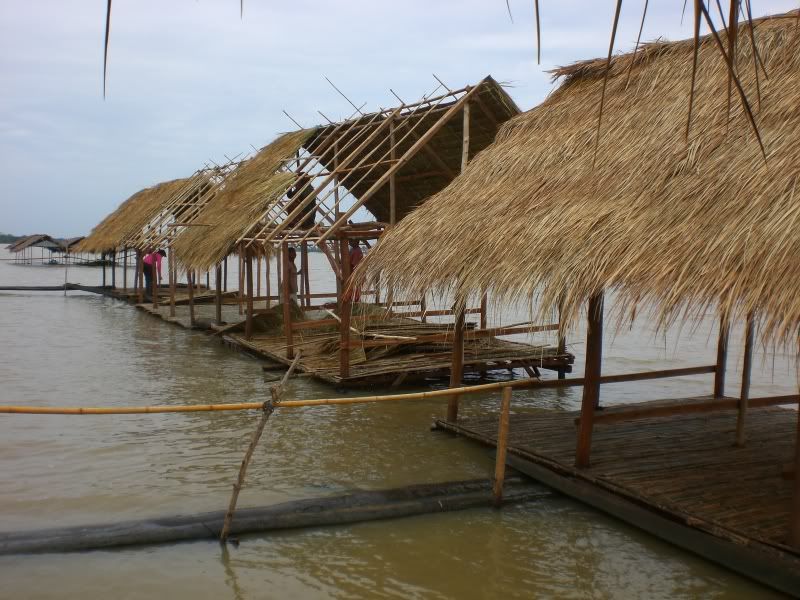
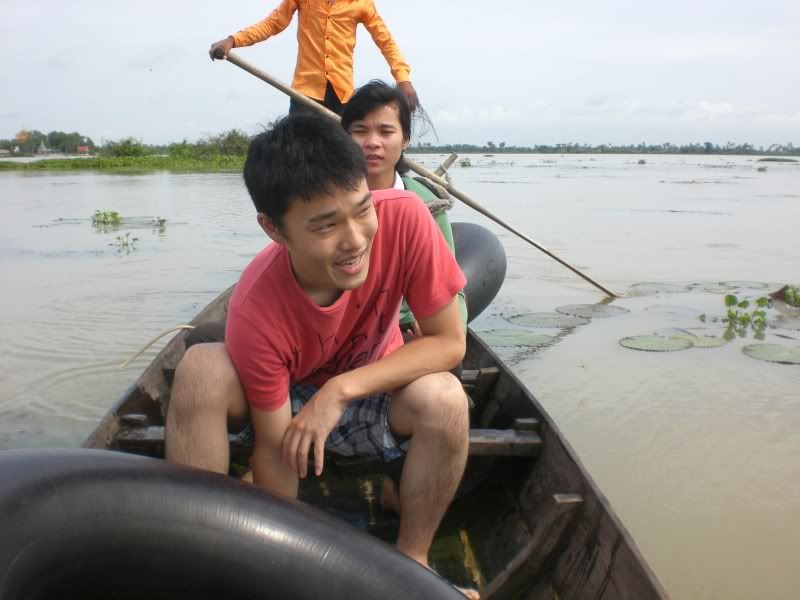
The Tonle Bati Resort in
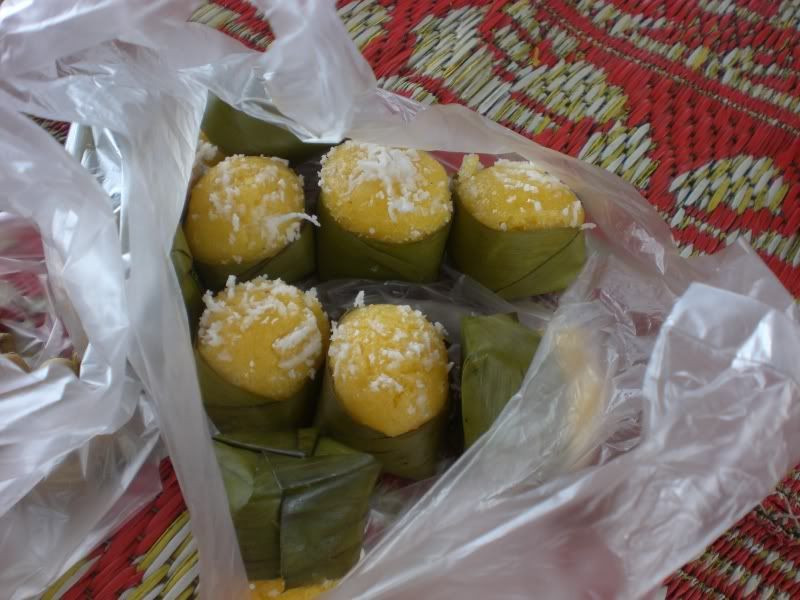 Cheap desserts made with palm tree fruit and bamboo leaves. Yummy!
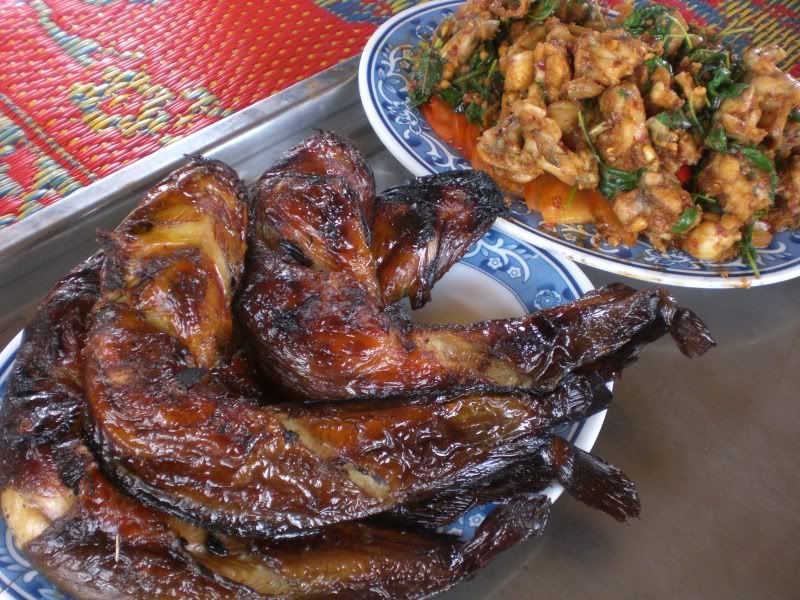 Cambodian "river cuisine" -- fried fish and FROG. The frog tasted weird.
 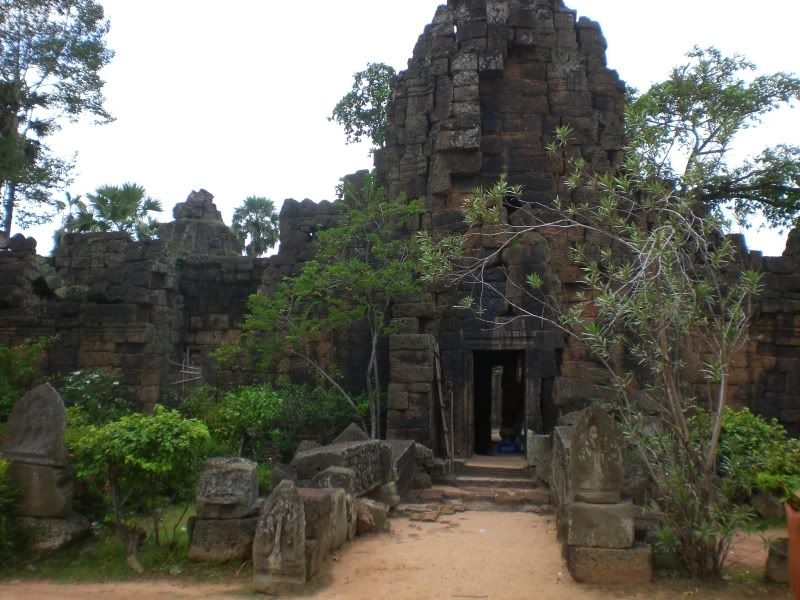 There are two ancient temples (plus pagoda) near the resort. This one, called the Grandmother Temple in Khmer, is made of sandstone. My friend says that the Angkor Wat was made with similar concepts -- except it was many many times bigger.
 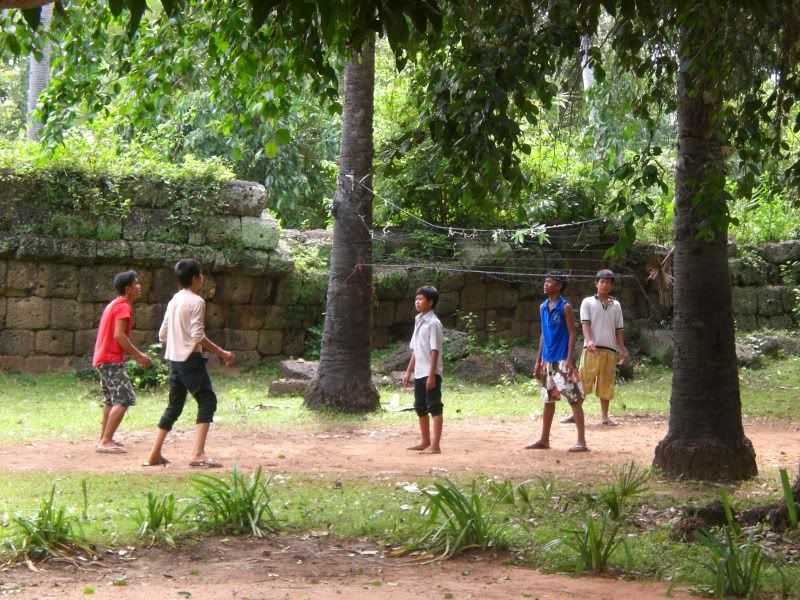 In Cambodia, pagodas are usually also places for people to relax. (And actually, Cambodian children can be really creative when it comes to games. Look at this -- a volleyball court made between two trees.)
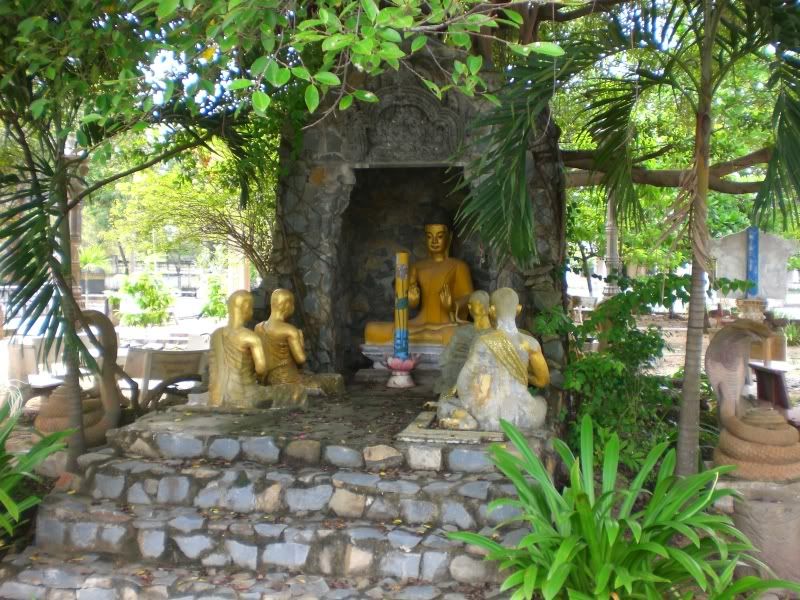 Right next to the Grandmother Temple is the Grandfather Pagoda. Surrounding the pagoda are many statues and stupas which tell the story of Buddha. According to the locals, this particular tree represents a "sacred place" because snakes are symbols of the gods.
 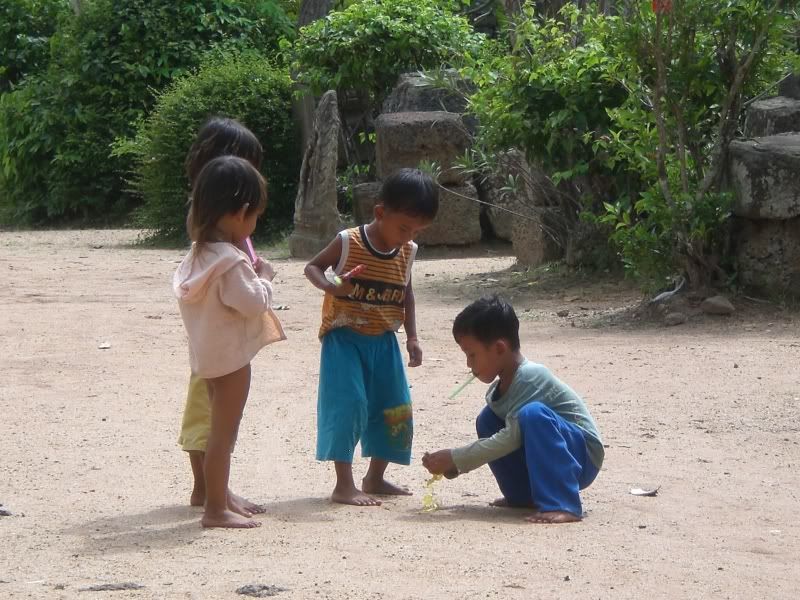 Children playing around the pagoda. They are very cute, but when they saw foreigners (such as me), they instantly began yelling m'roy, which means one hundred in Khmer. They were asking a hundred riels (around two cents). These scenes indicate that even though tourism may bring income to poor rural families, the influx of relatively wealthy locals and foreigners into the area may have a bad influence on the life and work attitudes of children and adults -- especially those who become accustomed to begging for money.
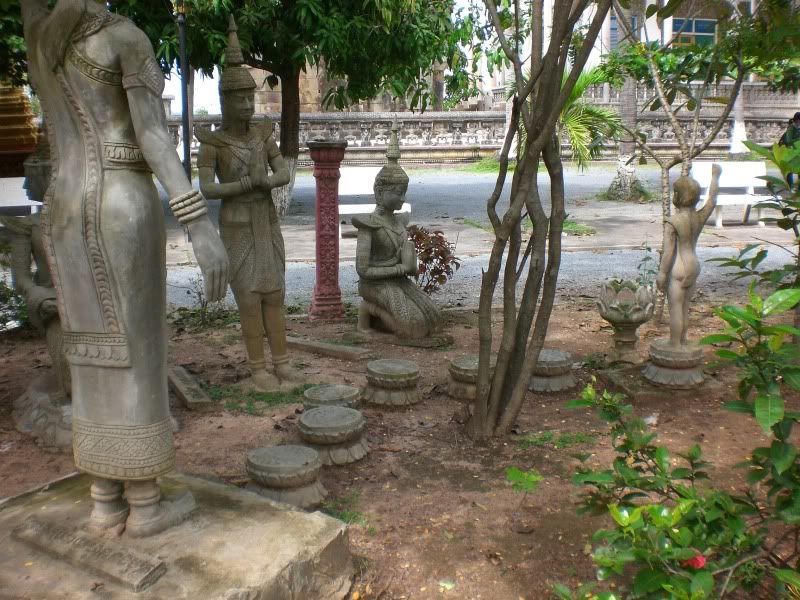 Another set of stupas representing the birth story of Buddha.
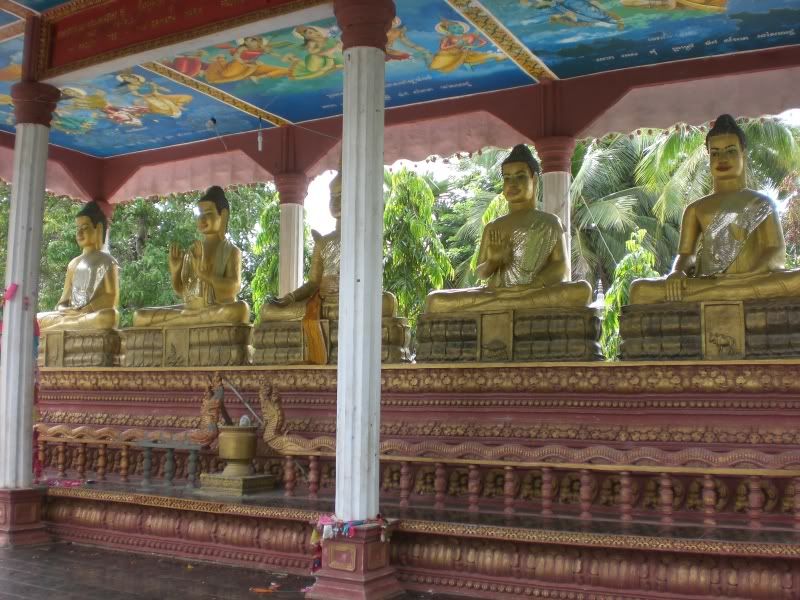 A series of statues made from donations by a Cambodian who migrated to the U.S. In Cambodia, it is customary for people to contribute to the construction of pagodas. In fact, most recently, there was the festival of Gut Ten. It was a huge fundraising period as Cambodian families collect hundreds and thousands of dollars from their family and friends and set off to the rural areas for a few weekends to start construction of a temple, monk's dormitory, statues, etc.


1 comment:
Great pictures. keep posting!
Post a Comment