A recent study published by the ILO, UNICEF and World Bank estimated 310,000 children in the worst forms of child labour (WFCL) in Cambodia based on the 2004 Census. The National Plan of Action for Eliminating the Worst Forms of Child Labour specifies 16 WFCL, including deep water fishing, salt-making, rubber-planting, child-portering, brick-making, scavenging, domestic work and sex work, etc. To reach the global target of eliminating these WFCL by 2016, the ILO has especially raised attention to how “social safety net” measures may empower vulnerable families as well as contribute to withdrawing child labourers and preventing any fresh entry of children into the workforce.
Specifically, in the context of Cambodia, conditional cash transfers (CCT) appears to have the greatest potential to reduce child labour. A nationwide CCT Scheme will likely be a social assistance programme giving cash benefits to very poor households in exchange of pre-specified investments in their children’s education and health. CCT schemes have been implemented in various parts of the world, especially in Latin America. However, although the concept of CCT has been widely accepted, the implementation challenges faced by each country may differ significantly. In Cambodia, in particular, the incidence of child labour is much higher than in Latin American countries. Therefore, mechanisms for beneficiary targeting, conditionality setting, monitoring and evaluation and fraud safeguard must be adapted according to the local context.
A key first step to operationalizing a CCT Scheme is the identification of beneficiaries. A targeting system may focus on all households of districts with the lowest school enrolment rates and the highest incidence of child labour. The Scheme may also target all households below certain income or asset levels. As well, CCT can also target vulnerable groups, such as pregnant women, infants, disabled persons, elderly and street children, etc. Any decisions regarding this targeting mechanism must be supported by a clear rationale and realistic predictions about the programme’s cost. More importantly, this system must comprise well-tested surveying and analytical tools for capturing poorest of the poor households.
Conditionality is key to the design of any CCT Scheme. A CCT scheme may directly contribute to promoting education and reducing child labour by specifying that children from beneficiary households must be enrolled in school and achieve satisfactory attendance.
However, this list of conditions may also be adapted to address weaknesses in the Cambodian education system and the high incidence of child labour. In the past few years, for instance, the ILO’s International Programme for the Elimination of Child Labour (IPEC) have set up community learning centres and transitional education activities for rehabilitating child labourers. Eligible households should also be rewarded for supporting former child labourers in informal courses in order to facilitate their integration into formal academic and vocational institutions. Furthermore, experiences from practitioners have indicated that after school programmes can effectively increase children’s time spent in schools and directly reduce their likelihood in working. Thus, the Cambodian CCT Scheme may incorporate after school activities and extra classes as conditionality. Noting low transition rate from primary to secondary schools, graduation and promotion bonuses may also be delivered.
More crucially, policy makers must bear in mind that each additional condition entails extra administrative costs. Due to geographical and resource constraints, some localities also lack the infrastructure for eligible families to fulfil these conditions. Therefore, the Royal Government and donors should generate clear justifications for the conditions chosen and the financial resources devoted to monitoring and evaluating compliance. At the same time, external and internal resources to be mobilized for putting in place appropriate infrastructure and facilities.
Any social protection scheme which involves cash benefits is prone to corruption and fraud. Thus, a fraud-proof and easily accessible cash distribution system should accompany the CCT Scheme. Ideally, the programme should utilize only one channel, such as the local/district/commune Department of Social Affairs, to distribute funds throughout the country. However, given geographical differences, some government officials may be incapable of managing meticulous accounts. In Cambodia, more decentralized methods of delivering cash benefits may be more practical and the district/commune may take leadership to explore viable means to channel these funds. In effect, there will likely be several parallel forms of delivery mechanisms within the country.
Nonetheless, the exact means for delivering cash benefits in various communities are still to be discussed. Some possibilities include distribution through well-established local businesses and convenience stores located near a local market. Transactions and payments may take place over the counter as beneficiary families present government-issued identification cards. Alternatively, experiences in Africa have shown that mobile banking is a growing possibility in developing countries. Rural households with mobile phones may check their balances via text messages or phone calls. Those without phones may approach local service providers to monitor their account activities at a low cost. Distribution by trusted local village chiefs, commune council representatives and school/health care directors are likely choices as well. In sum, the system chosen at various localities must be reliable and be able to deliver benefits in a timely fashion.
Going hand in hand with the transparent cash delivery system, the CCT Scheme should include an independent fraud safeguard, appeals and dispute resolution mechanism. A hotline, for instance, may be set up to receive feedback on the shortcomings of the targeting system (such as missing out some needy persons) and to prevent abuse of the CCT Scheme. A follow-up mechanism, manned by trusted officials and trained arbiters, may then step in to investigate valid complaints. These measures would help to ensure the transparency and integrity of the CCT Scheme. Noting reports on corruption and bureaucratic red-tape, these safeguards will be especially crucial for delivering benefits to the needy.
All in all, although the efficacy of CCT schemes have been proven in many countries, success should be taken as granted or automatic. When considering CCT as the main tool for promoting education and reducing child labour, more discussions and research would be needed to identify remedies for these abovementioned implementation challenges.
Reference:
Hamid Tabatabai, “Eliminating Child Labour: The Promise of Conditional Cash Transfers,” International Labour Organization (ILO/IPEC), October 2006.
“Towards Eliminating the Worst Forms of Child Labour in Cambodia by 2016: An Assessment of Resource Requirements,” Understanding Children’s Work, May 2009.
Monday, 30 November 2009


Wednesday, 25 November 2009
Creating a Social Protection System from Scratch
Imagine you are the head of a household of four in rural Cambodia. One day, as you walk in the local market and buy your regular groceries, you realize that the price of rice has doubled. The prices of meat and vegetables have also risen by 50 percent. The next day, your sister from Phnom Penh calls and weeps over the phone. She has been sacked by her employer, a garment factory, and cannot send money home. Gazing at the small plots of rice fields around your house, you begin to worry: what can you do to feed your children?
This story may resemble the experiences of a sizable number of rural households in the past year. The “double shock” of the food price crisis and the global economic crisis has especially dragged many poor and near poor families back into poverty. Absent of social protection measures, many resort to coping strategies such as reducing food consumption (especially of adult and women), selling productive assets, incurring high-interest loans, withdrawing children from school and putting school-age children and youth to work. These hardships have caught the attention of the Royal Government and development partners and hence stimulated discussions on formulating a National Social Protection Strategy.
However, among the broad array of social protection instruments, which one(s) would most likely uplift the rural poor?
Social protection is divided into two major categories, social insurance and social assistance. Social insurance schemes include pension funds and workers’ compensation funds which are contributions-based. Workers and employers (and sometimes also the government) would pay regularly a certain percentage of their earnings into the fund. In turn, employees who are retiring or have suffered from work injury may receive some financial support for their livelihoods. In Cambodia, the National Social Security Fund (NSSF) has been set up to provide work injury compensation for civil servants and private sector employees. However, these schemes appear to be most effective for the formal economy where employers and their businesses are clearly registered and workers earn stable incomes. In the vast rural areas where farmers engage in informal subsistence activities, a National Social Insurance Scheme administered by the central government may therefore be a difficult concept to practice.
Nonetheless, noting that limited access to capital and entrepreneurship training are the root causes of chronic poverty, some development partners have pioneered innovative projects, such as community-based insurance. The experiences of two ILO projects, the International Programme for the Elimination of Child Labour (IPEC) and the Women Entrepreneurship Development and Gender Equality (WEDGE) Project, especially highlight the efficacy of Self Help Groups (SHG).
SHGs are semi-formal savings associations, formed based on trust among families within target communities. Each group consists of 10 to 25 persons, normally close relatives or neighbours, and the members would elect a group leader and a bookkeeper. Thereafter, each member contributes 4,000 riel (equivalent of $1) each month. When the fund becomes sufficiently large, then members can make small loans for small business development and family emergencies. At the same time, the ILO and its NGO partners would provide training on financial management, income generation strategies and livelihood skills. Between 2004 and 2007, 166 SHGs were established in seven provinces and municipalities. Combined with access to small loans and improved skills in business operations, poor families have become more capable of generating supplemental income (which sufficiently replace income lost when child labourers stop working and return to schools). With proven success, this community-centred strategy is now being replicated and up-scaled.
The second category of social protection instruments is social assistance, now also referred to as “social safety nets” (World Bank-invented term). Social assistance schemes are non-contributions-based and are usually financed by government and donor groups. To become eligible for benefits, households or individuals must fulfil certain criteria. For instance, in Nordic countries, residents are automatically entitled to free health care. Therefore, those who wish to be beneficiaries must register with the local commune and obtain a resident card. Other schemes may deliver cash and in-kind benefits to target low-income households and maybe specific for certain vulnerable groups, such as children, elderly and the disabled.
In Cambodia, some social safety net measures have been piloted or implemented in various regions. For instance, the World Bank, under its Cambodia Education Sector Support Project (CESSP), has piloted a scholarship programme for poor lower secondary school students. The scheme delivered $45 and $60 lump sums to students identified to be vulnerable of dropping out. Also, the Asian Development Bank (ADB), the World Food Programme (WFP) and the International Labour Organization (ILO) have implemented food-for-work, cash-for-work and labour-based public works projects to provide employment to poor households. The successes of these projects may be up-scaled if stakeholders take action to improve and replicate such programme design to more areas in Cambodia. Furthermore, other relevant schemes, such as unconditional cash transfers (e.g. disability allowances, non-contributory pensions and needs-based assistance), may be piloted and included as part of the National Social Protection Strategy.
As discussions on social protection ensue, there is growing consensus that both social insurance and social assistance measures are needed alleviating poverty, mitigating economic shocks and expanding opportunities for poor households. Nonetheless, more coordination between government ministries and donors would be necessary to create a comprehensive framework specifying the policies, schemes and instruments to be utilized. More crucially, this process must proceed smoothly with cautious consideration of the resources and technical capacities available.
References
“Impact of High Food Prices in Cambodia,” Cambodia Development Resource Institute, October 2008, http://documents.wfp.org/stellent/groups/public/documents/ena/wfp189739.pdf
“Good Practices and Lessons Learned from the ILO IPEC Time Bound Programme Support Project in Cambodia,” International Labour Organization, November 2008
Friday, 20 November 2009
Photos from Tonle Bati Resort
The Tonle Bati Resort in
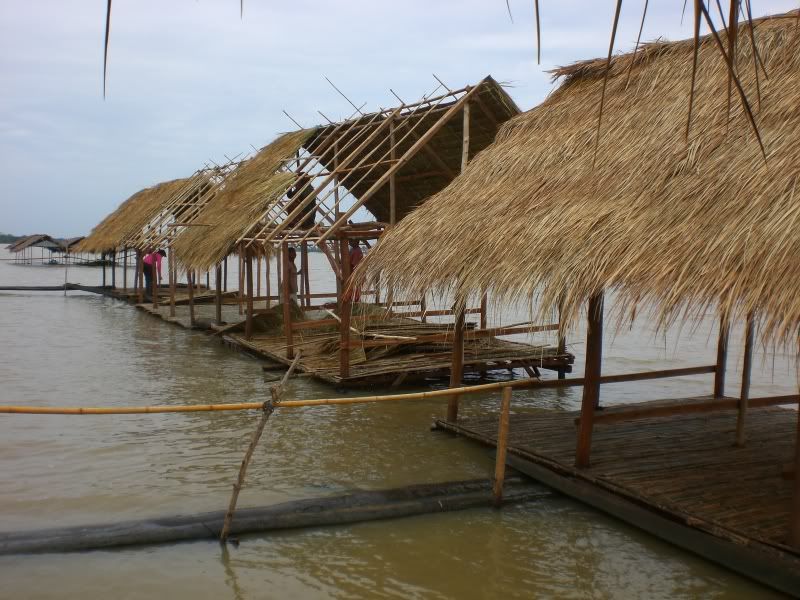
To access these huts, you must first walk and balance yourself on some flimsy floating wood. But once inside the huts, you would feel as if you are floating with the river. Really cool =)
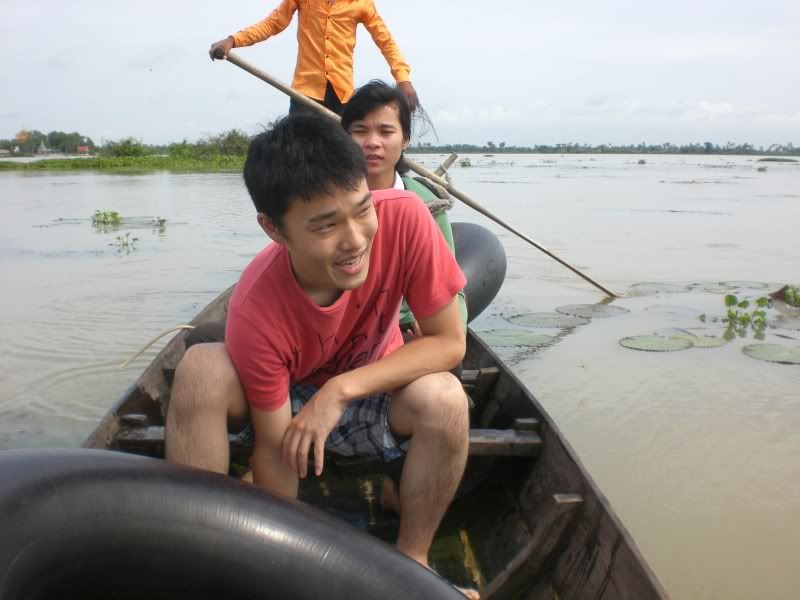
Ippei and Savon trying their best to throw water out of our little boat. Yes, it was leaking! Nonetheless, it was great to have a short 30-minute journey down the Tonle Bati river.
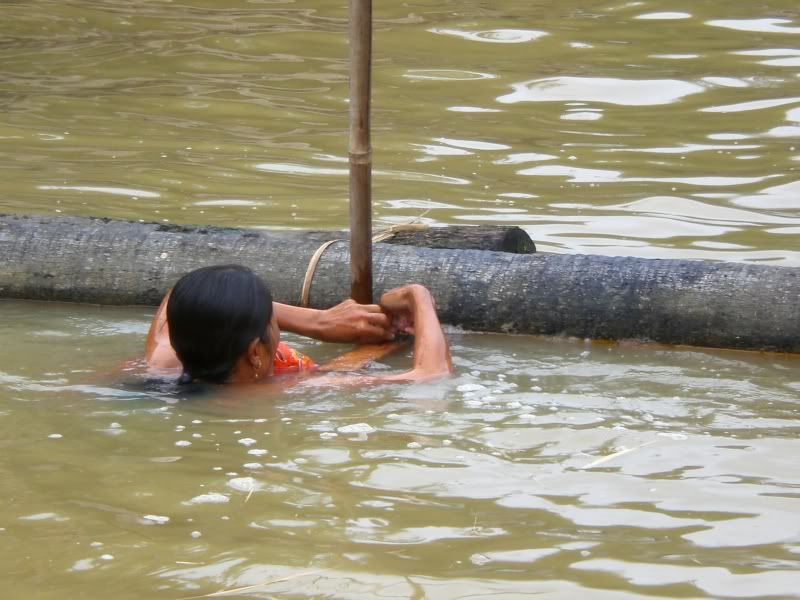
A Cambodian woman working to fasten the strings attached to this floating bridge.
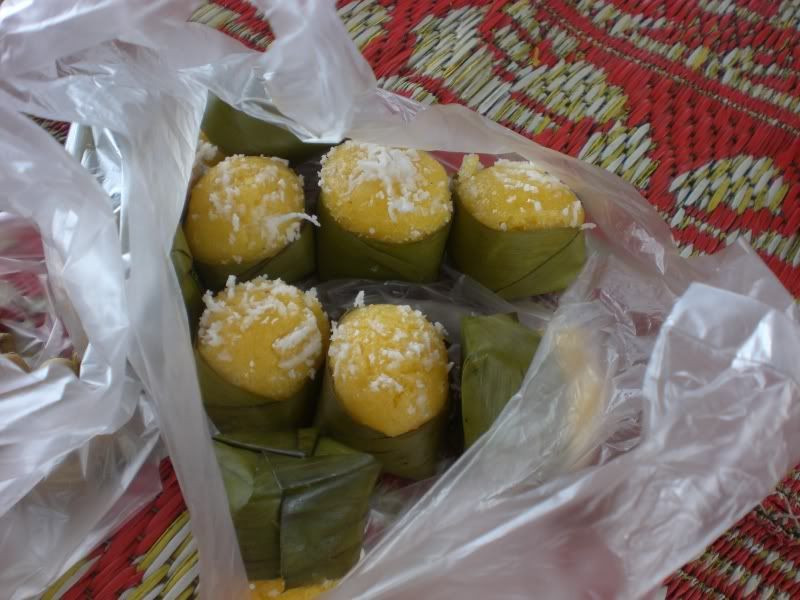 Cheap desserts made with palm tree fruit and bamboo leaves. Yummy!
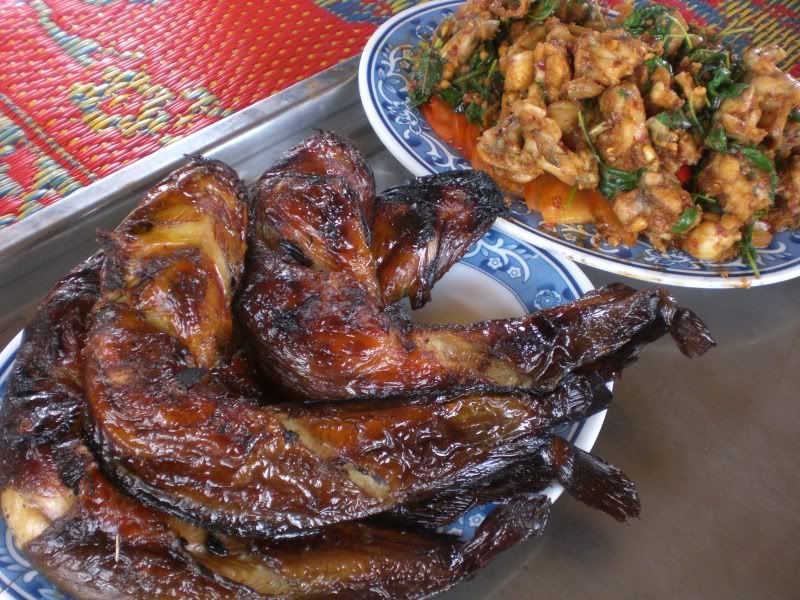 Cambodian "river cuisine" -- fried fish and FROG. The frog tasted weird.
  There are two ancient temples (plus pagoda) near the resort. This one, called the Grandmother Temple in Khmer, is made of sandstone. My friend says that the Angkor Wat was made with similar concepts -- except it was many many times bigger.
 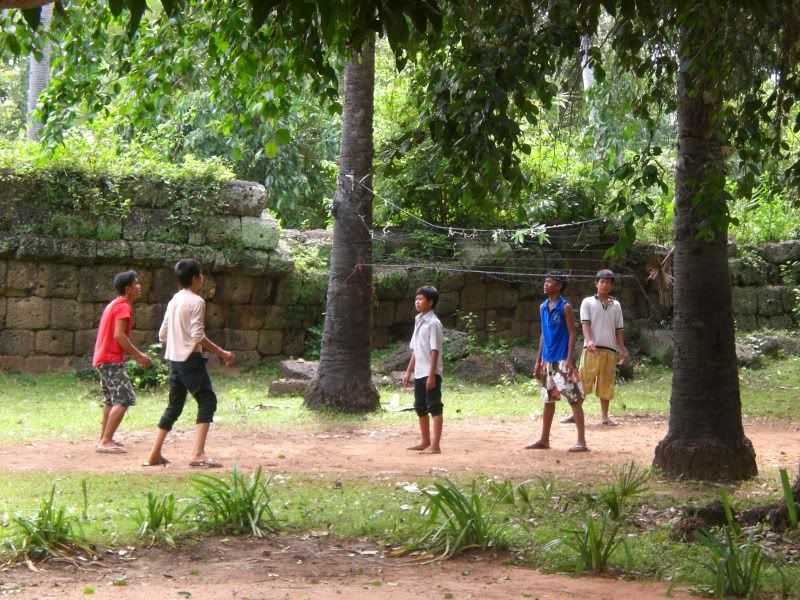 In Cambodia, pagodas are usually also places for people to relax. (And actually, Cambodian children can be really creative when it comes to games. Look at this -- a volleyball court made between two trees.)
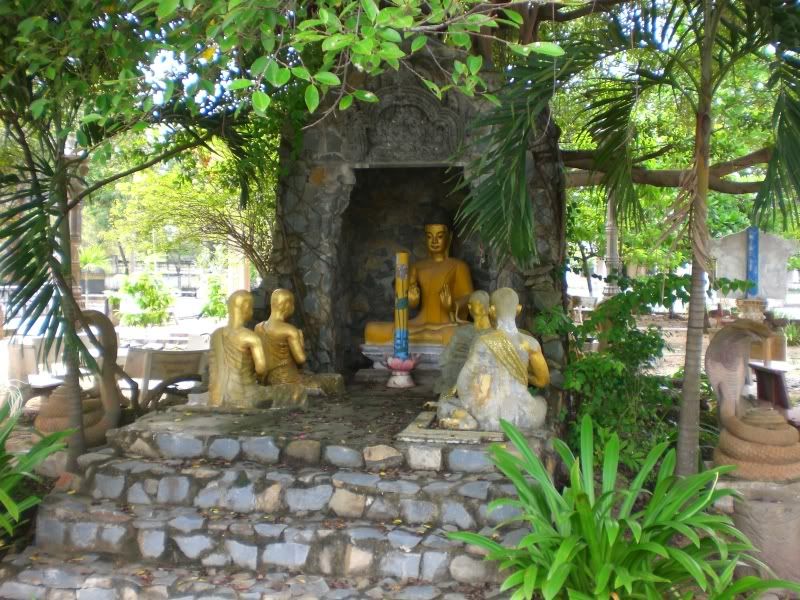 Right next to the Grandmother Temple is the Grandfather Pagoda. Surrounding the pagoda are many statues and stupas which tell the story of Buddha. According to the locals, this particular tree represents a "sacred place" because snakes are symbols of the gods.
 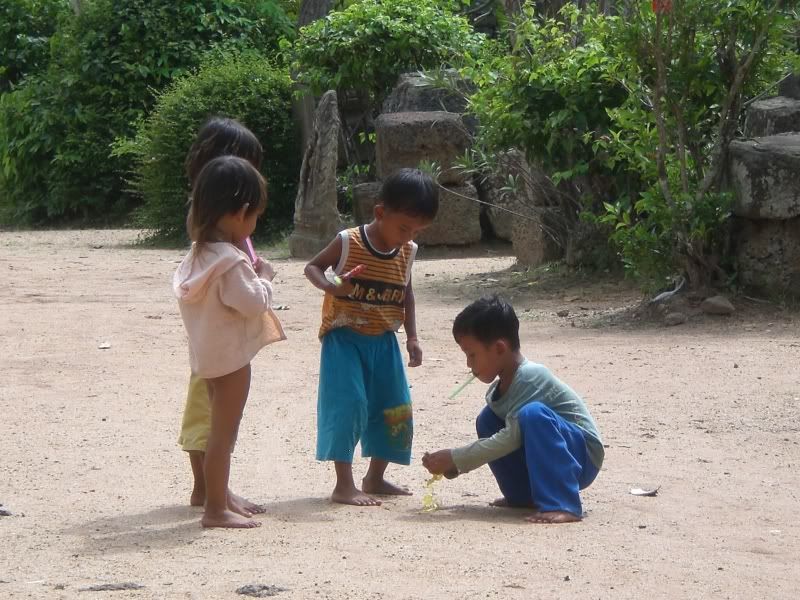 Children playing around the pagoda. They are very cute, but when they saw foreigners (such as me), they instantly began yelling m'roy, which means one hundred in Khmer. They were asking a hundred riels (around two cents). These scenes indicate that even though tourism may bring income to poor rural families, the influx of relatively wealthy locals and foreigners into the area may have a bad influence on the life and work attitudes of children and adults -- especially those who become accustomed to begging for money.
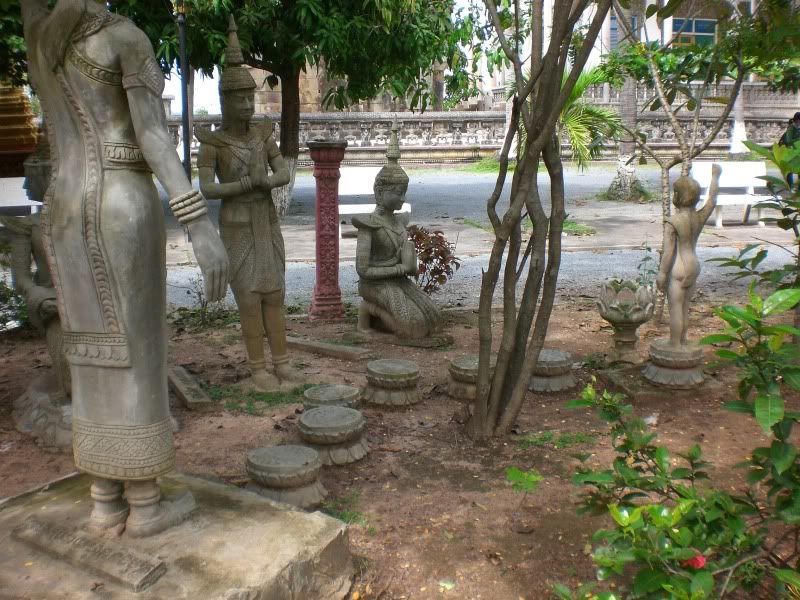 Another set of stupas representing the birth story of Buddha.
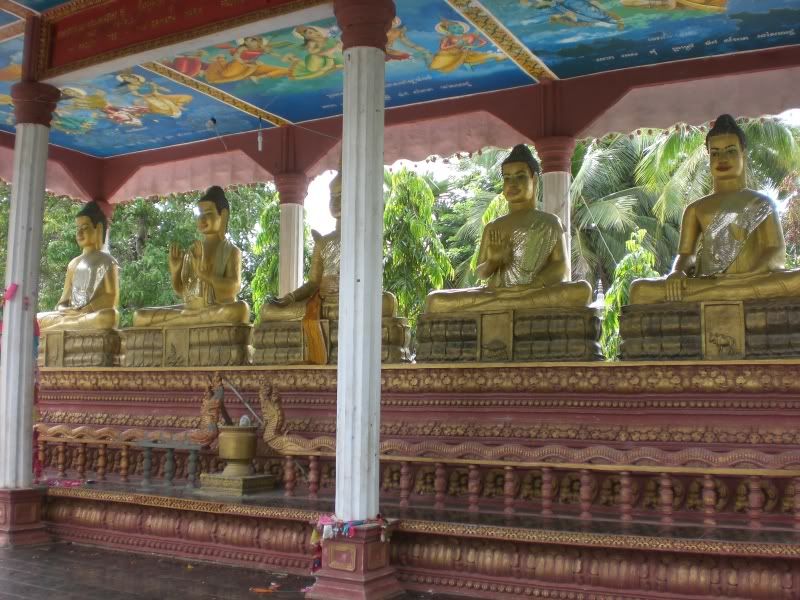 A series of statues made from donations by a Cambodian who migrated to the U.S. In Cambodia, it is customary for people to contribute to the construction of pagodas. In fact, most recently, there was the festival of Gut Ten. It was a huge fundraising period as Cambodian families collect hundreds and thousands of dollars from their family and friends and set off to the rural areas for a few weekends to start construction of a temple, monk's dormitory, statues, etc.
Thursday, 5 November 2009
The Majesty Capital of Phnom Oudong, Kampong Speu
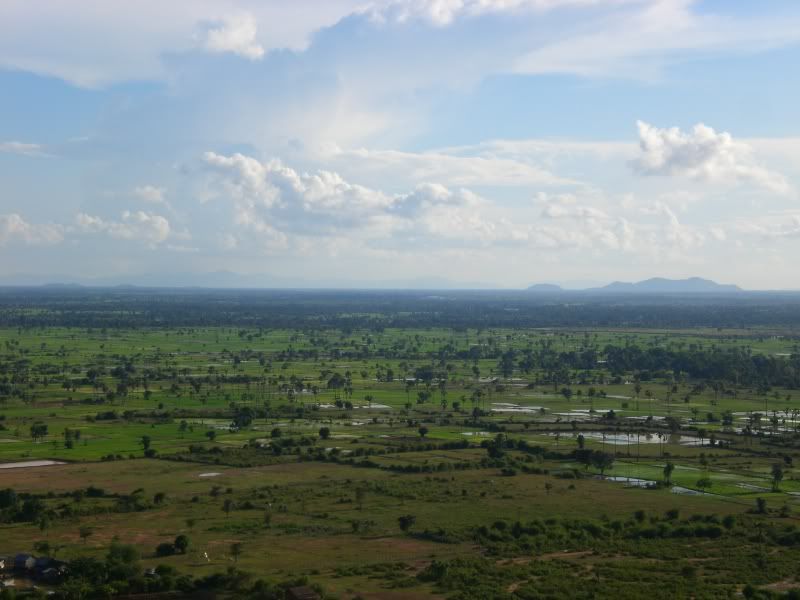
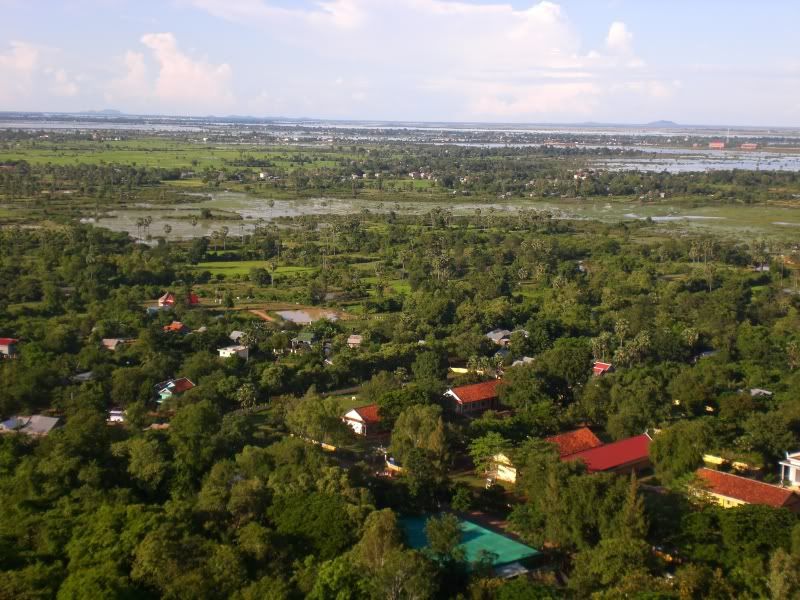
Phnom Oudong, or Oudong Mountain, in Kampong Speu Province is a local favourite. As the old capital of Phnom Penh, it houses magnificent temples and stupas at its peak. The precious ashes of Buddha are also said to be preserved here. I took these pictures back in September (sorry for not uploading after such long time). But I still feel compelled to post them because they are just gorgeous. It took about 20 minutes to hike up the hill. Along the way, there were "god" monkeys, fish ponds, child beggars, food sellers, handicapped people, etc., all trying to get some cash or blessing from the Gods and probably the visitors. The scenes from the top of the mountain made me speechless. The vast stretches of paddy fields, the aerial views of the river, the artistically scattered palm trees and coconut trees and the cloudless blue sky -- simply breath-taking. Please enjoy!


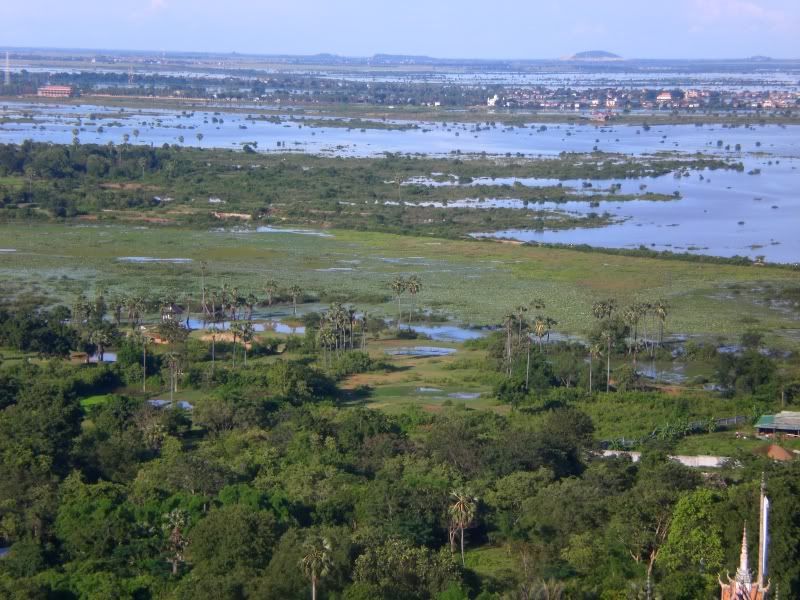
Here are some more pictures taken in Kampong Chhnang Province, the home of my landlord's wife. The city was basically built on the Mekong River. As you may see, the houses stood above water with flimsy wooden strcutures. Through the cracks, you may see fishermen and boatsmen patrolling the waters in their primitive boats, probably looking lotus, fish and other living things which can be sold in the market.
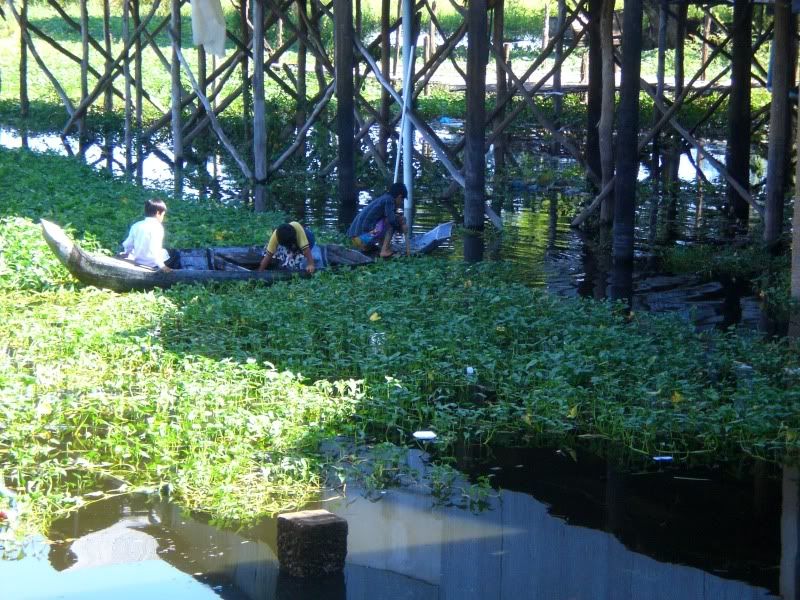

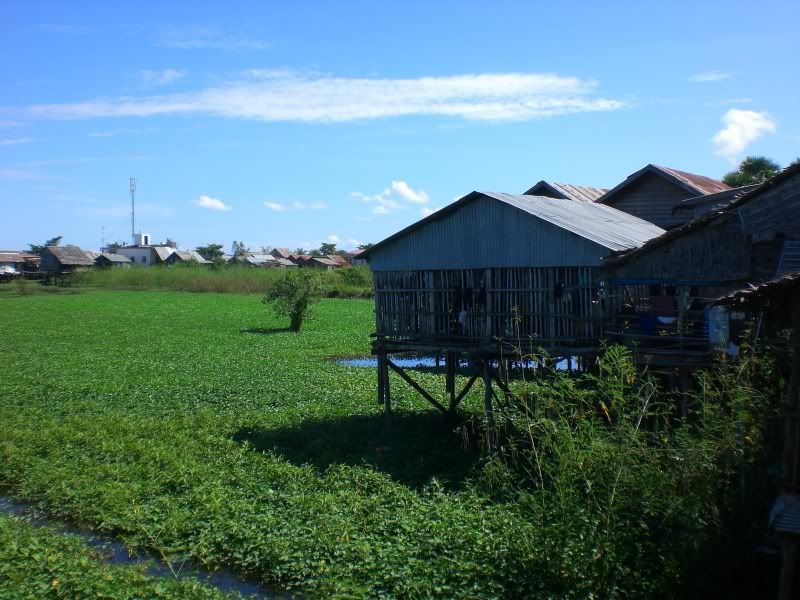
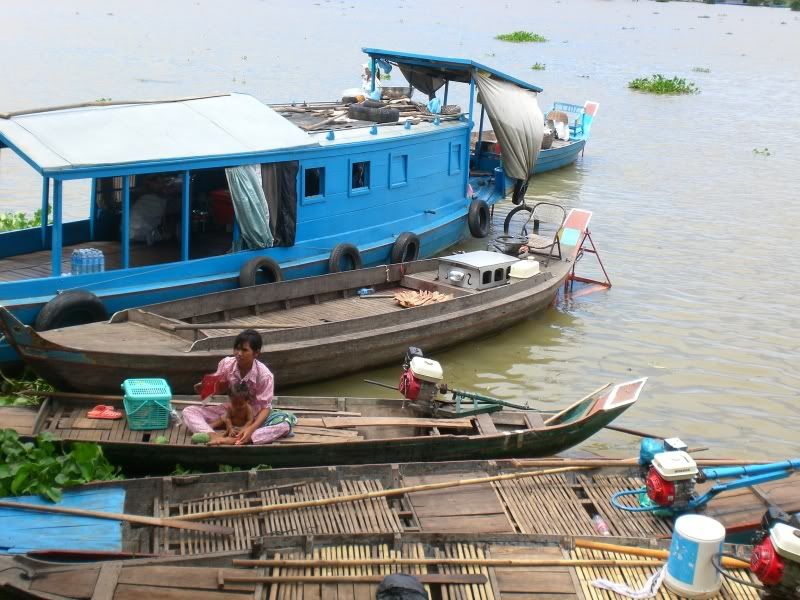

Here are some more pictures taken in Kampong Chhnang Province, the home of my landlord's wife. The city was basically built on the Mekong River. As you may see, the houses stood above water with flimsy wooden strcutures. Through the cracks, you may see fishermen and boatsmen patrolling the waters in their primitive boats, probably looking lotus, fish and other living things which can be sold in the market.
There Are More Cars and Prostitutes... So What?
When I first entered Grinnell College back in 2005, professors, my older peers and alums assured me that Grinnell will make me a “critical thinker” who knows how to read, speak and write well. In the following four years, I read, spoke and wrote. But when our final year started and the stock market crashed, it was impossible to find employment. Students, including me, then began to question the value of “critical thinking.” We asked, “Wouldn’t knowledge of accounting principles, business statistics, econometrics, computer programming, etc. be more valuable?”
If an economy only needs accountants and bankers as well as internet connection to support their work, then my answer may be YES. However, in reality, all economies need people who can think outside the box and convey ideas clearly verbally and in the written form.
In late October this year, the consultants from my Job Centre project team trained 15 counterpart staff from local vocational training providers and the Ministry of Labour. The training reminds me of the value of “critical thinking.” For four days, we ran exercises to stimulate analytical thoughts. We asked, for instance, “Suppose there are more cars in Battambang province over the ten years – what would this fact mean for the local economy?” Participants were then asked to brainstorm a list of new direct and indirect employment opportunities.
We also asked participants to make sense of labour market information in Cambodia. For example, seeing more laid off garment workers, some researchers found empirical evidence that unemployed women are moving to the sex industry. Now, how can the Job Centre use this information? How would this information alter the target audience and operation protocol of the Job Centre? What are the implications on skills needs?
Imagination is desperately needed for development-related work. There is no precedence in the country. There may be precedence from other countries, but their experiences must be adapted appropriately and tested in the local context. There are no textbooks. There are no authoritative supervisors who can tell staff members what exactly to do. In effect, people need to imagine and take up challenges and responsibilities.
From the trainers, I learned to get “the idea” across – the idea that their trainees must be imaginative and innovative. When asked to analyze certain data, some trainees refused to do so because “analysis is the job of the experts.” Little did they know that they were the experts! When asked to formulate the standard operating procedures of the Job Centres, some trainees suggested that “the ILO” should be responsible. Not them. The project consultants, therefore, spent much time conveying the idea of “critical analysis” in many different ways. Surely, there is much value of asking “so what?” and not receiving answers or facts as granted.
Photos from training course and training venue (project site):
 Consultants explaining to trainees the preparations needed to set up a Job Centre at the forthcoming project site.
 Construction of the National Employment Agency, due to be finished early next year. The NEA will forecast labour market needs and develop vocational training and employment policies.
 Renovation of the Job Centre site in Phnom Penh.
 The Job Centre site is located at the National Technical Training Institute, one of the first vocational training schools operated by the Cambodian government.
 Main building of NTTI. The building follows French architectural styles and has been recently repainted.
 The NTTI campus hosts three other schools -- the Cambodia-India Entrepreneurship Centre, Krossomak Polytechnic and Industrial Polytechnic (under construction). This is another view of the campus.
 Breakfast at NTTI canteen. In Cambodia, restaurants often cook the food and lay them out for customers to choose -- not very hygienic but nonetheless interesting to see.
 Sweets can also be part of breakfast...
 After the training course, the consultant joined some Cambodians in playing a "sports" game.
If an economy only needs accountants and bankers as well as internet connection to support their work, then my answer may be YES. However, in reality, all economies need people who can think outside the box and convey ideas clearly verbally and in the written form.
In late October this year, the consultants from my Job Centre project team trained 15 counterpart staff from local vocational training providers and the Ministry of Labour. The training reminds me of the value of “critical thinking.” For four days, we ran exercises to stimulate analytical thoughts. We asked, for instance, “Suppose there are more cars in Battambang province over the ten years – what would this fact mean for the local economy?” Participants were then asked to brainstorm a list of new direct and indirect employment opportunities.
We also asked participants to make sense of labour market information in Cambodia. For example, seeing more laid off garment workers, some researchers found empirical evidence that unemployed women are moving to the sex industry. Now, how can the Job Centre use this information? How would this information alter the target audience and operation protocol of the Job Centre? What are the implications on skills needs?
Imagination is desperately needed for development-related work. There is no precedence in the country. There may be precedence from other countries, but their experiences must be adapted appropriately and tested in the local context. There are no textbooks. There are no authoritative supervisors who can tell staff members what exactly to do. In effect, people need to imagine and take up challenges and responsibilities.
From the trainers, I learned to get “the idea” across – the idea that their trainees must be imaginative and innovative. When asked to analyze certain data, some trainees refused to do so because “analysis is the job of the experts.” Little did they know that they were the experts! When asked to formulate the standard operating procedures of the Job Centres, some trainees suggested that “the ILO” should be responsible. Not them. The project consultants, therefore, spent much time conveying the idea of “critical analysis” in many different ways. Surely, there is much value of asking “so what?” and not receiving answers or facts as granted.
Photos from training course and training venue (project site):
Consultants explaining to trainees the preparations needed to set up a Job Centre at the forthcoming project site. Construction of the National Employment Agency, due to be finished early next year. The NEA will forecast labour market needs and develop vocational training and employment policies.Renovation of the Job Centre site in Phnom Penh. The Job Centre site is located at the National Technical Training Institute, one of the first vocational training schools operated by the Cambodian government. Main building of NTTI. The building follows French architectural styles and has been recently repainted. The NTTI campus hosts three other schools -- the Cambodia-India Entrepreneurship Centre, Krossomak Polytechnic and Industrial Polytechnic (under construction). This is another view of the campus. Breakfast at NTTI canteen. In Cambodia, restaurants often cook the food and lay them out for customers to choose -- not very hygienic but nonetheless interesting to see. Sweets can also be part of breakfast... After the training course, the consultant joined some Cambodians in playing a "sports" game.
Subscribe to:
Comments (Atom)